Tomorrow, March 8, is International Women’s Day and if you’re wondering why that matters, you should read this post from last year. Globally we still have a long way to go to see an end to oppression and injustice for women and girls. But if you want to make a difference, or you want to help end world poverty, there is one key strategy I urge you find out more about and consider contributing to.
I recently celebrated a milestone birthday, and while I wanted to invite a whole bunch of friends to come together and celebrate, I didn’t want them to feel like they should give me gifts, particularly when there really isn’t anything I need. So instead, I asked them to make a donation towards something I am particularly passionate about: the education of girls. My friends blew me away by donating over $2,200 to a project focused on this significant strategy.
Why the education of girls?
For me personally, it brings together a number of my passions. As a church pastor and a theological college lecturer, I’m a teacher – that’s my vocation. I’m also a lifelong student – I have been privileged to have access to education at primary, secondary, tertiary and postgraduate levels. I’m also a woman (obviously) and I’m passionate about seeing girls and women reach their full potential. Add to that I’m a traveller who has visited communities around the world struggling with poverty, and I have seen first hand how the best strategy we know of to break the generational cycle of poverty is education, and in particular, the education of girls. And finally, I’m a follower of Jesus who believes that I am called to proclaim and work for His peace, justice and righteousness in the world today.
Currently there are up to 65 million girls in the world denied education simply because they are girls. And that is a problem not just for them personally, but for their communities, their nations, and ultimately, for all of us. Because educated girls are not married off while they are still children. Educated girls are less likely to have children while they are still children themselves. The children born to educated girls are 50% more likely to survive past age 5. The children of educated girls are much more likely to go to school themselves. Educated women are able to support themselves and their families, and much more likely to invest what they earn back into their communities. It’s a win-win-win-win-win proposition. It really should be a no brainer.
So here’s my challenge to you this International Women’s Day.
Find out more about how the education of girls can transform the world and consider how you can play a part in it. Here are some ideas for you to watch, listen to, think about and contribute to:
I showed the video below from the US government at my birthday. It gives a brief but powerful overview of some of the incredible stats on how educating girls can make an exponential difference.
Another helpful overview video comes from the girl effect.
Earlier this week, I joined with politicians, celebrities, and everyday women all over the world in posting a Throwback Thursday photo of myself at school.
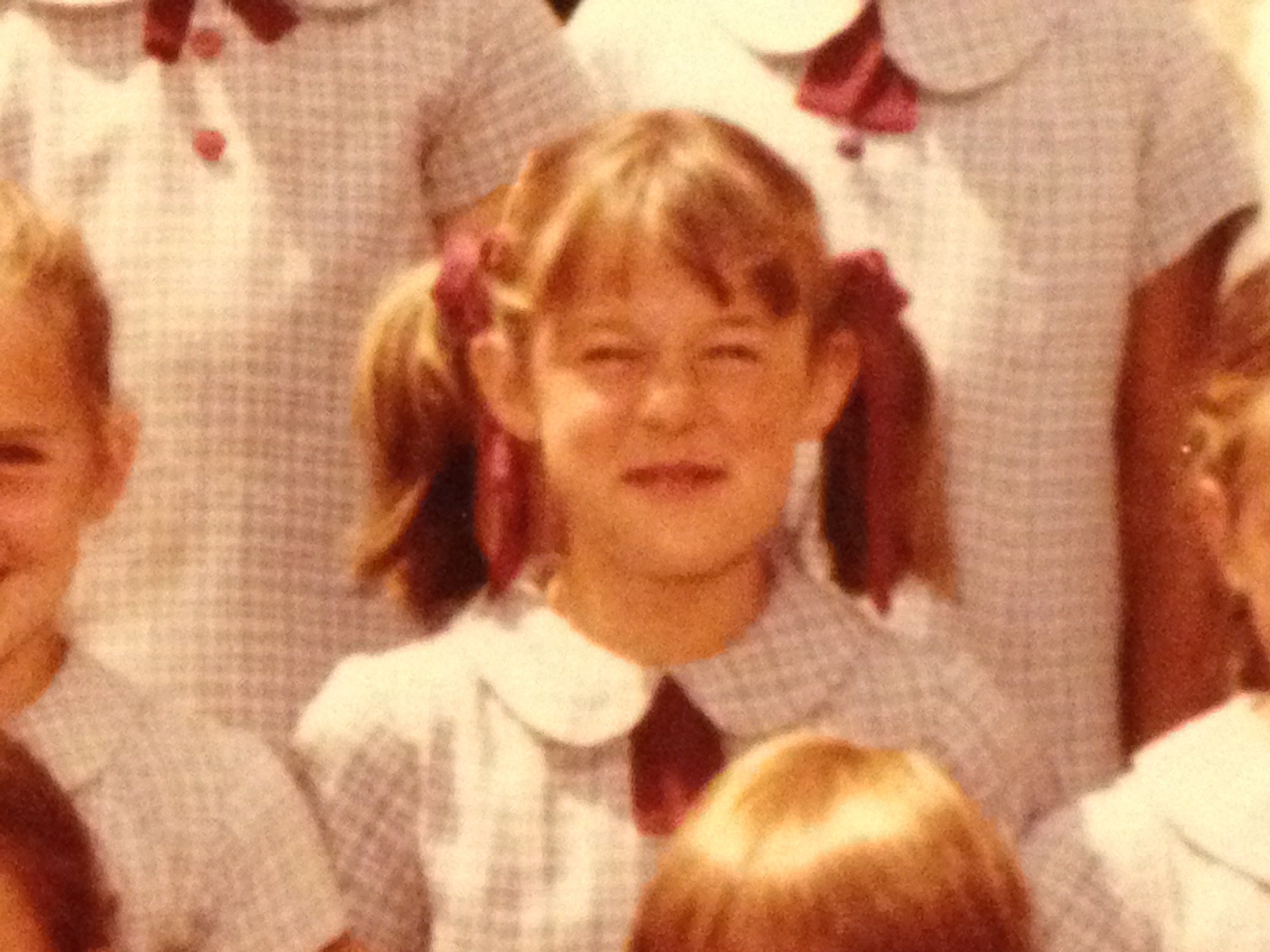
This was in support of Up For School, who are hosting a number of IWD events around the world, and have what they hope will be the world’s largest petition – one I’d encourage you to sign – urging our governments to keep the promises they made in 2000 to ensure the right to education for those who are denied it.
There are plenty of organisations working in developing countries to overcome barriers to girls’ education. Making a donation to one of them will make a huge difference. This is a link to World Vision Australia’s Education for Girls project.
And finally, if you’ve got a bit more time to learn more, watch one or more of these inspiring TED talks by people like Ziauddin Yousafzai (Nobel Peace Prize Recipient Malala’s father) or Liberian Nobel Peace Prize Recipient Leymah Gbowee.
* Just in case you’re wondering, I’m not screwing my nose up in the photo because I’m at school. I loved school! But as my fellow Aussies should understand, there was a fly on my nose I was trying to blow away when this photo was snapped. True story!

 One of the highlights for me at last year’s
 Thinking Out Loud ...