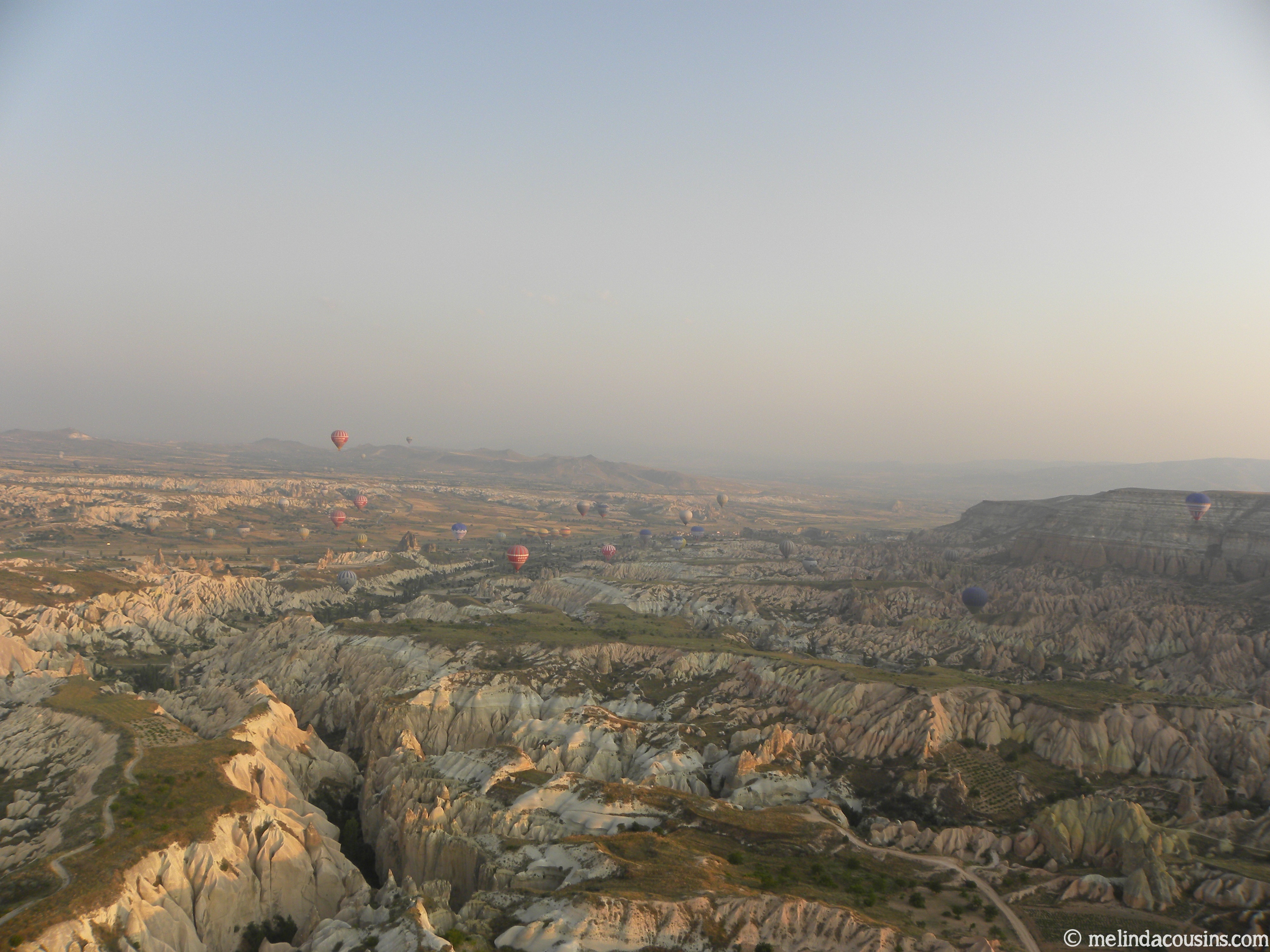
Category Archives: Faith

Today would be a good day to be in Lutherstadt Wittenberg

This coming Friday, October 31, marks a special day. No, it’s not Halloween (we don’t generally celebrate that in Australia). It’s Reformation Day. This Friday it will be 497 years since Martin Luther famously nailed his 95 theses to the door of the Wittenberg castle church, one of the key events that lit the spark of the Protestant Reformation of the church. I had the opportunity to visit Wittenberg (now officially called Lutherstadt – “Luther’s town”) about 4 years ago. I’m thinking it would be a nice place to revisit today and ponder the history that took place there.

Window in Wittenberg Castle Church

I’m passionate about the church, and I’m pretty keen on history, so it’s no surprise that I really enjoyed visiting Wittenberg. I was in Berlin for a few days and was excited to discover it is only just over an hour by train to this delightful little town with its preserved artefacts of a remarkable life lived here nearly 500 years ago.

Martin and Katharina Luther
 What did I love about Wittenberg?

Wittenberg is a beautiful European town, and a great size for walking through.
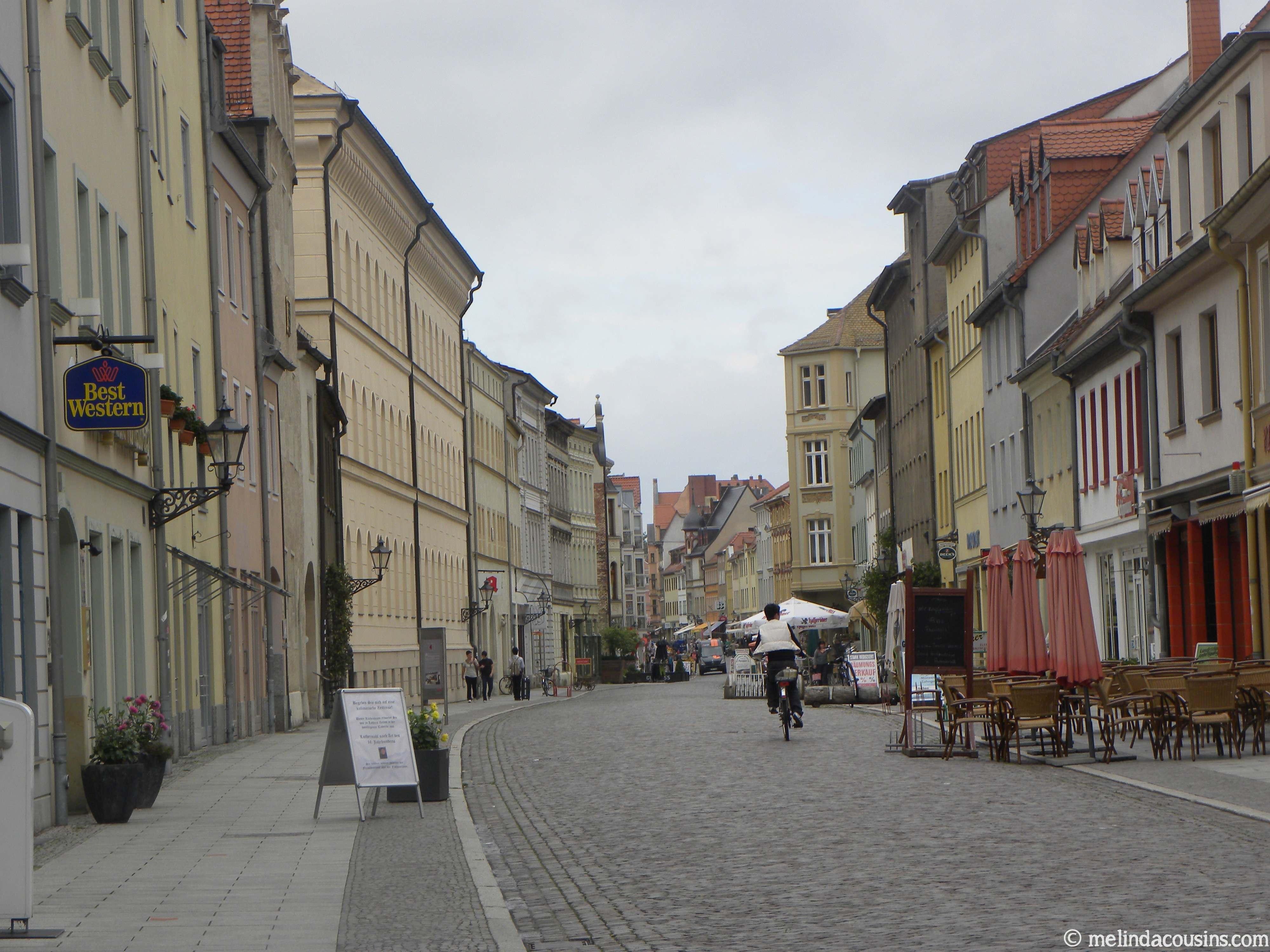
street

As I found with Stratford-upon-Avon, however, taking a tour through this town is really taking a walk through the places of one man’s life. Coming in from the train station, I passed by this pretty park, which is also thought to be the site where Luther burned his papal bull of excommunication.

Park

Normally a statue of Luther stands in the centre of the town square, but it was being renovated when I visited and so was replaced with an art installation of 800 colourful miniature copies – quite a sight!
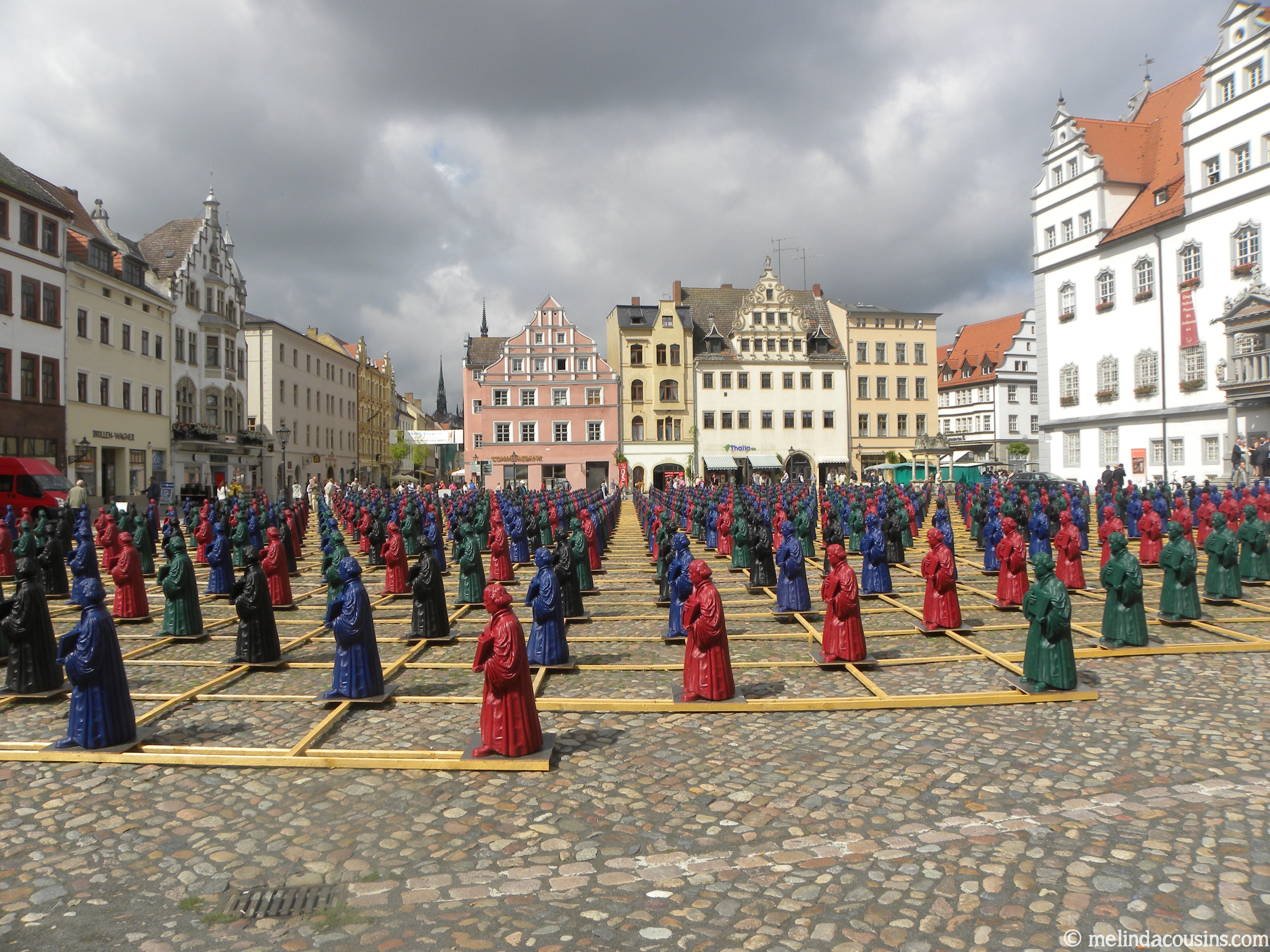
Luthers in the square

The former monastery where Luther studied and taught and which then became his family home is now a museum honouring his life and work.
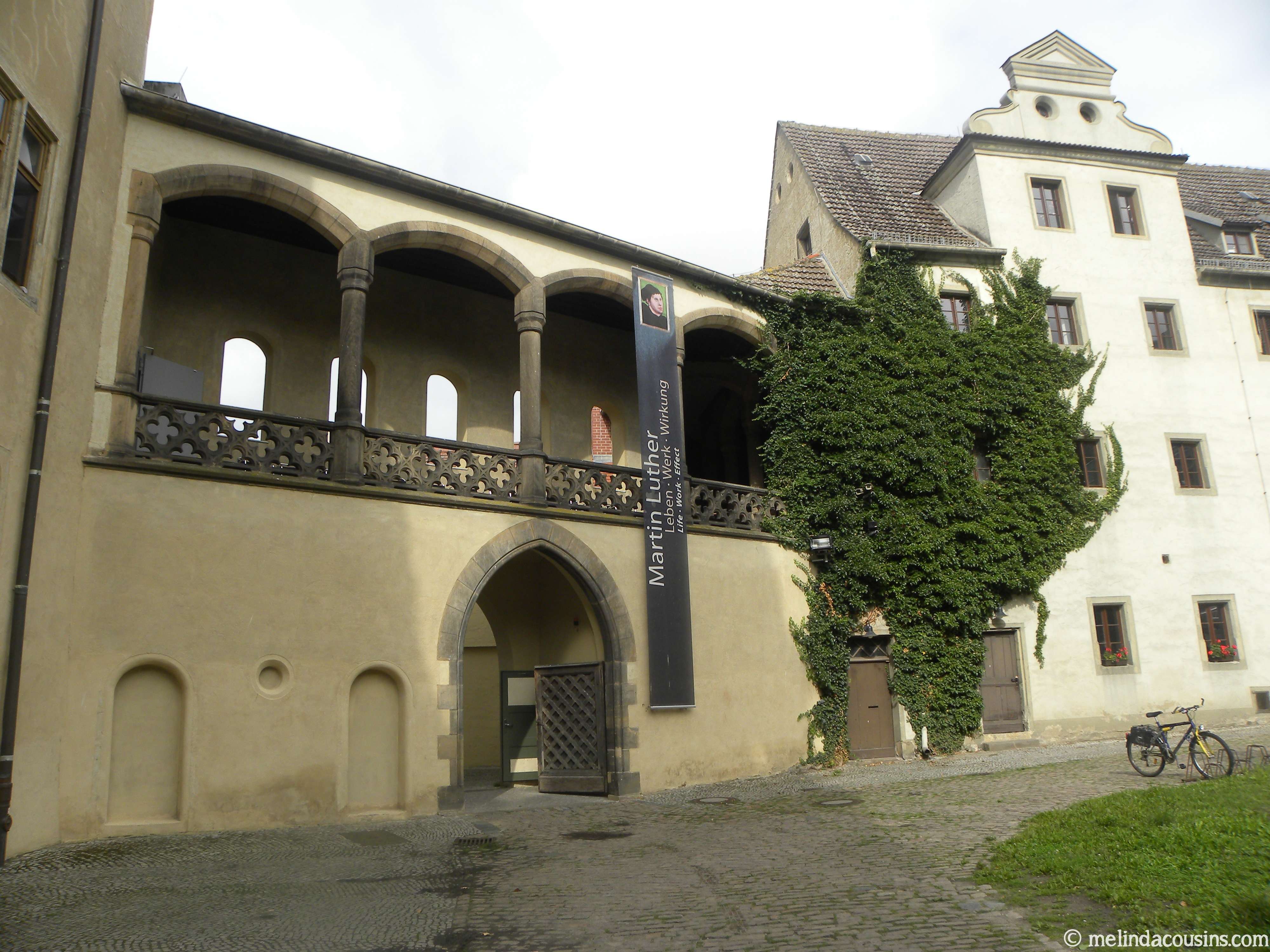
Luther House

Here you can walk through the simple living room of the home he made with his wife, former nun Katharina …
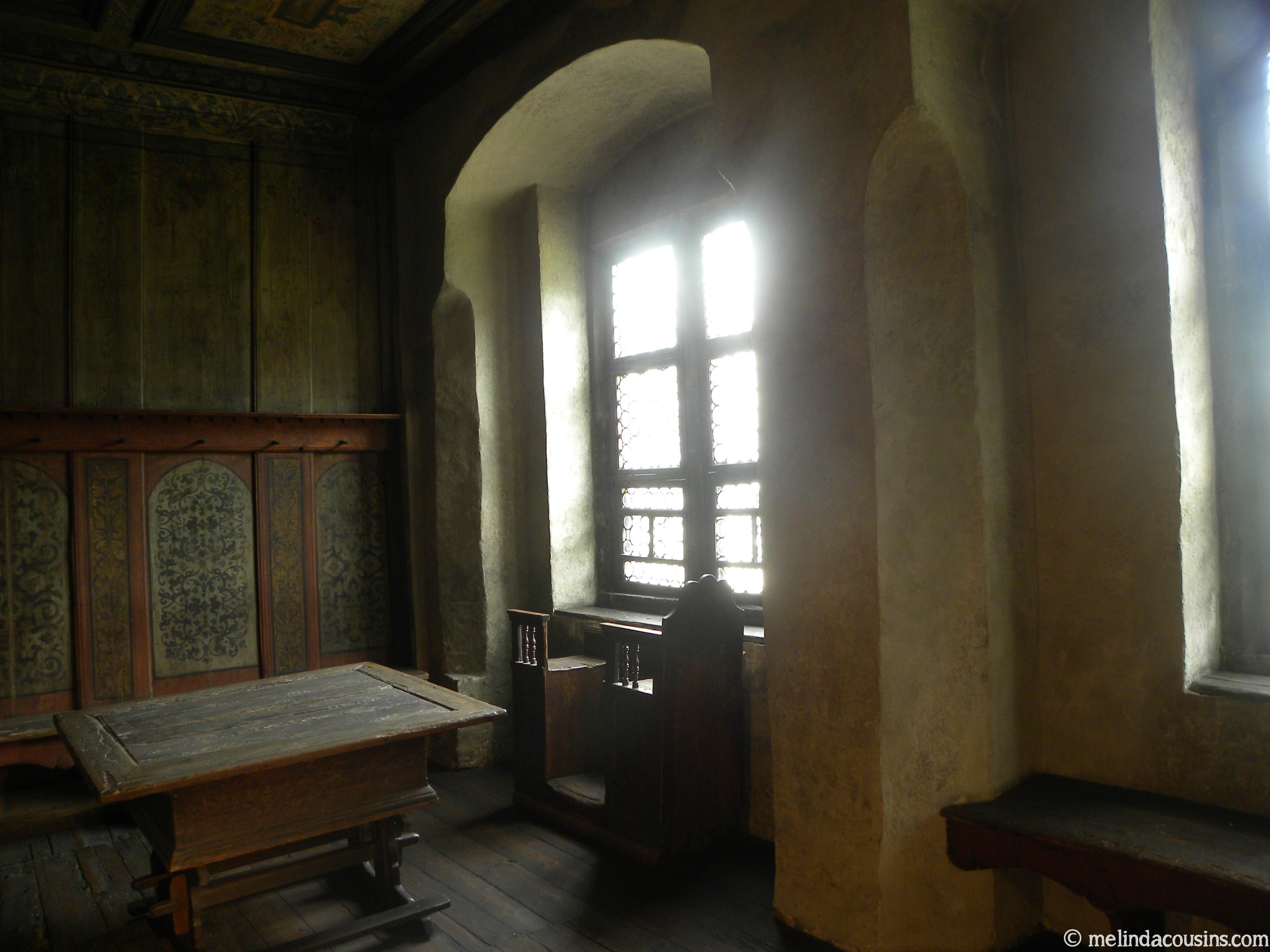
Iving room

… and the lecture hall where he and others taught the Bible …

Lecture hall

… as well as see the impressive lectern from which they spoke!

Lectern

There is also the oldest copy of his translation of the Bible into German …

German Bible

… a 1533 hymnbook with his pub-tune song “A Mighty Fortress” …
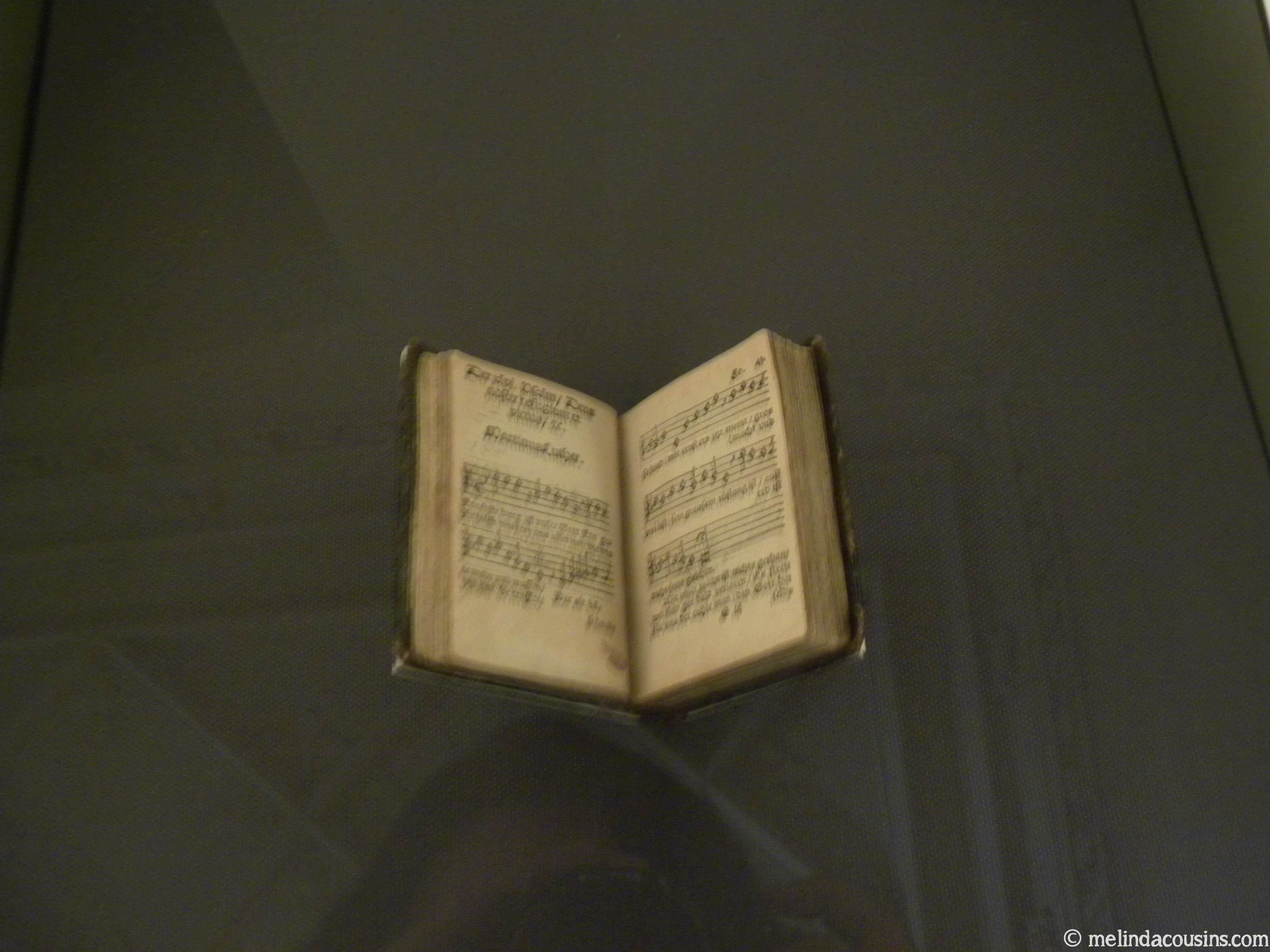
1533 hymnbook

… and a printed copy of his 1517 “95 theses” laying out his reasons for disputing church practices which distorted the gospel and gave people false hope.

95 Theses

For this, he was excommunicated by papal bull, a document naming him a heretic to be shunned.

Papal bull

St Mary’s church, (or the Town Church) where Luther often preached, dates back to the 14th century …

Church

… as does the smaller Corpus Christi chapel in its grounds.

Chapel

But the church where Martin nailed his theses is the Castle Church (All Saints’) at the other end of town.

Castle Church

Luther’s grave lies underneath the pulpit inside.

Grave and pulpit

 What did I learn from Wittenberg?

The heart of Luther’s story really starts in another city: Rome. With the need to raise funds to renovate the dome of St Peter’s basilica, the church of the time began selling indulgences, promising forgiveness of sins for a fee. This practice might seem quite medieval to us now, but it reminds me how easy it is for wealth and greed to corrupt the truth of the gospel and God’s free gracious gift offered in His Son. There is a reason that Jesus warned about the dangers of money.

A certificate of indulgence

Luther wrote his sermon for Sunday October 31, 1517 (95 theses on the power and efficacy of indulgences) and then, as was the custom of the day, posted it (in Latin) on the door of the church. As a fellow preacher, I am reminded of the need to be faithful in speaking the truth of Jesus Christ, even when it might be unpopular, and of the call to be bold in making the message clear and open for all to hear, even those who might oppose it.

Castle door

I was really struck by this letter that Luther wrote explaining his actions after the Diet of Worms (NB: diet = a decision-making gathering of the Catholic church; Worms = a town in Germany 🙂 ).

Letter

While I can’t read all his words, I can only imagine they are similar to the ones he spoke before that gathering in April 1521:

“My conscience is captive to the Word of God. I cannot and will not recant anything. Here I stand, I can do no other. May God help me.”

I hope that I might live my own life with the same passion and conviction for the truth of God’s Word.

What might our response to Ebola have to say about what it means to love our neighbours?

Recently, I’ve been thinking about the biblical principle of loving your neighbour and whether I really understand it properly, let alone put it into practice consistently.

Because I’m convicted that even our compassion and advocacy for others can sometimes demonstrate the insidious depths of our culture’s self-interest. When it comes to loving others, I’ve heard a number of people quote the principle this way “Love your neighbour as you love yourself.” The problem is that is not actually quite what the Bible says. The command appears nine times in the Bible, but each time it simply reads, “love your neighbour as yourself.” And it got me wondering what the difference might be.

Does hearing “as you love yourself” feed into the self-focus, and even narcissism, of our modern culture? Would the ancient readers of the Bible even have had such a concept as “self-love”?

More importantly, does “love your neighbour as you love yourself” too often become “love your neighbour after you love yourself”?

Certainly I have heard it explained that way – that you can’t love others until you learn to love yourself. But is that true? Or does it too easily become an excuse for not caring for others because we haven’t got all our own issues sorted out first? Does it stop us from reaching out with compassion to those in need because we subconsciously see ourselves as a higher priority than them?

So, what might be the difference between reading the call as to “love as you love yourself” and to “love as yourself”? Some people might say there isn’t one. But I wonder …

The Hebrew preposition כ used in Lev 19:18 is found all throughout the Old Testament in comparisons, similes and metaphors. Could it be that the idea of loving your neighbour as yourself means actually seeing them as you? Loving them as if they actually were you rather than seeing them as “other” or “outsider”? Certainly Leviticus 19:34 seems to lead in this direction, where the same command is applied corporately to foreigners in the land of Israel – they are to be loved not as outsiders, but just as if they were native-born, insiders.

What would it look like to truly love those who we think are not like us as if they were us? And would that change the world’s response to what is going on right under our noses every day?

So what does all this have to do with Ebola? A friend tweeted me this graph yesterday about the number of people who have died in Africa over the last 8 months. I don’t know about you, but I find it very confronting.

Ebola stats
Image source

It’s confronting to consider the global panic over Ebola in comparison to other diseases and to ask the question, why? What makes the difference in what we choose to care about?

(It’s also confronting to be reminded that we somewhat condescendingly talk about “Africa” as one place with a single story rather than recognise the huge variety of experience within its 54 countries, but perhaps that’s a separate issue).

Could it be that our concern, fear and panic around Ebola is more to do with ourselves than those who are dying from it? At our core, are we afraid of Ebola because if we caught it, we might die from it, whereas the other reasons people across Africa are dying every day don’t bother us so much because we know they are unlikely to happen to us? Is this an example of “loving as we love ourselves” because subconsciously we know if we were hungry we would just eat, whereas if we caught Ebola we might actually have to confront our mortality?

Is this why the death of one person “like us” gets so much more attention than thousands who we see as “other”? (See Rob Oakeshott’s letter to Thomas Eric Duncan for some challenging questions about that)

These are just some of my questions. The more pressing ones are these: How can we respond differently? How do we overcome such deeply ingrained self-interest that it even comes out in the way that we think we are showing compassion and care for others?

We need a whole new paradigm. As a Christian, thankfully I remember that I already have one. Jesus doesn’t just affirm the commandment to love our neighbours as ourselves.

Jesus redefines who our neighbours are, and even calls us to love those we see as our enemies in the same way. And He sets a whole new standard for measuring what love looks like.

In the end, whether its “as you love yourself” or “as yourself”, using ourselves as the standard for how we choose to love others seems to leave us open to excuses and provisos. Jesus gives His disciples a new commandment, using Himself as the standard for what love for others is to look like. “Love one another as I have loved you.” Just imagine if we could begin to show that kind of incarnational, self-sacrificial, servant-hearted love – love that puts others above ourselves – in the way we respond to the every day tragedies of our world. How different might that look?

Seeing things from a new perspective (or, today would be a good day to be in Cappadocia)


DSCN9318

I have a just a few (thousand!) digital photos from my travels 🙂 But the one above is what I have as a background on my iPad. I love the photo itself, but I also love what it reminds me of. The day that I had the privilege of hot-air ballooning across the surreal landscape of Cappadocia.

DSCN9283

This remote part of Turkey has a fascinating, alien-like landscape that is an amazing sight to behold in and of itself. What made it even more intriguing was seeing it from a new perspective as we floated above (and even between) it.

dawn

In some ways it is nothing out of the ordinary, just rocks and sky, dirt and trees. But we spent a tranquil couple of hours in the air, just wondering and marveling at the earth below us.

DSCN0002

Watching the sunrise and the shadows play. Listening to the stillness and contemplating the world in all its varied splendour.

DSCN9287

It was a beautiful exercise in seeing things from a different perspective and these photos remind me that that is not a bad metaphor to take into other areas of life.

sunrise

With photography, some of the most beautiful and memorable images from around the world have happened when someone took their camera and looked at things from a slightly different angle, gaining a new perspective on what is seen.

DSCN9326

Some of the best inventions and innovations in the world have come about when someone dared to look at an age-old problem from a new perspective.

DSCN9325

I think seeing with a different perspective is a helpful picture of what study is all about. I love the insights I gain when I take something I know a little about, and ask new questions, or bring new perspectives to bear on it, and suddenly more that was previously unknown is revealed.

DSCN9320

I hope that in my vocation, as I teach and preach, that I am able to help others look at things with a new perspective. I teach the Bible, which doesn’t change. But we can always look at it and listen to it in new ways, and God speaks amazing truth when we have our perspective shifted, even if only ever so slightly.

DSCN9307

And in the end, I think is a pretty good picture for what my faith in Jesus means to me. I spoke at a youth group Q and A night on Friday, and one of the questions was “What difference does being a Christian make to your every day life?” My answer was that it completely changes not only the way I see the world, but the very way that I understand what it is to be in the world, and therefore the way that I am in the world.

DSCN9297

I have a new perspective on who I am, and how valuable people are, and what the purpose of life is, and what the goal of history is, and how I want to live all of that out. I have been transformed and I want to be a part of seeing the world transformed.

DSCN9293

Today, like every day, is a good day to stop and look at the world around from a new perspective.

DSCN9313