The Ministry, Theology and Culture faculty (of which I am a part) at Tabor Adelaide has recently started a blog called “Manna” seeking to provide ideas, resources, and challenges to thinking for those in ministry.
This is an article I wrote earlier this week, as I continue to think about the assumptions and presuppositions many people have about the Bible and how they might help or hinder our engagement with it. I’d love to hear what you think, and you might also like to check out some of the other posts at Manna written by my wonderful colleagues on a whole range of topics.
By Rev Melinda Cousins, Biblical Studies Lecturer, Tabor Adelaide
That might seem like a question with a very obvious answer. I’m holding a copy of the Bible in my hands right now. It sure looks like a book. It has pages and everything. But I wonder what unspoken assumptions viewing the Bible as a book might have on how we engage with it. In my experience of reading books, they generally work something like this:
Today, the 25th of April, is for many Australians one of the most significant dates on the calendar. All week I’ve heard the media talk about it as a sacred day. This morning many Australians arose before dawn to participate in services of remembrance. Veterans and their families will march in parades, and it’s a public holiday to commemorate the date.
Many would say that the story of the Anzacs has become foundational to Australian culture. It has become what sociologists call our national myth. Every nation has its own stories, its own celebrations and its own myths. The United States chooses to celebrate events like Independence and Victory. The Swiss celebrate their neutrality and their humanitarianism. The Jews commemorate their endurance despite overwhelming persecution. The Japanese esteem the honour and nobility of the samurai.
As Australians (and New Zealanders), we choose to mark a day on which we suffered a terrible defeat. When thousands of lives were lost in a faraway place where many would say they never should have been in the first place. To many outsiders it seems like a very strange national holiday.
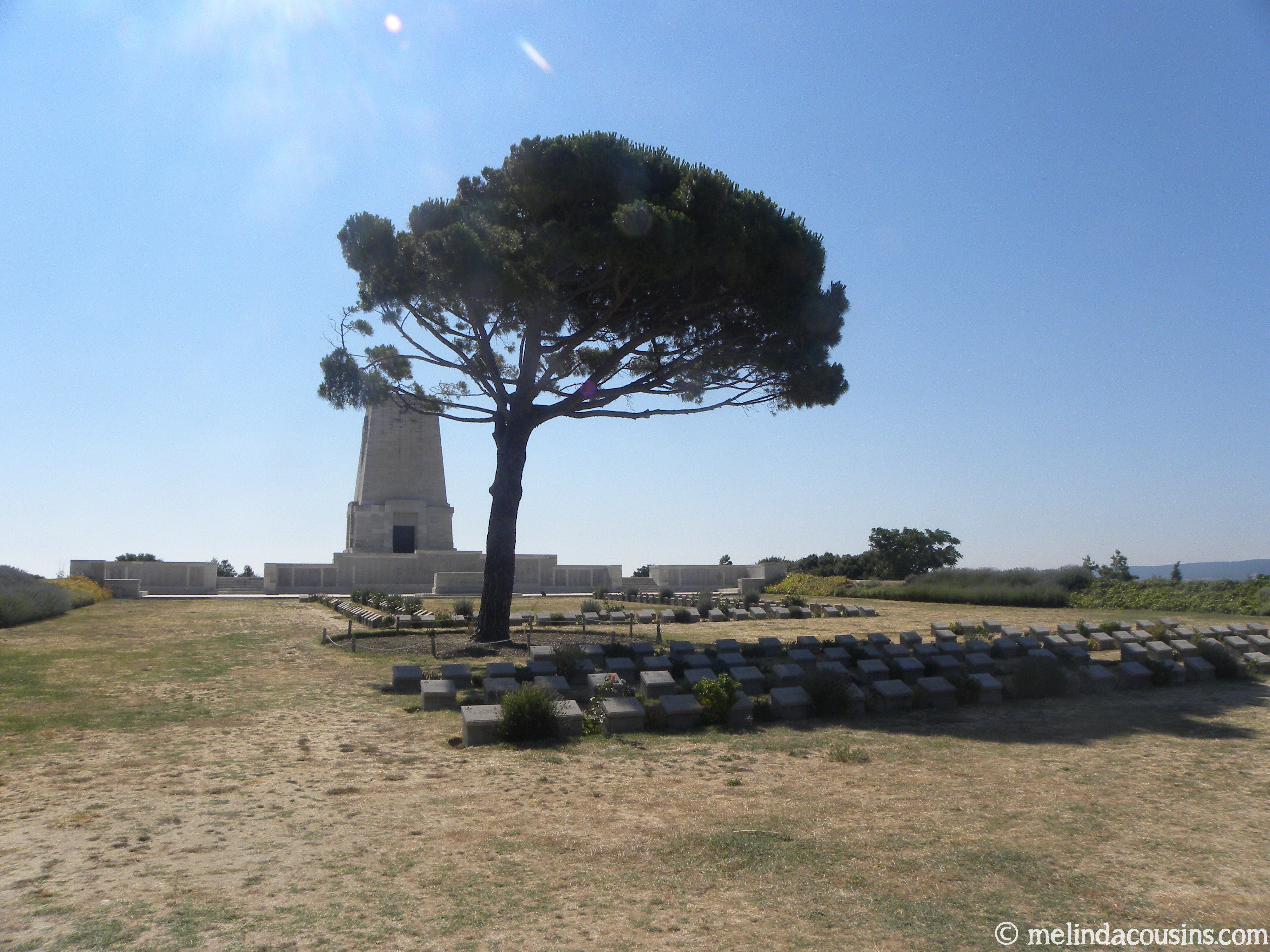
Lone Pine Cemetery, Galllipoli, Turkey
But it is more than the events of that day at Gallipoli 99 years ago that this day is about. For many Australians, the Anzac story or legend has become a story about the kind of people we want to be known as. The values of the Anzacs are tied up in concepts like mateship and loyalty, with hints of larrikinism and good humour, and ultimately the willingness to give one’s life for others. This is our national story. And I think it provides a fascinating window into our culture.
The thing about national myths or stories is that they are both inspirational and aspirational.
They tell us what we value, and they tell us how we would like to see ourselves. This is who we as Australians would like to be. We know that on the world stage we are not the most powerful, or the most efficient. But we do want to be the ones who will always play fair, have a go, stand up for one another, and give all we have to give. These are human qualities to be admired by everyone, but there is something quite unique in our Australian culture that prizes them in a way that not all other nations do.
When people prepare to serve in other cultures, they learn about ‘contextualisation,’ which is basically trying to find ways to share God’s love that are particularly relevant and connected to the culture in which they find themselves. So I find it interesting on this day to think about how we might find ways to express and share God’s love that are contextualised to our Australian culture. How might the good news of Jesus resonate with people who value ideals like mateship, loyalty, egalitarianism and sacrifice?
The truth is that there is always a gap between how we would like to see ourselves & how we actually are.
We do not live up to our own ideals. We want to value mateship, but there are times when life gets busy and we lose touch with our friends. We want to value loyalty, but there are times when we are pushed by our own needs to put ourselves first. We want to value equality and egalitarianism, but deep down we often treat those who are like us better than we treat those who are different. And we’d all like to think that in extreme circumstances we’d be willing to lay down our lives for our family & friends, but in our everyday mundane circumstances we sometimes find it difficult to lay down just a bit of our time or money for their benefit.
But still we remember and celebrate and aspire. We esteem and honour the ideal of what we hope we could be. And what many Australians respect and revere as the ideals and values of the Anzacs, are actually what Christians believe are ideals and values ultimately found in Jesus Christ alone.
We believe there is a man who values mateship, who is the best friend anyone in this world will ever know. There is a man who values loyalty, who has promised to stick by us through thick and thin & will never renege on that promise. There is a man who values equality, who treats each one of as valuable & worthwhile regardless of where we come from or what we have achieved.
And there is a man who was willing to lay down His life in our place.
The gospel declares that Jesus is the One who fulfils all of our aspirations. That what we are looking for in others, what we would like to think we can find in ourselves, ultimately we will only find in Him.
It seems to me that the Anzac story provides a window into our own culture, a culture that still longs to find meaning and hope and values, but which is unaware of the true source of all that it is looking for. For those who know Jesus Christ, this puts us in the same situation that the apostle Paul found himself in when he visited Athens. Paul commended the Athenians for their worship of an unknown God. He recognised that they were seeking, hoping, aspiring to something greater than themselves. But he also wanted to tell them the truth: that what they were looking for could be found in Jesus.
So too, we can commend and affirm the desire in Australian culture to remember and to celebrate the values that the “Anzac spirit” seeks to encapsulate. But the challenge for followers of Jesus is to find ways to proclaim the truth that these values and aspirations point us to the need for someone who can fulfil them in a way that no one else ever has or ever can. That Jesus, dare I say it, is the true Anzac, the one we should be remembering and worshipping. Perhaps that’s a risky image to use, but the Bible uses risky pictures and metaphors for God all the time as it seeks to find ways for people to understand who God is and how He wants to relate to them.
Perhaps I’ll be accused of hijacking a secular event and trying to bring religion into it. If so, I make no apologies for that. Because as a follower of Jesus, as a Christian first and foremost, I believe that Jesus is the only hope for the whole world. And He calls me to bring His good news into the lives and worlds of my friends, and my neighbours, and my nation.
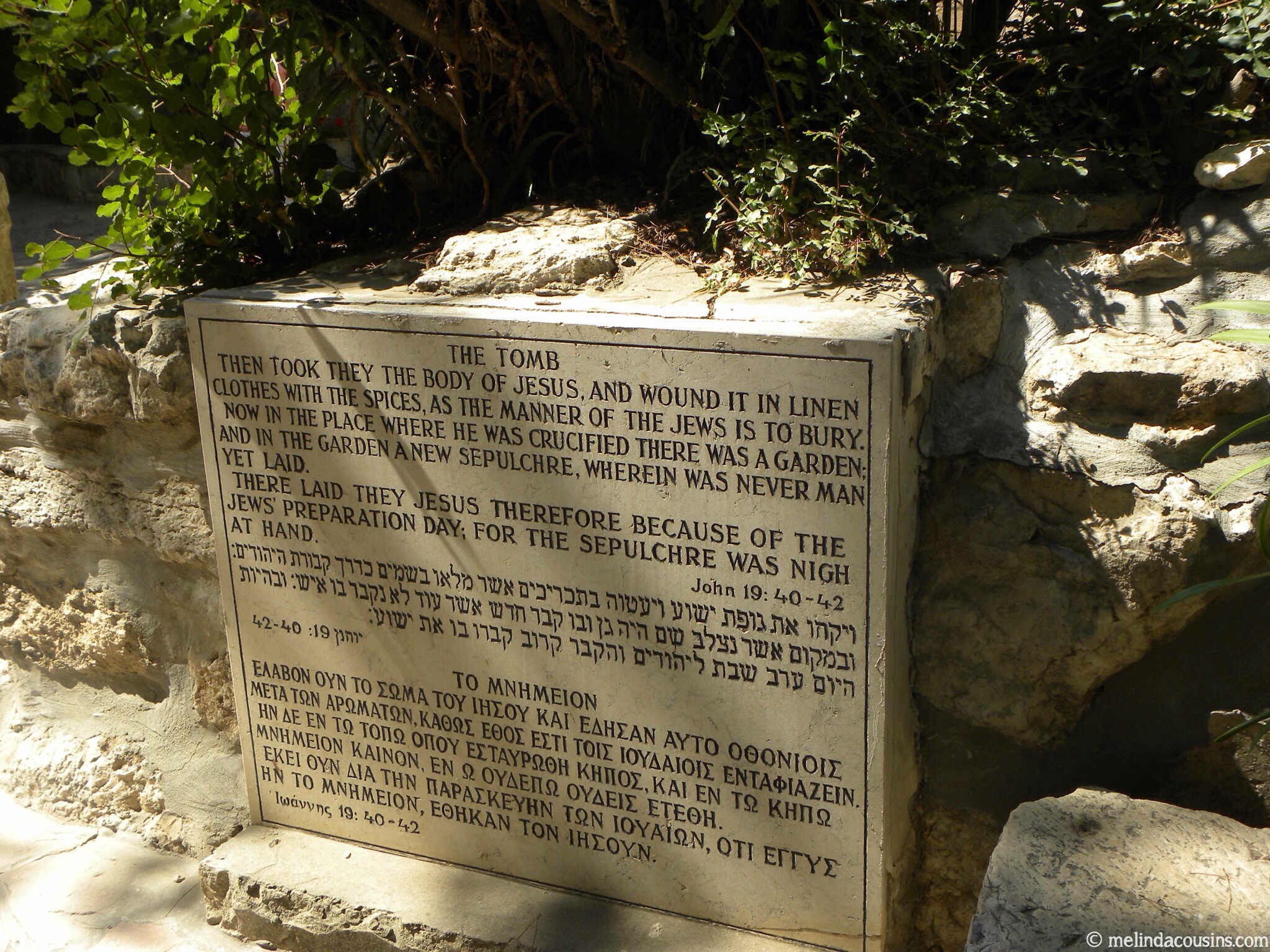
Resurrection Sunday. Easter. The weekend we celebrate the turning point of history, the fact that everything from then on is different, because Jesus was raised to new life. Although I’m sure actually being at the Garden Tomb just outside the current Old City of Jerusalem would be crazy busy at this time of year, today is a great day to reflect on visiting that beautiful place.
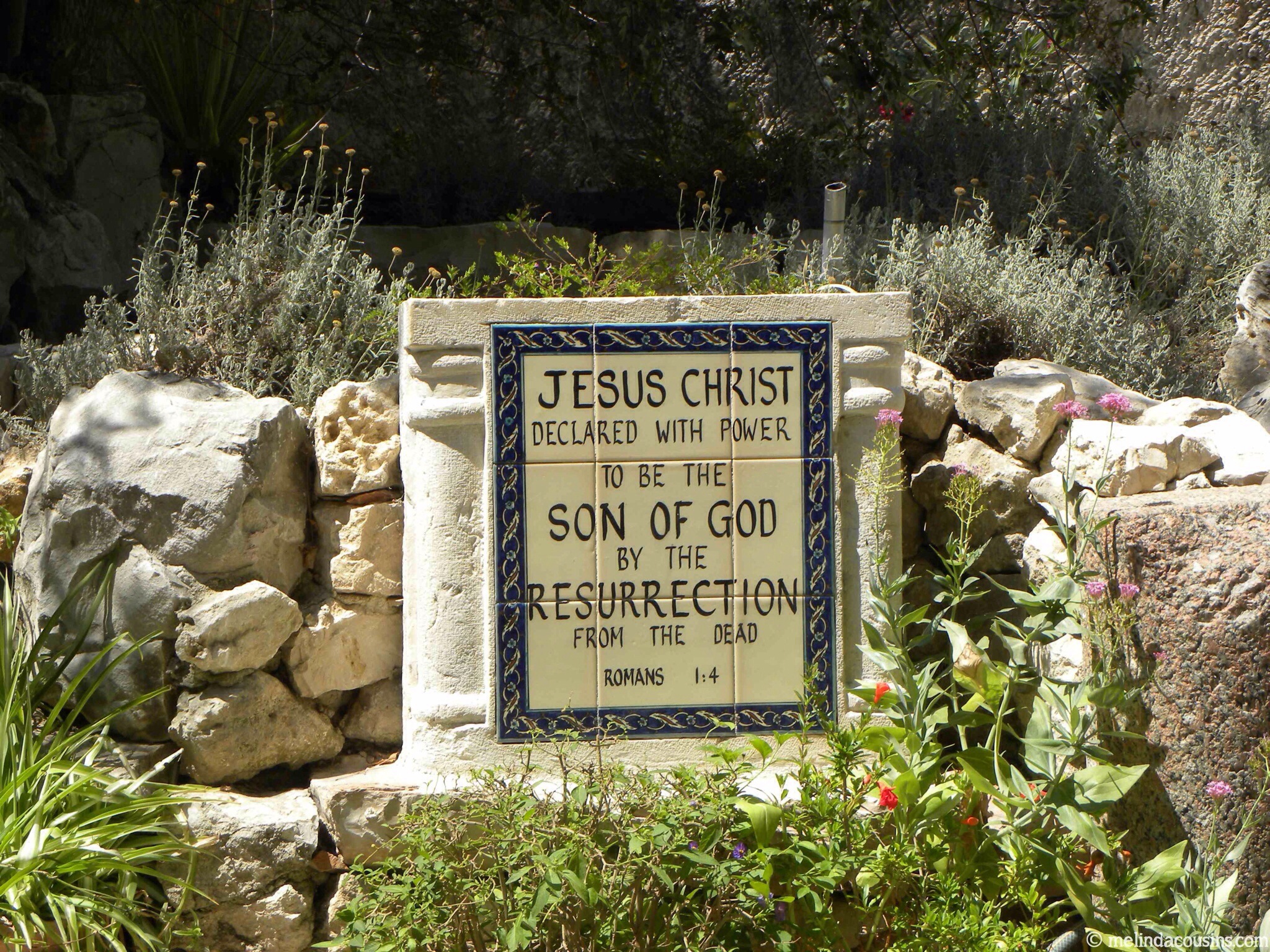
The Garden Tomb is a peaceful oasis in the midst of the bustling city; a good place to sit and reflect on what happened, whether here or somewhere nearby.
The traditional site of Jesus’ tomb and thus resurrection is inside the Church of the Holy Sepulchre, inside the walls of the Old City. But many have noted that it doesn’t totally fit the historical story, and looked for an alternative site.
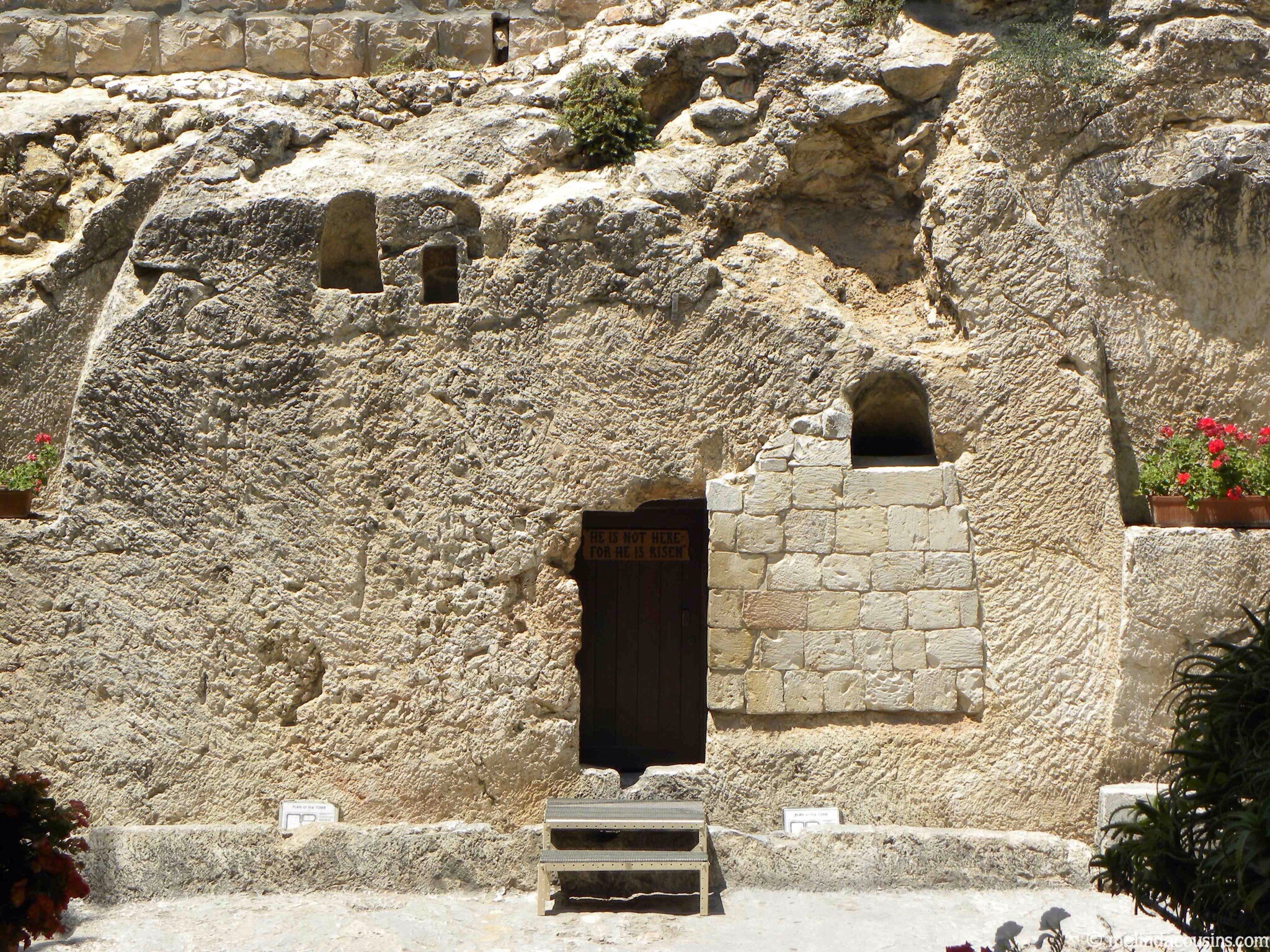
The Garden Tomb was discovered in the 1860s, and has many features which meet the description of the kind of tomb in which Jesus’ body was laid. It is hewn out of the rock, and has a channel in front for a stone to be rolled to close it.
Inside there is a burial chamber as well as a weeping chamber for mourners.
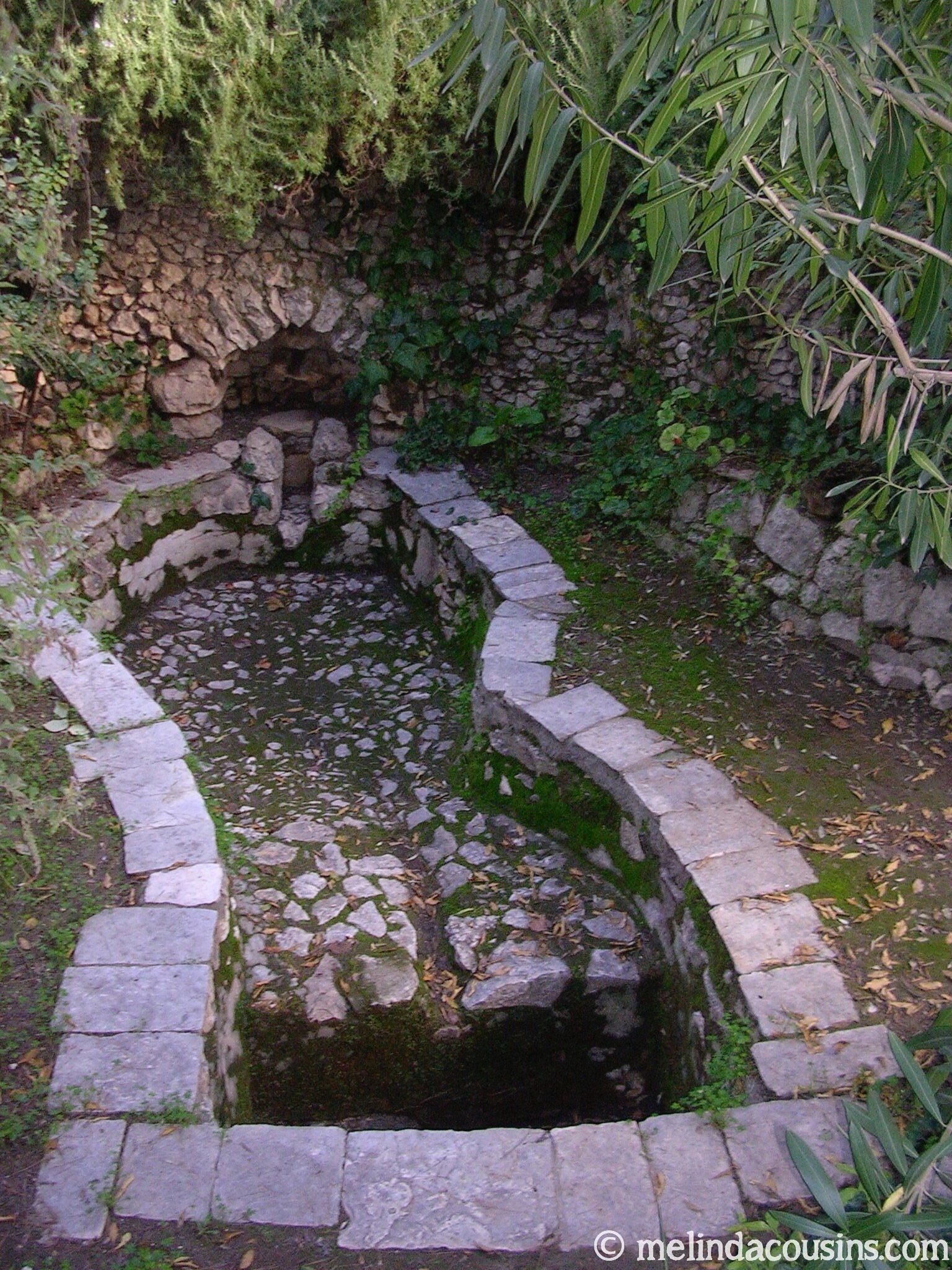
A large cistern and a wine press nearby indicate that this tomb was likely located within a garden in the first century.
So, could this be the actual tomb belonging to Joseph of Arimathea in which Jesus was buried for three days? It’s possible. But unlikely.
But it doesn’t matter.
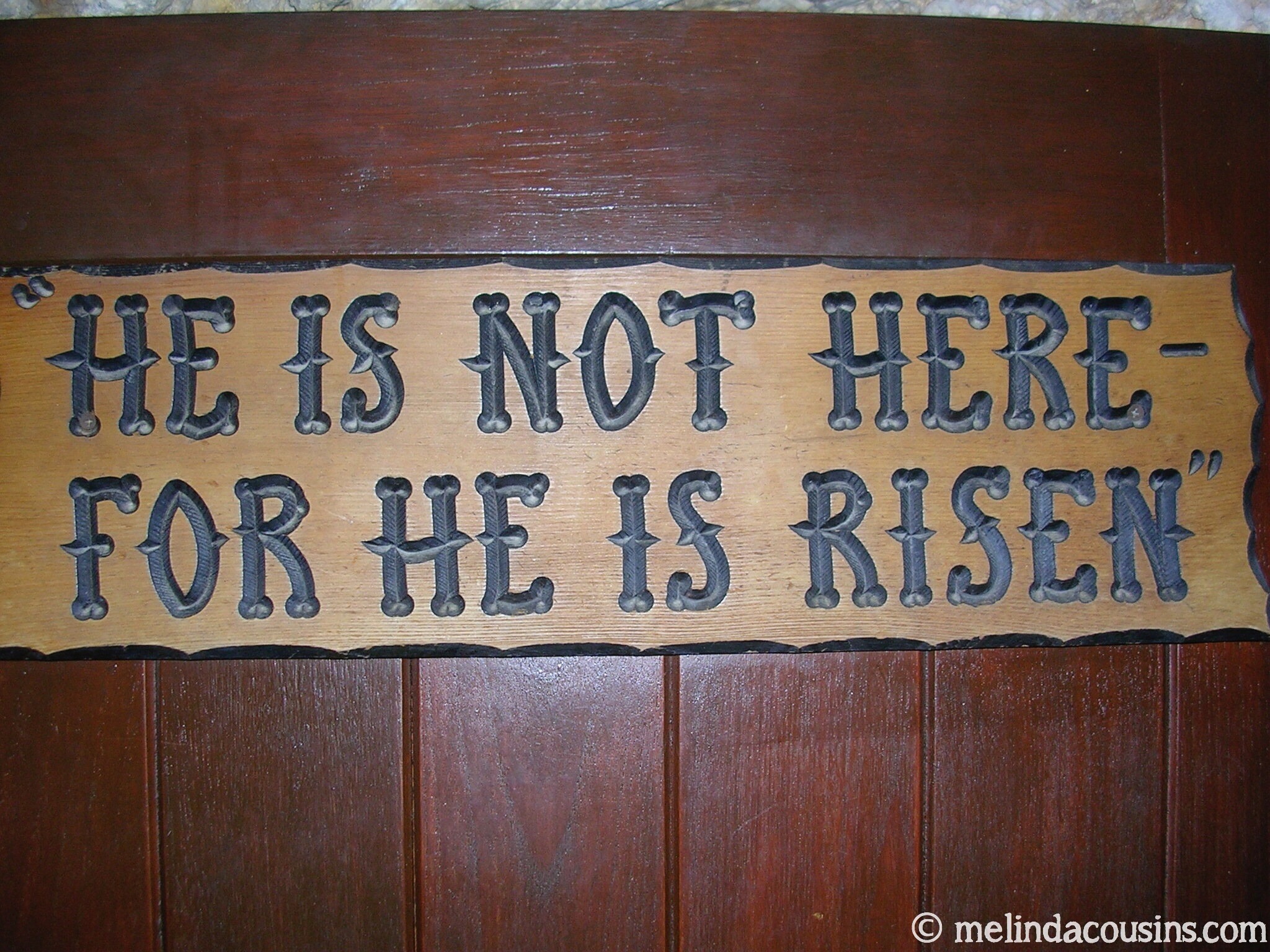
My favourite thing about this place has always been this sign on the door to the tomb. Jesus is not in this tomb, or any tomb. There is no need to locate a tomb for Him.
Sure, it’s lovely to have a place to visualise what it may have been like, and to sit and reflect and remember. But the resurrection of Jesus isn’t about a place and time in history. It is about a reality that changes our very understanding of history.
For many years, Christian apologetics focused primarily on the historical evidence for the resurrection. This is helpful and interesting, but if that is as far as we go, then we have missed the central point of what we are celebrating this weekend. Jesus’ resurrection from the dead is the breaking into our world of God’s kingdom and a whole new way of life. Because of Easter Sunday, everything is different.
To say, “I believe in the resurrection” is to say so much more than that I believe that Jesus rising to new life was a historical event that actually happened two thousand years ago. I believe it was and it did; but to believe in the resurrection, to put my trust in it, is to choose to enter into the new life that it makes possible. It is to believe that that kind of life is available to everyone here and now, despite all appearances to the contrary.
N. T. Wright says, “Jesus’ resurrection is the beginning of God’s new project not to snatch people away from earth to heaven, but to colonise earth with the life of heaven.” Resurrection life is life where miracles are possible, where justice is proclaimed, where renewal is experienced, where righteousness is lived out. It is the breaking in of heaven here on earth, and because of Jesus, it is available to us right here and now.

 By Rev Melinda Cousins, Biblical Studies Lecturer, Tabor Adelaide






 Thinking Out Loud ...