Category Archives: Questions

Back to blogging: my surprising #top3 posts list

I ended up taking a much longer break from blogging than I planned to. Like most things, once you get out of the habit, it’s much harder to re-start. (Although I think I did have a fairly good excuse – getting my thesis finished!)

But I’ve been thinking it’s time to start regularly blogging again. Thinking about blogging has led to me reflecting on my experience of blogging so far, and in particular some of the surprises I have discovered in seeing the popularity and responses to some of my posts. In response to that, and to kick start my return to the blogosphere, here is a list of my “top” (i.e. most commonly read) blog posts and the possibly surprising reasons why they have been popular …

#1 Can we please stop saying “Charity Begins At Home”?

This is by far my most commonly read post. Every single day for the past year, it has averaged between 20 and 50 views. This intrigues me. It was one of my earlier posts, and was born out of my own frustration at the frequent misuse of the saying. What the post’s popularity seems to suggest (along with the fact that most people come to it via a google search) is that although the phrase is frequently thrown around, a lot of people don’t know what it means or where it comes from, and there apparently aren’t too many answers to those queries available! I’m glad I can provide a helpful information service of some kind. 😉

#2 Beauty in the Dry Season

This post has been popular for quite a different reason. Written as part of my travel reflections, my intention in writing it was to reflect on different types of beauty out of my experience of visiting Victoria Falls in Zambia at both peak water time and during the height of the dry season. Unfortunately, some of my photos showing the lack of water during the dry season were picked up by a couple of other blogs and used as “proof” that there was a desperate drought in Africa and even as a “sign” of the judgment of God on the world!! It was quite bizarre receiving comments and emails from people all over the world, some wanting to check whether the photos were real or photoshopped (they are absolutely real), others wanting to warn me that they were being used without my permission (which bothered me less than the fact that they being used in a way that directly contradicted what I had written about them), and others congratulating me on getting the ‘truth’ out (which was disturbing because I had done no such thing!) I hope those who continue to come across some of the false information actually read what I wrote and get a different perspective.

#3 How does the church respond to #yesallwomen?

This was a post that I felt very vulnerable writing and so it was quite confronting to realise it had been much more widely read than my posts usually are. But it is also the one I am most pleased got attention, because of the ongoing discussions it started. Written in response to a twitter hashtag, it contributed to a conversation that has brought out into the open the experience of too many women that too many men were unaware of. It is certainly the post that I have had the most in-person conversations about and it has been a privilege to hold other women’s stories as they have been prompted by my vulnerability to share their own. It has also been incredibly encouraging to have people seek to respond to the ‘awareness raising’ that blogging can do with tangible, practical action. I trust this will only continue.

Three very different posts, and three very different reasons for the attention they have garnered.

What have I learned from them?

From the first, I’ve learned that you never quite know what is going to be helpful for people and that blogging can apparently have an educative role. From the second, I’ve learned that once you put something on the net you can’t control what people do with it and that blogging can get you into unexpected trouble. And from the third, I’ve learned that being open and vulnerable has incredible power and that there are always people who can hear you and say “me too.” I’ve also learned that it is possible for blogging to transcend the digital page and open up amazing and unexpected opportunities. All of these are helpful reminders as I re-embark upon this journey of “thinking out loud.”

So, just in case anyone has wondered why I’ve been quiet, or whether I’d given up blogging altogether, this post is my way of saying “I’m back” and of getting myself back into the habit of posting regularly again. I’m planning a similar mix to before – responses to current issues (whether global, local or just in my own head!), travel reflections, theological ponderings, political and social musings and lots of questions of all kinds. It’s a useful process for me and I’ve missed it. I hope some of you might be looking forward to engaging with the things that I think out loud about that interest you along the way. And I’m looking forward to seeing what unexpected responses are yet to come …

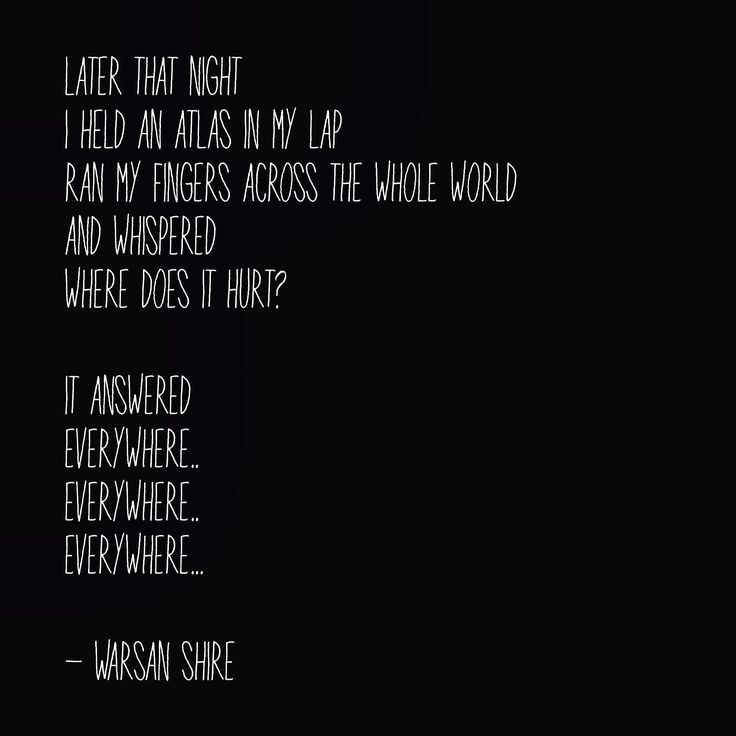
Responding to evil in the world: do we accept what we expect or is there another way?

The last few days have seen some terrible things happen in various places around the world and many words written and spoken in response. Words of grief, words of fear, words asking questions, words expressing unease. I have hesitated to add my words for two reasons. The first is that I’m not sure I have much new to say. The second is that I worry that by saying something, assumptions will be made about all the things I leave unsaid.

But I called this blog “thinking  out loud” because for me it is often in sharing my questions that I begin to discover answers (or more questions!) So what I add here are not my first thoughts nor my final thoughts, not my only thoughts nor my complete thoughts. Just something I’m still working through and out …

This is by no means a comprehensive list, but here are some of the tragic events of the last month or so.

  • On October 5, 57 people were killed when a car bomb went off outside their local market.
  • On October 10, 102 people were killed as they attended a rally for peace in their capital city.
  • On October 14, 42 people were killed when suicide bombers entered their place of worship, and on October 23, another 27 were killed in similar circumstances in the same country.
  • On October 31, 224 people were killed when their aeroplane was brought down by an act of terrorism.
  • On November 12, 43 people were killed when suicide bombers detonated explosives in a suburban neighbourhood.
  • On November 13, over 129 people were killed due to a series of coordinated terrorist attacks in cafes and clubs.

By not including the places where these tragic events happened, they all sound the same. And on very many levels they are the same. All were acts of terrorism that resulted in the deaths of innocent people going about their daily lives. But in one important way, they are not the same at all.

One of the questions that is being asked is why only the last of these has generated wall to wall news coverage, the use of lights and flags on iconic buildings around the world as signs of solidarity, and statements of sympathy and determination to avenge by numerous western world leaders including the US President and the Australian Prime Minister.

I’m not sure there is a simple answer. I know there is no comfortable answer. Because for me, the question has to be personal. I could blame the media for making more of some things and not telling me about others, but I’m pretty sure their reasons are not that different from my own. Why did I have a stronger reaction to one event than I did to the others?

First, if I’m honest, there is the “it could have been me” factor. A place that I have recently been to, a place I am familiar with, a place that feels similar to where I live, people whom I somehow see as more “like” me… this is easier for me to sympathise with. I wish that was not true, but it is. I want to keep working hard to try to overcome that natural tendency I see within me. I need you to help me with this.

But the second thought I have had is about expectations. Are there some places in the world where these events feel unexpected to me? And therefore some where subconsciously they are, in contrast, “expected”? Have I somehow in my mind divided up the world into places where I think “this kind of thing happens” and places where I think it doesn’t?

And here’s the question that really horrifies me.

If there are places where I think these events are to be expected, does that lead me to assume that there are places where these events are to be accepted?

I hope not, but I fear if I’m not careful that may be my subconscious attitude. And I wonder what the alternative is.

Is it our level of expectation or our level or acceptance that needs to change? As a follower of Jesus,  I think, perhaps seemingly contradictorily, the answer is both. And that somehow, it is in living in the tension that expects evil and yet does not accept it, that hope is found.

Jesus teaches me that evil and the resultant suffering are to be expected everywhere. We live in a broken and hurting world and even the places we like to pretend are in some kind of protective, prosperous bubble are in reality fragile and vulnerable to the power of sin and darkness.

At the same time, Jesus calls me to act and speak out in a way that does not just accept evil and its resultant suffering anywhere. That works to overcome and respond with compassion and love to all people in all places so that His light might be seen where it is desperately needed … which is everywhere.

a669b1ba2d37bad1a89d6319ed642ab8

How do we decide what to care about?

This world we are living can be a heart-breaking place. As I write this, thousands are dead after an earthquake in Nepal and many, many more face health and housing crises in the aftermath. Just last week, 28 Ethiopian Christians were cruelly murdered for no reason other than their faith. According to the UN, there are now 4 million registered Syrian refugees who have fled from the persecution and destruction wreaked by ISIS.

Like many other Australians, I was horrified this morning to hear of the brutal executions of Andrew Chan and Myuran Sukumaran. There are people I know personally who knew them personally and my heart is heavy for them – I can’t even begin to imagine what their families are feeling.

But I was also horrified that I only learned the plight of Mary Jane Veloso the day before she was to be executed. Why have I not been hearing her story for months?

Similarly, while I rejoiced this morning with the news that 293 women and girls have been rescued by the Nigerian military from their appalling captivity to Boko Haram, the fact that none of these are the girls kidnapped from Chibok over a year ago reminds me that there are many more stories of suffering happening in that place than the one I have heard about.

Which leads me to these questions: How do we decide what to care about? In a world with so much suffering and injustice, how and why do some situations become known and provoke massive outpourings of response, while others go unheeded? Who decides, and is it okay to let someone else decide for us?

I’m not sure I have answers to these questions, but that’s okay. My goal here is simply to do some thinking out loud.

Certainly the media can be an easy target, as “they” appear to choose which stories we hear and which we don’t and we can’t always be sure what their motives are. I do wonder, however, if a big part of their agenda is presenting us with the stories they think we want to hear. Which puts the question back on us and our self-interest .

Social media can be seen as playing a helpful role in allowing people to have more of a voice and to probe beyond what those with seemingly big corporate agendas are telling us. Certainly the fact that I have a handful of friends on facebook who live in Nepal has helped me feel like I have slightly more insight into the realities of what is happening on the ground there.

And yet it is often difficult to understand why some stories go viral and so many others don’t. Why do we collectively choose to care about some things more than others?

Social media also seems to feed into a kind of “Compassion Fatigue” – where we are so overwhelmed by the sheer amount of suffering in the world that we just want to crawl under the covers and watch videos of cats. It also seems to lead us towards setting up Compassion as a Zero Sum Game – where we assume that by caring about one thing someone is by default not caring about something else, and we then attack them for that perceived lack of compassion.

Two passages from the Bible are challenging me about these questions today.

The first is in Deuteronomy 15, where Moses is explaining to the people of Israel how they are to put into practice the call to respond to the poor and needy. One of the things I love about biblical Hebrew is how abstract concepts are often spoken about by grounding them in physical, concrete, realities. So when he speaks about being compassionate and generous, he literally talks about what you “see with your eyes” and what you can “reach with your hand.” To me, this suggests that the call to respond to the poor and needy is in some way contingent upon us and our situation. If we see injustice, if we can reach out to suffering, then we are called to do so. Once we have become aware, and we know that it is in our ability to act, to turn away is in and of itself an act of injustice.

The challenge we face in our global, interconnected world is that we have the ability to see injustice and need in so many places, and we have the ability in our hands to make a difference in so many ways. We have readily accepted the privilege of knowledge and information and connection that technology has brought us, but I’m not sure we have so readily accepted the challenge.

The second passage is the very well known story Jesus tells in Luke 10. The parable of the Good Samaritan. Jesus tells the story in response to a man asking a question not that dissimilar from the ones I am asking today. “Who is my neighbour?” “Who am I to care about?” And Jesus’ answer is quite confronting. Your neighbour might just be the last person you expect, the person so unlike you, the person who hates you, the person who has no connection to you at all and no ability to repay you for your kindness.

As I continue to scroll through my facebook or twitter feed, as I click on the links people send me, as I engage with the stories of what is happening in our world, what does it look like for me to respond to these my neighbours, whether their story is viral or hardly known? What can I do today with the images I have seen with my own eyes and the resources I have in my own hand to show compassion and justice?