Category Archives: Questions

How can you make a difference to world poverty this International Women’s Day?

Tomorrow, March 8, is International Women’s Day and if you’re wondering why that matters, you should read this post from last year. Globally we still have a long way to go to see an end to oppression and injustice for women and girls. But if you want to make a difference, or you want to help end world poverty, there is one key strategy I urge you find out more about and consider contributing to.

I recently celebrated a milestone birthday, and while I wanted to invite a whole bunch of friends to come together and celebrate, I didn’t want them to feel like they should give me gifts, particularly when there really isn’t anything I need. So instead, I asked them to make a donation towards something I am particularly passionate about: the education of girls. My friends blew me away by donating over $2,200 to a project focused on this significant strategy.

Why the education of girls?

For me personally, it brings together a number of my passions. As a church pastor and a theological college lecturer, I’m a teacher – that’s my vocation. I’m also a lifelong student – I have been privileged to have access to education at primary, secondary, tertiary and postgraduate levels. I’m also a woman (obviously) and I’m passionate about seeing girls and women reach their full potential. Add to that I’m a traveller who has visited communities around the world struggling with poverty, and I have seen first hand how the best strategy we know of to break the generational cycle of poverty is education, and in particular, the education of girls. And finally, I’m a follower of Jesus who believes that I am called to proclaim and work for His peace, justice and righteousness in the world today.

Currently there are up to 65 million girls in the world denied education simply because they are girls. And that is a problem not just for them personally, but for their communities, their nations, and ultimately, for all of us. Because educated girls are not married off while they are still children. Educated girls are less likely to have children while they are still children themselves. The children born to educated girls are 50% more likely to survive past age 5. The children of educated girls are much more likely to go to school themselves. Educated women are able to support themselves and their families, and much more likely to invest what they earn back into their communities. It’s a win-win-win-win-win proposition. It really should be a no brainer.

So here’s my challenge to you this International Women’s Day.

Find out more about how the education of girls can transform the world and consider how you can play a part in it. Here are some ideas for you to watch, listen to, think about and contribute to:

I showed the video below from the US government at my birthday. It gives a brief but powerful overview of some of the incredible stats on how educating girls can make an exponential difference.

Another helpful overview video comes from the girl effect.

Earlier this week, I joined with politicians, celebrities, and everyday women all over the world in posting a Throwback Thursday photo of myself at school.
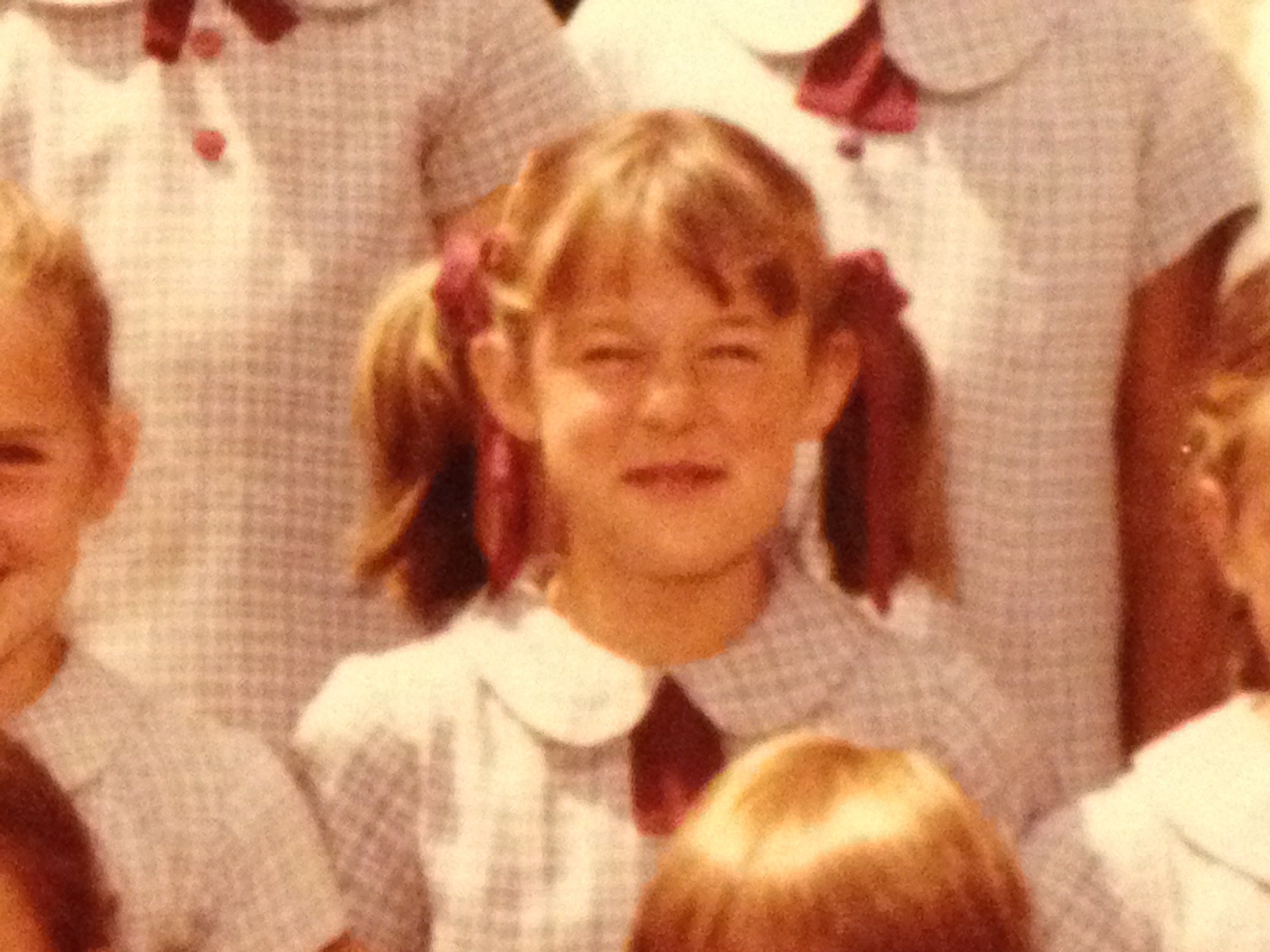
Melinda Year 3
Me in Year 3*

This was in support of Up For School, who are hosting a number of IWD events around the world, and have what they hope will be the world’s largest petition – one I’d encourage you to sign – urging our governments to keep the promises they made in 2000 to ensure the right to education for those who are denied it.

http://www.youtube.com/watch?v=ziglsH2mecI

There are plenty of organisations working in developing countries to overcome barriers to girls’ education. Making a donation to one of them will make a huge difference. This is a link to World Vision Australia’s Education for Girls project.

And finally, if you’ve got a bit more time to learn more, watch one or more of these inspiring TED talks by people like Ziauddin Yousafzai (Nobel Peace Prize Recipient Malala’s father) or Liberian Nobel Peace Prize Recipient Leymah Gbowee.


* Just in case you’re wondering, I’m not screwing my nose up in the photo because I’m at school. I loved school! But as my fellow Aussies should understand, there was a fly on my nose I was trying to blow away when this photo was snapped. True story!

Some questions about violence, suffering, and the reason for Christmas

It has been a bad week. The Sydney hostage crisis, the Peshawar school massacre, the murder of eight children in one family in Cairns. These tragedies have been publicly watched, mourned and analysed. And some common sentiments I’ve seen expressed on social media are things along the lines of “It’s all too much.” “Why do so many terrible things happen at once?” I can’t take any more tragedy or bad news this week.” “Not this week – it’s Christmas!”

Without in any way wanting to downplay these tragedies – which I too have struggled to comprehend – I’m left asking a number of questions.

Has this week been a worse week than usual?

Is the world getting more violent?

Or are we just more aware of and more connected to terrible things happening than ever before?

Is terrorism somehow worse when it happens to people like me?

And why do we kind of seem to think tragedies are greater when they happen close to Christmas?

For people directly affected by these terrible events, I’m not sure whether either the time of year or the size of the social media response makes much difference to their grief and loss. I certainly don’t think it matters where in the world they are or what colour their skin is. The pain for those who have lost loved ones in senseless violence must be overwhelming.

For the rest of us, however, I’m intrigued by what we might learn about ourselves in weeks like this. For starters, if I’m honest, I have to wonder how much my reactions (and those of people I know and follow) are often really about the “it could have been me” factor.

But I also wonder what it shows up about our assumptions about pain and violence and suffering. It seems that we have certain expectations about where terror and violence “shouldn’t” happen … does that mean that subconsciously we think there are therefore places where it “should”?

Are those who feel these things shouldn’t happen this week because “it’s Christmas” unknowingly implying that any other time of the year is … well, if not ok, at least a bit better?

I don’t quite know where to go with these questions of mine. I realise they might sound impertinent, insensitive, or even offensive.

But what I do know is this. That deep down I am not surprised by violence and terror and suffering in this world. Because the biblical story tells me that this world is a broken, hurting, messed up place. We are broken, hurting, messed up people.

And maybe as a Christian, I should actually be less surprised about these things at this time of year. Perhaps part of celebrating Christmas is remembering why we need Christmas in the first place.

I want to push back against a culture which is telling me that Christmas is all about happiness and family and harmony and feeling good and buying stuff. But you might then think I am going to get all cliched and talk about how “Jesus is the reason for the season.” I’m not. Because I don’t think He is. (I hope that’s not considered blasphemy!) Yes, Jesus is the One whose birth we celebrate this time of year.

But the reason He was born?

Can I suggest to you that it is the precisely the fact that this world is so messed up, so broken, so desperately in need of salvation, that the God of the universe stepped in and became one of us?

That the reason we need Christmas is because the world has long been a place of violence and terror and pain and grief. Maybe we see it on our screens with more immediacy than ever before, or maybe we’ve just been the privileged few who have been protected from the harsh realities for too long. But throughout history and around the world, people have been and are hurting and abusing and terrorising and warring against and inflicting suffering upon one another every single day. We desperately need a Saviour. I don’t know about you, but watching the news this week has again reminded me of that simple fact.

So this week, as we celebrate Christmas, we can try to see it as a time where we forget about all the terrible, messed up, broken and imperfect things going on in the world, or perhaps in our own lives, and on Thursday we can work really hard to have that one perfect day which is nothing but peace and harmony and happiness.

Or, we can choose to acknowledge that it is into the midst of the suffering and brokenness and violence of our world that Jesus comes, and that we need Him to come. We can set aside time this Christmas to include space for mourning and longing and crying out that the world is not all as it should be.

We can enter into the ancient cry of God’s people, desperately seeking the one thing that I believe can truly make a difference in this broken, hurting, messed up world:

O come, O come, Emmanuel. God with us. We need you.

What might our response to Ebola have to say about what it means to love our neighbours?

Recently, I’ve been thinking about the biblical principle of loving your neighbour and whether I really understand it properly, let alone put it into practice consistently.

Because I’m convicted that even our compassion and advocacy for others can sometimes demonstrate the insidious depths of our culture’s self-interest. When it comes to loving others, I’ve heard a number of people quote the principle this way “Love your neighbour as you love yourself.” The problem is that is not actually quite what the Bible says. The command appears nine times in the Bible, but each time it simply reads, “love your neighbour as yourself.” And it got me wondering what the difference might be.

Does hearing “as you love yourself” feed into the self-focus, and even narcissism, of our modern culture? Would the ancient readers of the Bible even have had such a concept as “self-love”?

More importantly, does “love your neighbour as you love yourself” too often become “love your neighbour after you love yourself”?

Certainly I have heard it explained that way – that you can’t love others until you learn to love yourself. But is that true? Or does it too easily become an excuse for not caring for others because we haven’t got all our own issues sorted out first? Does it stop us from reaching out with compassion to those in need because we subconsciously see ourselves as a higher priority than them?

So, what might be the difference between reading the call as to “love as you love yourself” and to “love as yourself”? Some people might say there isn’t one. But I wonder …

The Hebrew preposition כ used in Lev 19:18 is found all throughout the Old Testament in comparisons, similes and metaphors. Could it be that the idea of loving your neighbour as yourself means actually seeing them as you? Loving them as if they actually were you rather than seeing them as “other” or “outsider”? Certainly Leviticus 19:34 seems to lead in this direction, where the same command is applied corporately to foreigners in the land of Israel – they are to be loved not as outsiders, but just as if they were native-born, insiders.

What would it look like to truly love those who we think are not like us as if they were us? And would that change the world’s response to what is going on right under our noses every day?

So what does all this have to do with Ebola? A friend tweeted me this graph yesterday about the number of people who have died in Africa over the last 8 months. I don’t know about you, but I find it very confronting.

Ebola stats
Image source

It’s confronting to consider the global panic over Ebola in comparison to other diseases and to ask the question, why? What makes the difference in what we choose to care about?

(It’s also confronting to be reminded that we somewhat condescendingly talk about “Africa” as one place with a single story rather than recognise the huge variety of experience within its 54 countries, but perhaps that’s a separate issue).

Could it be that our concern, fear and panic around Ebola is more to do with ourselves than those who are dying from it? At our core, are we afraid of Ebola because if we caught it, we might die from it, whereas the other reasons people across Africa are dying every day don’t bother us so much because we know they are unlikely to happen to us? Is this an example of “loving as we love ourselves” because subconsciously we know if we were hungry we would just eat, whereas if we caught Ebola we might actually have to confront our mortality?

Is this why the death of one person “like us” gets so much more attention than thousands who we see as “other”? (See Rob Oakeshott’s letter to Thomas Eric Duncan for some challenging questions about that)

These are just some of my questions. The more pressing ones are these: How can we respond differently? How do we overcome such deeply ingrained self-interest that it even comes out in the way that we think we are showing compassion and care for others?

We need a whole new paradigm. As a Christian, thankfully I remember that I already have one. Jesus doesn’t just affirm the commandment to love our neighbours as ourselves.

Jesus redefines who our neighbours are, and even calls us to love those we see as our enemies in the same way. And He sets a whole new standard for measuring what love looks like.

In the end, whether its “as you love yourself” or “as yourself”, using ourselves as the standard for how we choose to love others seems to leave us open to excuses and provisos. Jesus gives His disciples a new commandment, using Himself as the standard for what love for others is to look like. “Love one another as I have loved you.” Just imagine if we could begin to show that kind of incarnational, self-sacrificial, servant-hearted love – love that puts others above ourselves – in the way we respond to the every day tragedies of our world. How different might that look?