What does hospitality look like in speech and in action?

A few years ago I had a disagreement with a politician about words. He was using a phrase that had been understood in the popular media at the time as a kind of ‘slogan’ with a particular emphasis. I assumed that was what he meant by using this phrase; he assured me that he had a more nuanced perspective to communicate. The key to our disagreement was that he then said it was my responsibility to listen and understand what he intended to communicate, and my problem if I didn’t get what he meant. Conversely, I suggested that it was his responsibility to understand how I would hear what he was saying and to use words to ensure that I would receive his intention. In the end we had to agree to disagree, but it is a conversation I have often thought about since.

Does the onus lie on the speaker or the hearer to make sure communication is clearly understood?

And what does that have to do with hospitality?

Missiology 101 tells me that as someone who has a good message to proclaim, the onus is on me to make sure that my words are being heard and understood by those I am seeking to communicate with, rather than expecting or assuming that they will know what I intend. We call it “contextualisation,” that is, making sure our message is communicated in a way that makes sense to those who are receiving it. To me, this is a form of hospitality. I invite someone into the conversation in a way that is welcoming when I focus not so much on what I want to say, but on what they will hear and receive.

I think hospitality is often misunderstood. The mental picture many people have is of inviting someone into their home. Which is a lovely, welcoming thing to do. However, there is an important caveat. In many ways, our home is our “turf.” It is the place where we feel most comfortable, and where we do things our way. If we invite someone in to that, but expect and assume that they will “fit in” with us, are we truly being welcoming? Or is hospitality about making the other person feel comfortable, choosing to accommodate ourselves to their way of doing things, making sure they feel at home?

True hospitality is the attitude of making someone else feel at home rather than simply being in our home.

What would it look like to live that kind of hospitality in speech and in action?

My church has recently started partnering with a Christian community who speak a different language to us, many of whom are refugees and have left everything they have known behind. I see their joy in their eyes as they come into a place where they can speak their own language, and eat food that is familiar to them, and feel comfortable knowing that they understand what is expected of them. I imagine that in nearly every other aspect of their lives this is not the case. Everywhere they go they are expected to fit in with us, speak like us, do things our way. And yes, that is part of the process of learning to live in a new culture. But what if instead of the church being just one more place where they are the outsiders who are expected to find ways to fit in, what if we as followers of Jesus chose to be the ones who learned their language, ate their food, did things their way? What if we went out of our way to be the ones who were uncomfortable so that they might feel at home?

That’s a challenge. That will be more difficult. That’s the kind of hospitality that is costly as we sacrifice our own comfort and ease for the sake of the other. That’s the kind of hospitality of a church whose early leaders chose to become like outsiders in order to share their hope with those on the outside. That’s the kind of hospitality of a church whose head is a God who condescended to become a human being in order to demonstrate his great love for humanity.

There’s no such thing as history (or Today would be a good day to be in Hanoi)

It’s time for a Monday morning travel post … where would I like to be spending the day today? One of the most recent places I have visited was Vietnam. The friendly people, delicious food, warm weather, and stunning scenery made this a great tourist destination. But the complicated history, ongoing after effects of war, and the challenges of relationship given the baggage of the past raised lots of questions for me as well. Reflecting on visiting the capital city today gives me the chance to ponder a thought I had often while there, something I have been known to say to my Old Testament students: “There’s no such thing as history.” I mean that in two different ways, but you’ll have to read on to find out which.

Masouleum back

What did I love about Hanoi?

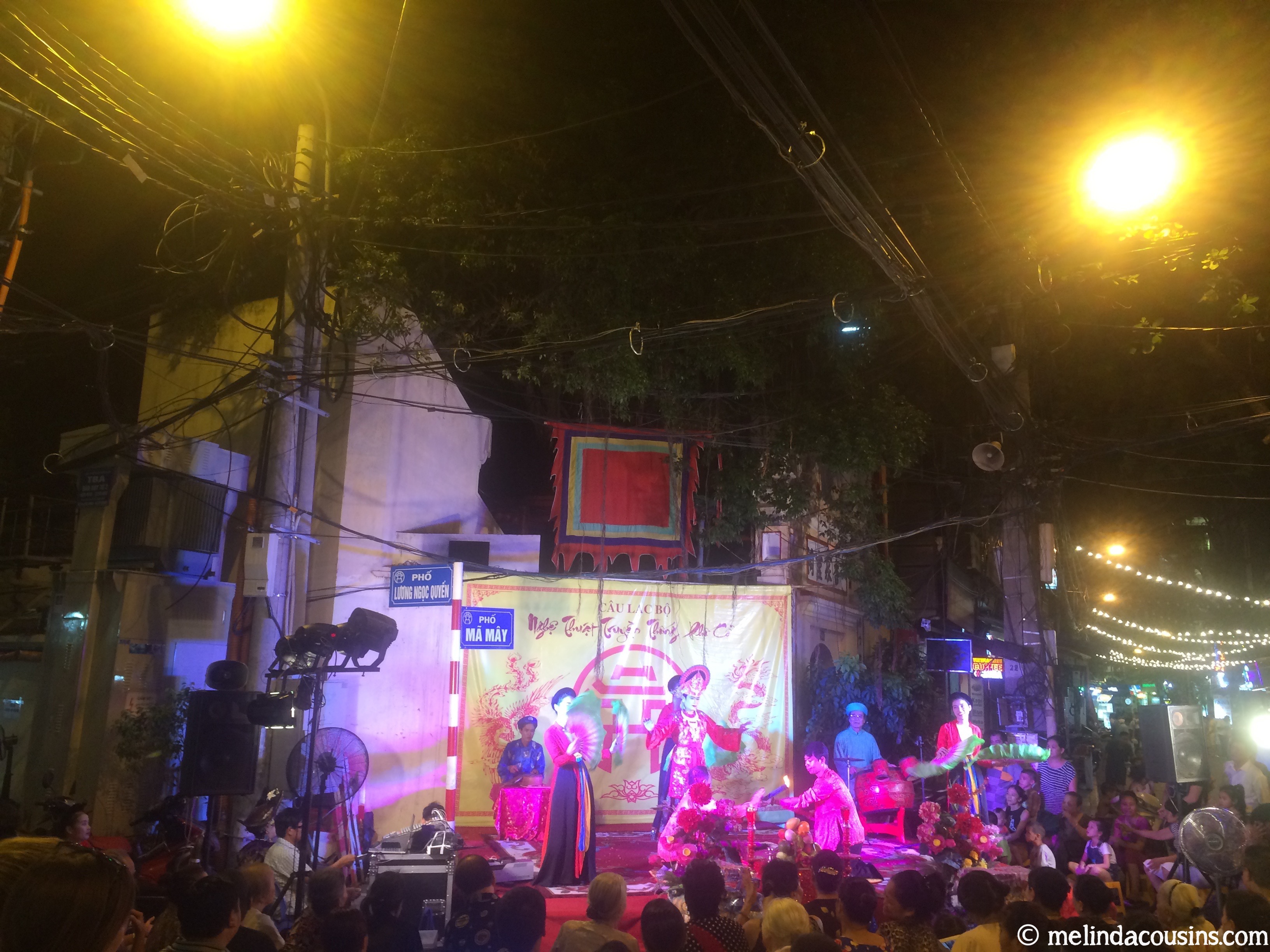
I had a wonderful few days in Hanoi. Day or night, there were always people around, smiling, laughing, enjoying life.

Street market

And the food … I’m not sure there is such a thing as bad Vietnamese food.

Lunch

What I did learn was that it’s all about the sauces – something that looks simple is taken to a whole other level by an amazing complex Vietnamese sauce!

Dinner

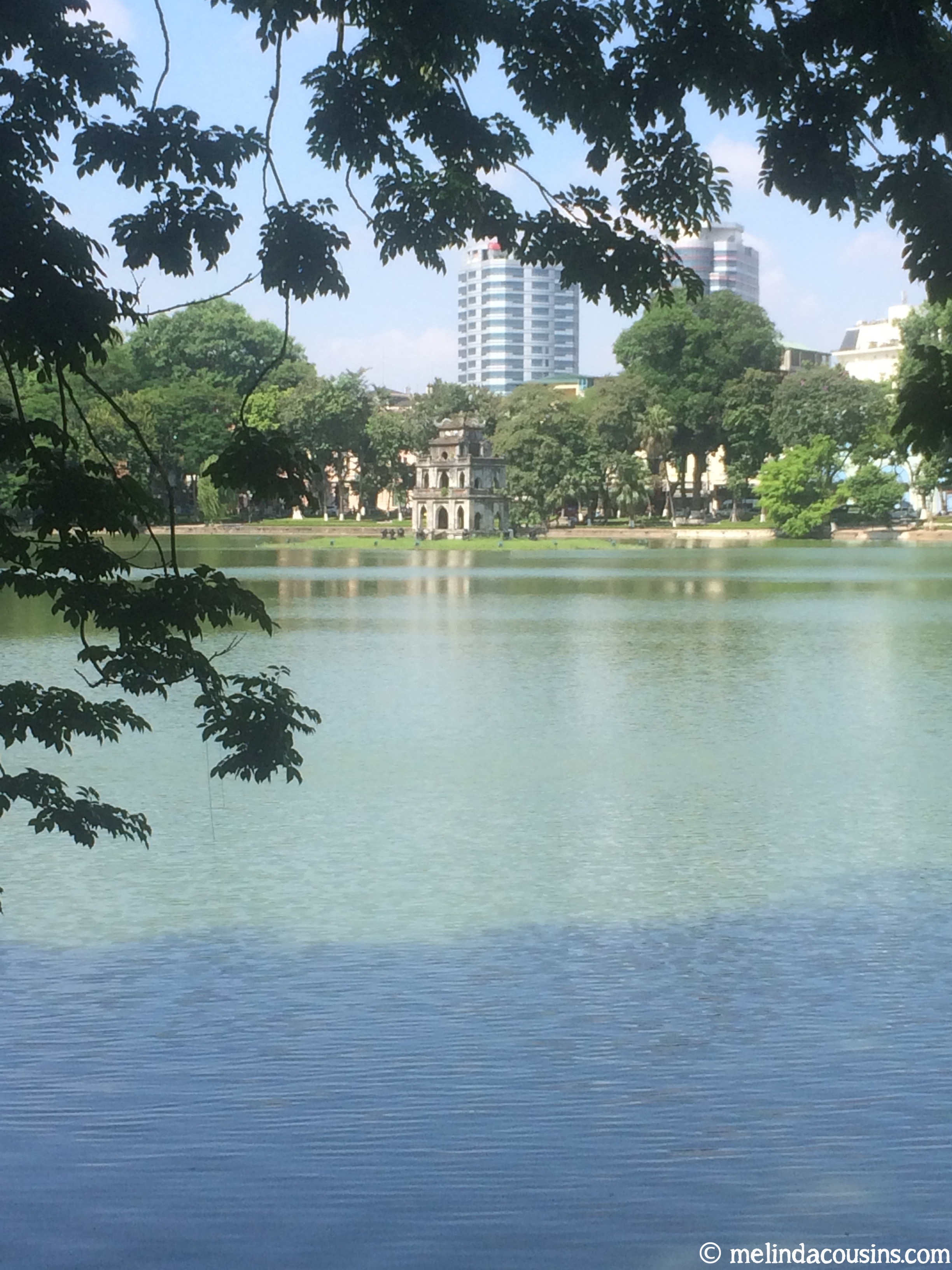
And I do love history, so I loved seeing glimpses of the past and the present side by side in the centre of the city …

Lake with new and old buildings

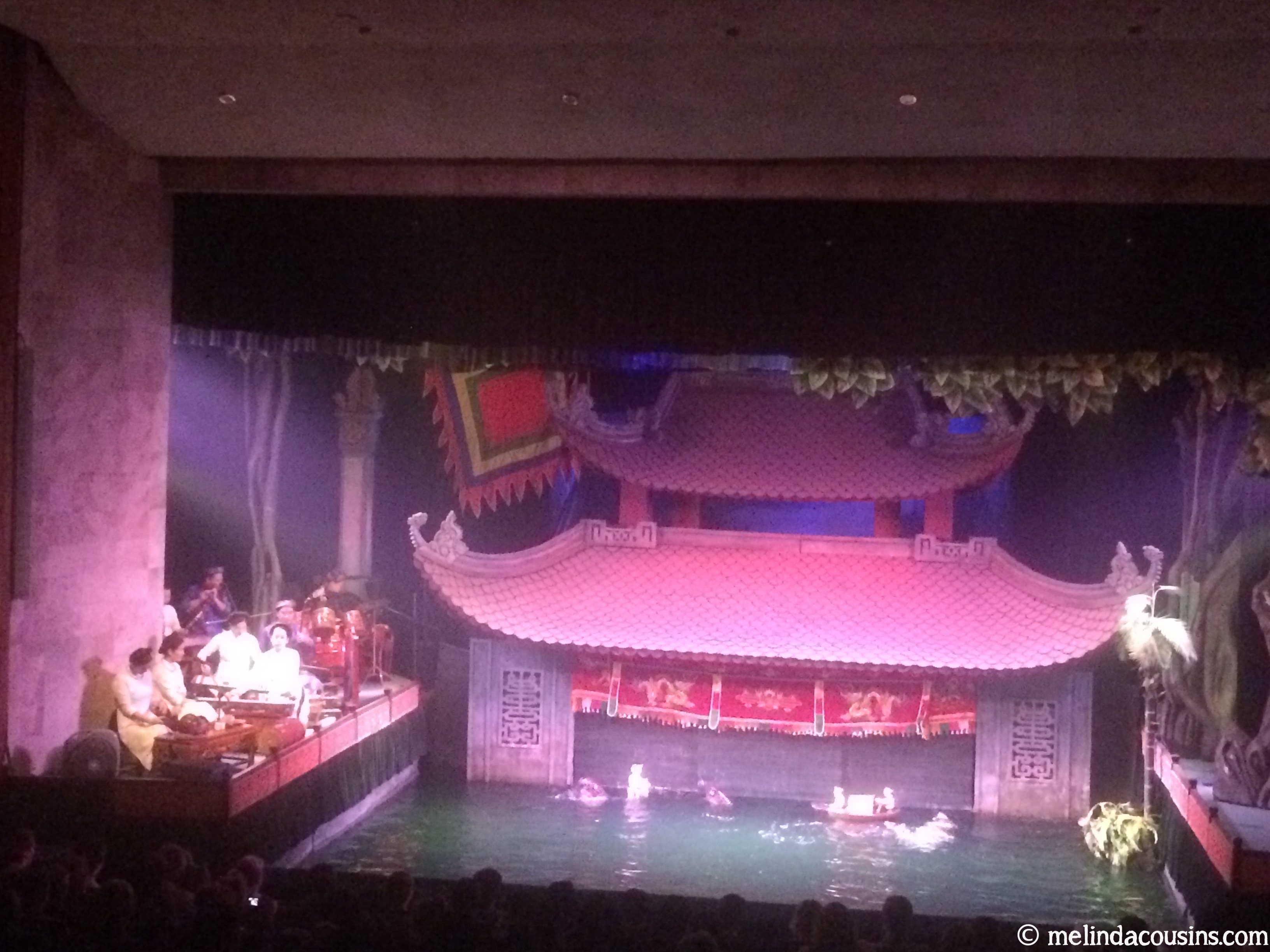
.. in a modern performance of the centuries old art of Water Puppetry …

Water puppets

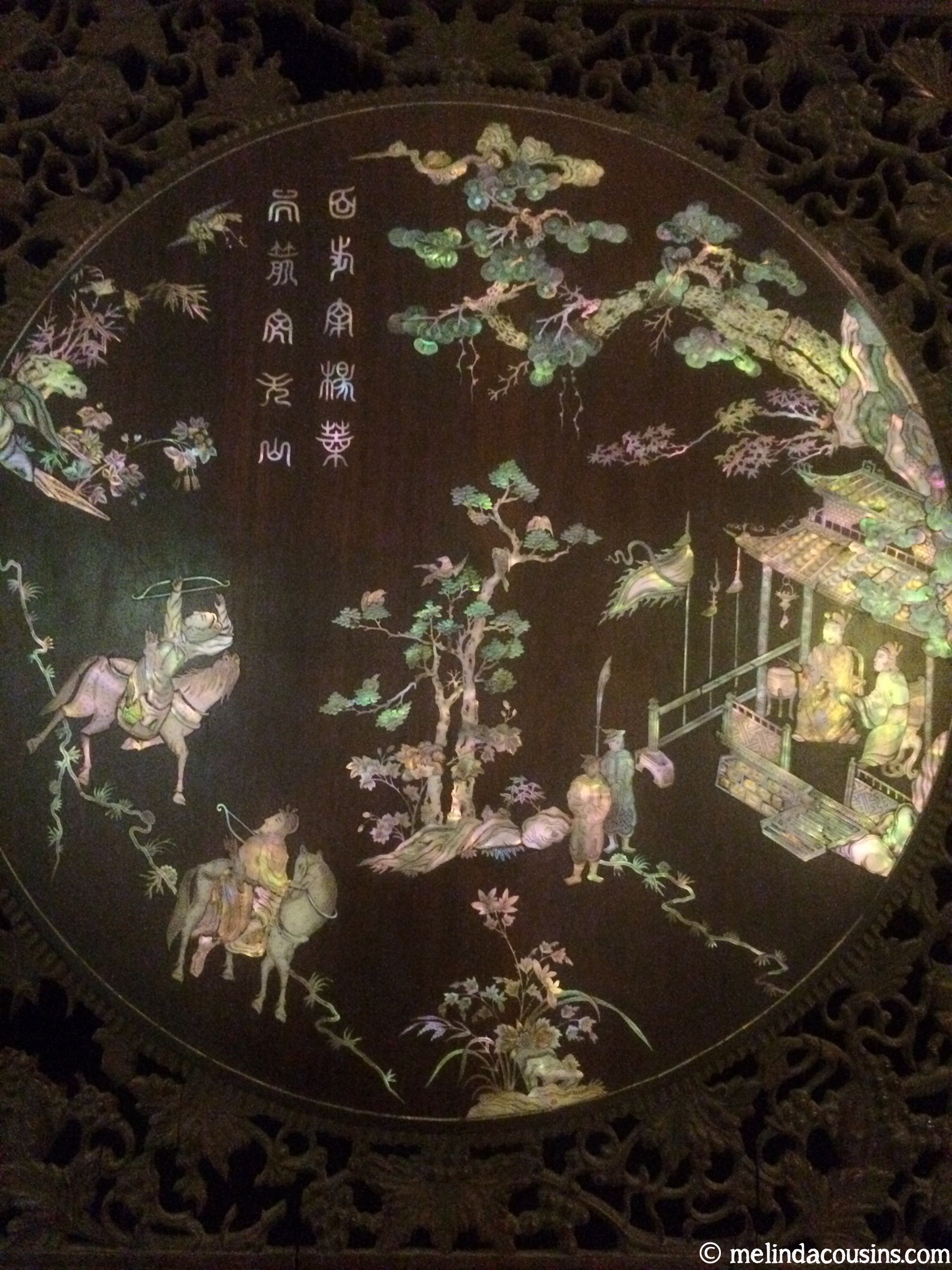
.. and in the beautiful artefacts in the history museum.

Wardrobe detail

What did I learn from Hanoi?

As well as loving the history,  the thought I kept coming back to was “there’s no such thing as history.” First, in the sense that there is really only historiography (written history) or people’s perspectives on history, rather than any objective reality of the past that we can access. And secondly, in the sense that the past is never just the past; its effects echo and resound in the present and will continue to do so no doubt long into the future.

Outside history museum

One of the great things about travel is the opportunity to see another perspective on the history of the world, to put yourself in someone else’s shoes. Certainly that is the case with Vietnam, particularly when it comes to the War. Even what the War of the 1960s-70s is called is a complicated question, and really depends on whose perspective you are looking at it from. I grew up calling it “The Vietnam War” but it’s kind of obvious to realise that a person from Vietnam would not use that term.

Sign

Seeing artefacts, photos, and in particular the written commentary on them in the history museums was a key reminder to me that ‘history’ is always written from a particular perspective. I saw some tourists who seemed frustrated, even angry, because it felt to them that history was being told ‘wrongly’. But who is to say that we haven’t also learned it wrongly? Of course we are all going to see it from the perspective of the country in which we grew up. Of course there are multiple sides to such complex stories.

Prison entrance

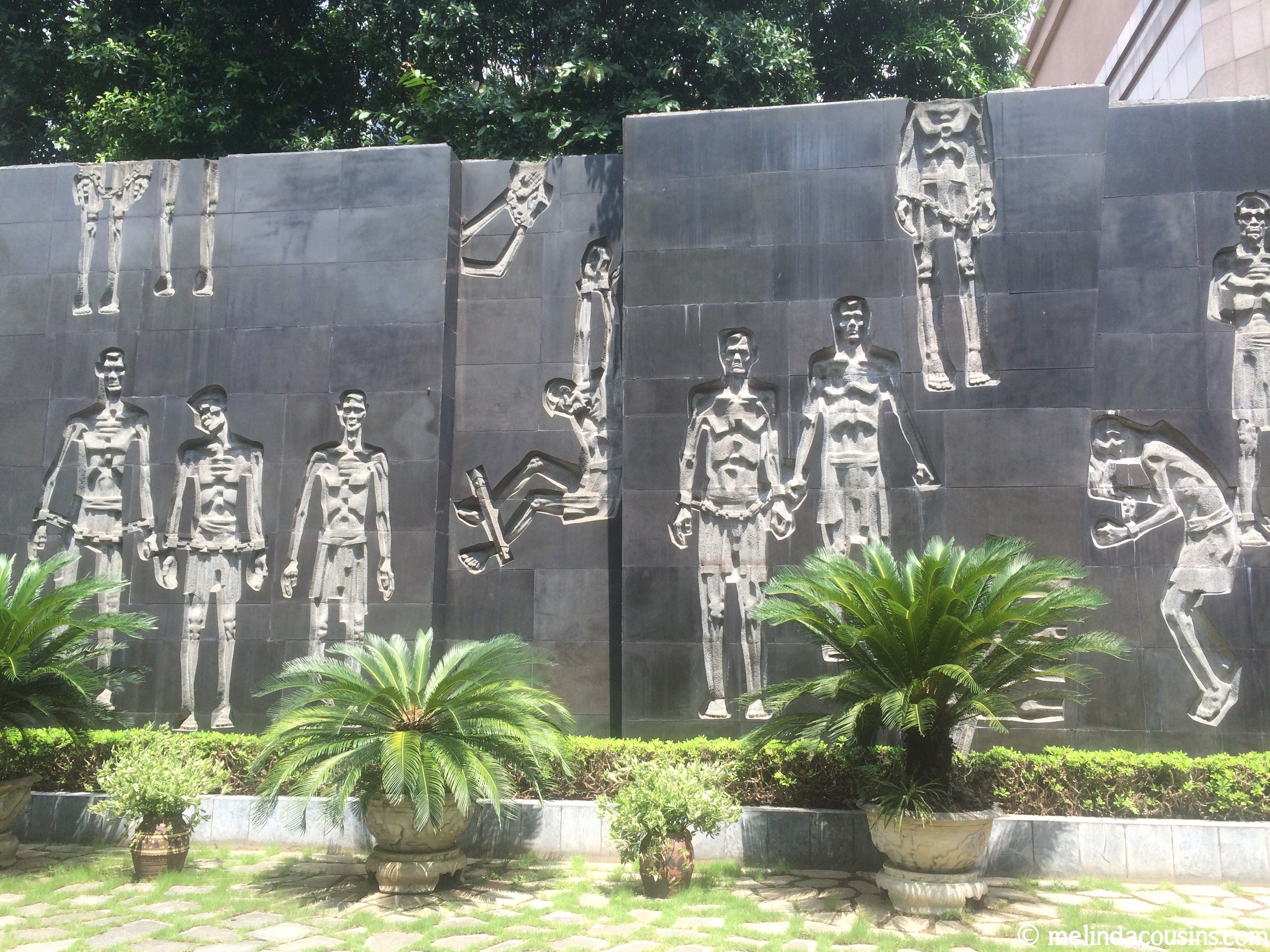
Visiting Hỏa Lò Prison (sometimes called the Hanoi Hilton) brought this to the fore. Half of the prison remembers the Vietnamese revolutionaries who were kept here as prisoners of the French and so, of course, tells the story from the perspective of being the oppressed.

Prison memorial

The other half of the prison remembers the American pilots who were kept here as prisoners of the Vietnam and so, it could be argued, tells the story of the perspective of being the oppressors, or at least those in power rather than those without power. I found it a fascinating place, because in the very same place, history is being told from these two very different perspectives. It’s a stark illustration of the fact that we all tell our stories from the perspective we find ourselves in, that history is not objective fact but interpreted experience.

Prison explanation 2

I hope I’m not sounding judgmental of the Vietnamese – that is not at all my point. I think we all do the same thing. That’s why it is so valuable to try to stand in another person’s shoes and think of how history looks from their perspective. Hopefully it gives all of us more compassion, more understanding, more forgiveness, and more humility, to do so.

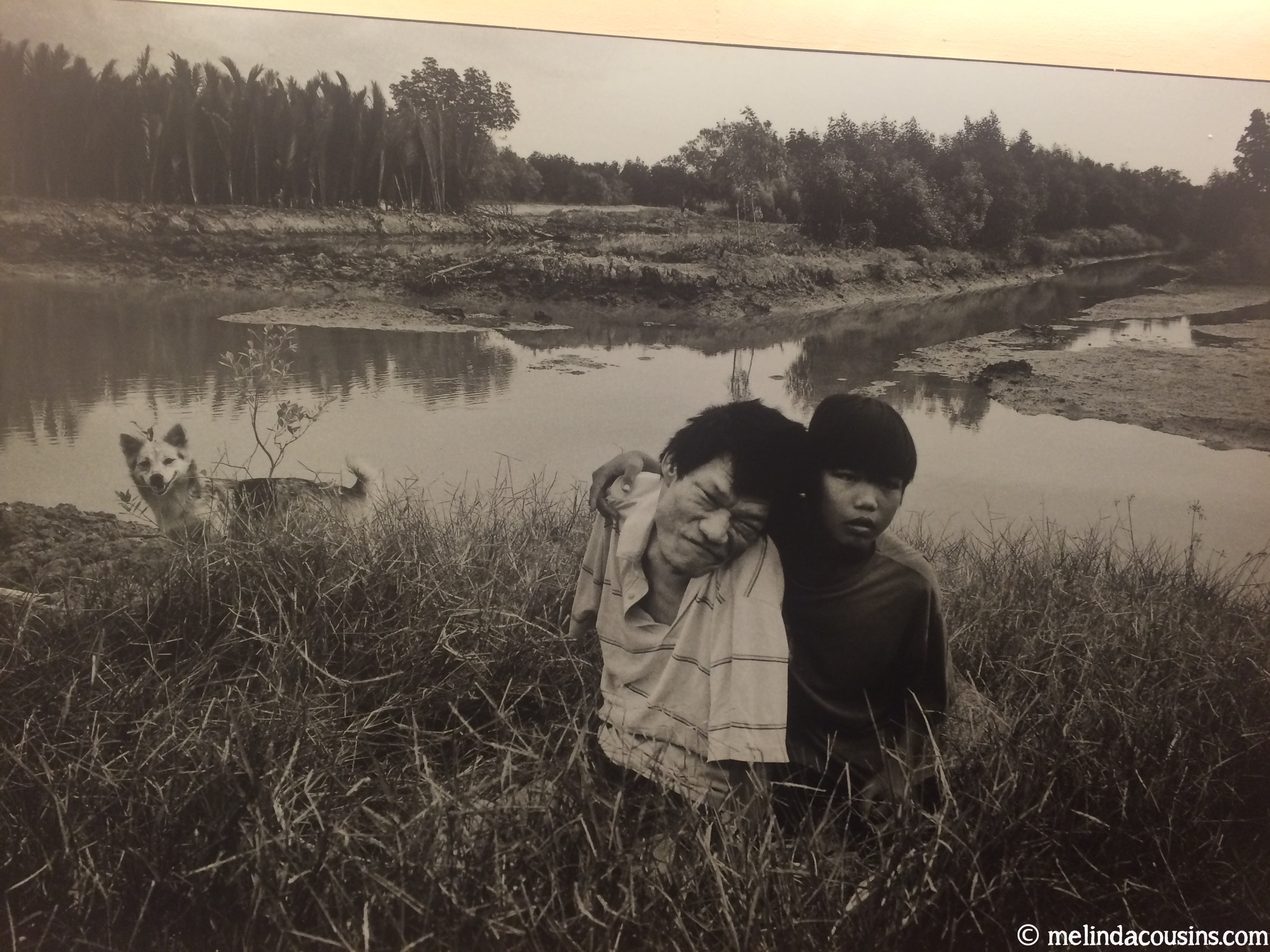
The second sense of the phrase “There’s no such thing as history” is the idea that the past isn’t gone and forgotten – its after effects linger on. Seeing the ongoing issues of disability and disease in people suffering the effects of Agent Orange some forty years on is both sobering and heartbreaking.

IMG_4203

And finally, due to my history, what you could call the accident of birth, I come to visit a place like Vietnam as a rich, white, Westerner. This shapes and colours how I am perceived and responded to, and is something that I cannot really escape, no matter how much I might like to.

Difficult as I might find it, it is good for me to see myself from someone else’s perspective. It challenges me as I consider how much of who I am is shaped by the perspective on the world I have inherited, and how I can continue to allow the culture, experiences, and perspectives of others to be used to transform me and open me up to others.

Back to blogging: my surprising #top3 posts list

I ended up taking a much longer break from blogging than I planned to. Like most things, once you get out of the habit, it’s much harder to re-start. (Although I think I did have a fairly good excuse – getting my thesis finished!)

But I’ve been thinking it’s time to start regularly blogging again. Thinking about blogging has led to me reflecting on my experience of blogging so far, and in particular some of the surprises I have discovered in seeing the popularity and responses to some of my posts. In response to that, and to kick start my return to the blogosphere, here is a list of my “top” (i.e. most commonly read) blog posts and the possibly surprising reasons why they have been popular …

#1 Can we please stop saying “Charity Begins At Home”?

This is by far my most commonly read post. Every single day for the past year, it has averaged between 20 and 50 views. This intrigues me. It was one of my earlier posts, and was born out of my own frustration at the frequent misuse of the saying. What the post’s popularity seems to suggest (along with the fact that most people come to it via a google search) is that although the phrase is frequently thrown around, a lot of people don’t know what it means or where it comes from, and there apparently aren’t too many answers to those queries available! I’m glad I can provide a helpful information service of some kind. 😉

#2 Beauty in the Dry Season

This post has been popular for quite a different reason. Written as part of my travel reflections, my intention in writing it was to reflect on different types of beauty out of my experience of visiting Victoria Falls in Zambia at both peak water time and during the height of the dry season. Unfortunately, some of my photos showing the lack of water during the dry season were picked up by a couple of other blogs and used as “proof” that there was a desperate drought in Africa and even as a “sign” of the judgment of God on the world!! It was quite bizarre receiving comments and emails from people all over the world, some wanting to check whether the photos were real or photoshopped (they are absolutely real), others wanting to warn me that they were being used without my permission (which bothered me less than the fact that they being used in a way that directly contradicted what I had written about them), and others congratulating me on getting the ‘truth’ out (which was disturbing because I had done no such thing!) I hope those who continue to come across some of the false information actually read what I wrote and get a different perspective.

#3 How does the church respond to #yesallwomen?

This was a post that I felt very vulnerable writing and so it was quite confronting to realise it had been much more widely read than my posts usually are. But it is also the one I am most pleased got attention, because of the ongoing discussions it started. Written in response to a twitter hashtag, it contributed to a conversation that has brought out into the open the experience of too many women that too many men were unaware of. It is certainly the post that I have had the most in-person conversations about and it has been a privilege to hold other women’s stories as they have been prompted by my vulnerability to share their own. It has also been incredibly encouraging to have people seek to respond to the ‘awareness raising’ that blogging can do with tangible, practical action. I trust this will only continue.

Three very different posts, and three very different reasons for the attention they have garnered.

What have I learned from them?

From the first, I’ve learned that you never quite know what is going to be helpful for people and that blogging can apparently have an educative role. From the second, I’ve learned that once you put something on the net you can’t control what people do with it and that blogging can get you into unexpected trouble. And from the third, I’ve learned that being open and vulnerable has incredible power and that there are always people who can hear you and say “me too.” I’ve also learned that it is possible for blogging to transcend the digital page and open up amazing and unexpected opportunities. All of these are helpful reminders as I re-embark upon this journey of “thinking out loud.”

So, just in case anyone has wondered why I’ve been quiet, or whether I’d given up blogging altogether, this post is my way of saying “I’m back” and of getting myself back into the habit of posting regularly again. I’m planning a similar mix to before – responses to current issues (whether global, local or just in my own head!), travel reflections, theological ponderings, political and social musings and lots of questions of all kinds. It’s a useful process for me and I’ve missed it. I hope some of you might be looking forward to engaging with the things that I think out loud about that interest you along the way. And I’m looking forward to seeing what unexpected responses are yet to come …