Tag Archives: Christmas

Some questions about violence, suffering, and the reason for Christmas

It has been a bad week. The Sydney hostage crisis, the Peshawar school massacre, the murder of eight children in one family in Cairns. These tragedies have been publicly watched, mourned and analysed. And some common sentiments I’ve seen expressed on social media are things along the lines of “It’s all too much.” “Why do so many terrible things happen at once?” I can’t take any more tragedy or bad news this week.” “Not this week – it’s Christmas!”

Without in any way wanting to downplay these tragedies – which I too have struggled to comprehend – I’m left asking a number of questions.

Has this week been a worse week than usual?

Is the world getting more violent?

Or are we just more aware of and more connected to terrible things happening than ever before?

Is terrorism somehow worse when it happens to people like me?

And why do we kind of seem to think tragedies are greater when they happen close to Christmas?

For people directly affected by these terrible events, I’m not sure whether either the time of year or the size of the social media response makes much difference to their grief and loss. I certainly don’t think it matters where in the world they are or what colour their skin is. The pain for those who have lost loved ones in senseless violence must be overwhelming.

For the rest of us, however, I’m intrigued by what we might learn about ourselves in weeks like this. For starters, if I’m honest, I have to wonder how much my reactions (and those of people I know and follow) are often really about the “it could have been me” factor.

But I also wonder what it shows up about our assumptions about pain and violence and suffering. It seems that we have certain expectations about where terror and violence “shouldn’t” happen … does that mean that subconsciously we think there are therefore places where it “should”?

Are those who feel these things shouldn’t happen this week because “it’s Christmas” unknowingly implying that any other time of the year is … well, if not ok, at least a bit better?

I don’t quite know where to go with these questions of mine. I realise they might sound impertinent, insensitive, or even offensive.

But what I do know is this. That deep down I am not surprised by violence and terror and suffering in this world. Because the biblical story tells me that this world is a broken, hurting, messed up place. We are broken, hurting, messed up people.

And maybe as a Christian, I should actually be less surprised about these things at this time of year. Perhaps part of celebrating Christmas is remembering why we need Christmas in the first place.

I want to push back against a culture which is telling me that Christmas is all about happiness and family and harmony and feeling good and buying stuff. But you might then think I am going to get all cliched and talk about how “Jesus is the reason for the season.” I’m not. Because I don’t think He is. (I hope that’s not considered blasphemy!) Yes, Jesus is the One whose birth we celebrate this time of year.

But the reason He was born?

Can I suggest to you that it is the precisely the fact that this world is so messed up, so broken, so desperately in need of salvation, that the God of the universe stepped in and became one of us?

That the reason we need Christmas is because the world has long been a place of violence and terror and pain and grief. Maybe we see it on our screens with more immediacy than ever before, or maybe we’ve just been the privileged few who have been protected from the harsh realities for too long. But throughout history and around the world, people have been and are hurting and abusing and terrorising and warring against and inflicting suffering upon one another every single day. We desperately need a Saviour. I don’t know about you, but watching the news this week has again reminded me of that simple fact.

So this week, as we celebrate Christmas, we can try to see it as a time where we forget about all the terrible, messed up, broken and imperfect things going on in the world, or perhaps in our own lives, and on Thursday we can work really hard to have that one perfect day which is nothing but peace and harmony and happiness.

Or, we can choose to acknowledge that it is into the midst of the suffering and brokenness and violence of our world that Jesus comes, and that we need Him to come. We can set aside time this Christmas to include space for mourning and longing and crying out that the world is not all as it should be.

We can enter into the ancient cry of God’s people, desperately seeking the one thing that I believe can truly make a difference in this broken, hurting, messed up world:

O come, O come, Emmanuel. God with us. We need you.

Some post-Christmas questions

And so Christmas is over for another year. What are we left with? Do the joy and wonder continue? Do we have greater peace and gladness than we had three days ago?

Or are there some feelings of disappointment, that after all the build up it was over so quickly, or that it didn’t quite go as we had hoped and planned? Or perhaps there’s just sheer relief that the craziness of the past few days is finally over and we can sit down and relax! Maybe we’ve already moved on to thinking about New Year’s Eve and the next celebration to plan and prepare for and the seemingly endless cycle starts again.

I love celebrating Christmas but many years I am left with these kinds of questions afterwards. What difference does it make to today and tomorrow and the next day? Is it really all just about one day?

I knew that the word “Christmas” itself is a contraction of “Christ’s Mass,” but what I didn’t know before is that the word “mass” comes from the Latin missa which is in the concluding words of the liturgical celebration. These are the words of dismissal, the words of sending out, the words of mission. That has got me thinking today. Christmas is not just about one day, but a sending out into what comes next.

Of course that is also true of the original Christmas story. It is the celebration of a birth, which is not an end itself, only the starting point for the life that follows.

This Christmas I am struck with the message the angels had for the shepherds – words which also point forward and have a sense of dismissal or commissioning to them.

 “On earth, peace to humanity, for whom God has goodwill.”

(Luke 2:14, my own translation)

What does it mean to go forward knowing that God has goodwill toward us? That He is pleased with us? That He favours us and is for us? What does it mean in a world where so many people think God is against them, just waiting to smite them? Where His church has too often given them the impression that God is displeased with them?

These are the questions I am asking today, as I move forward into a new year and all that it holds. How do I take the mission of Christmas with me? How am I making it known that God loves this world – every broken, hurting, vulnerable corner of it? How does that make a difference to my every interaction and thought, my every word and deed?

“O Little Town…” or … Today would be a nice day to be in Bethlehem

The "little" town of Bethlehem today
The “little” town of Bethlehem today

It seems appropriate this eve of Christmas Eve to think about spending time in the place where the events we are celebrating took place. I’ve visited Bethlehem three times, just for a day each time, and found it a place of sadness and joy, of tensions and of celebrations. A place which perhaps reflects the breadth of emotions the story of the Incarnation brings in all its fullness.

Mosaic Map of Bethlehem in St Catherine's Church
Mosaic Map of Bethlehem in St Catherine’s Church

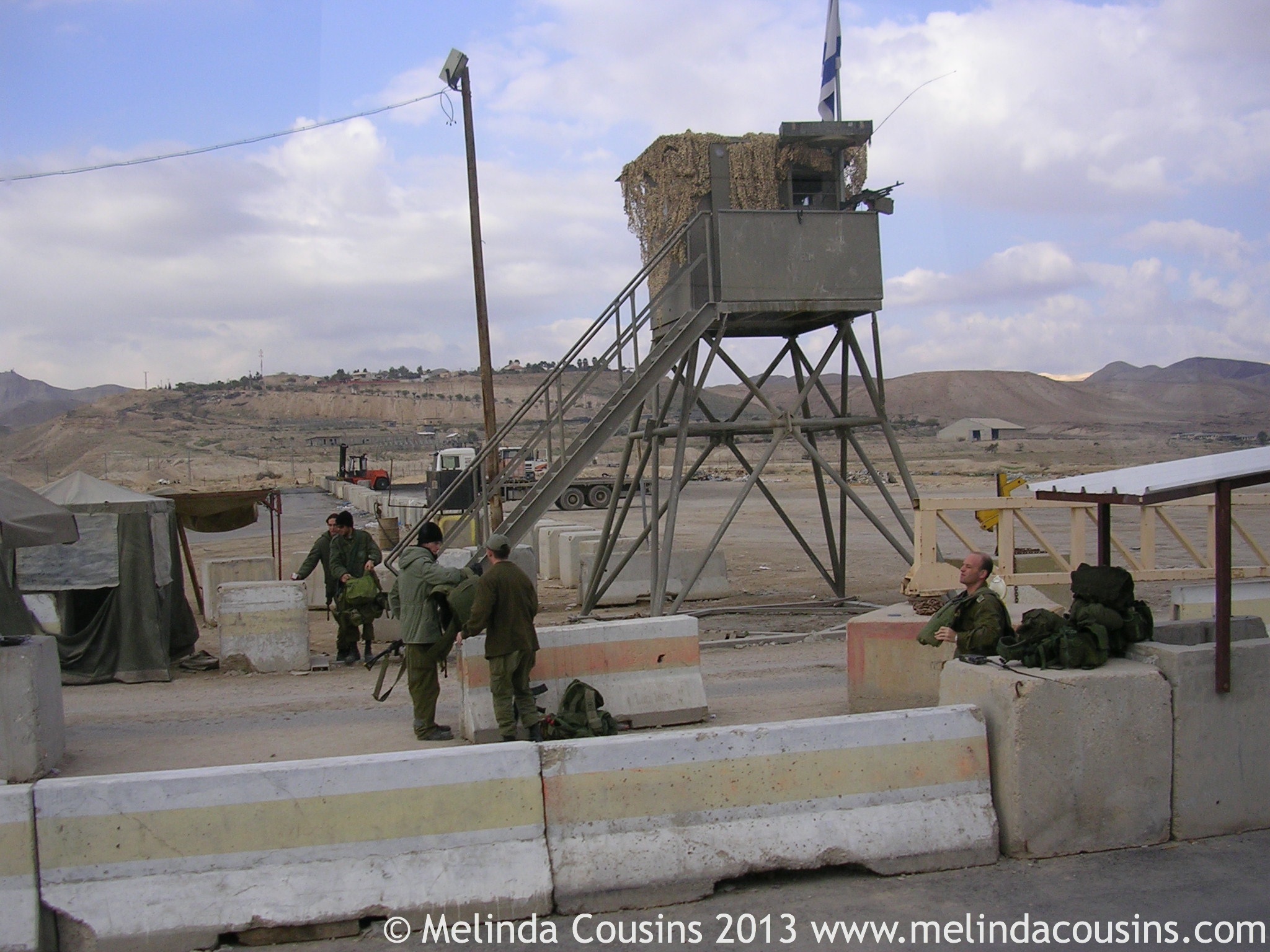
Bethlehem today is located in the West Bank, under Palestinian control. The first time I visited was during the Second Intifada and the experience of entering and exiting the town was quite confronting. Seeing the way those who lived there were roughly and invasively searched and trying to reconcile that with the deferential way we were treated as Westerners was difficult.

A 2005 West Bank checkpoint

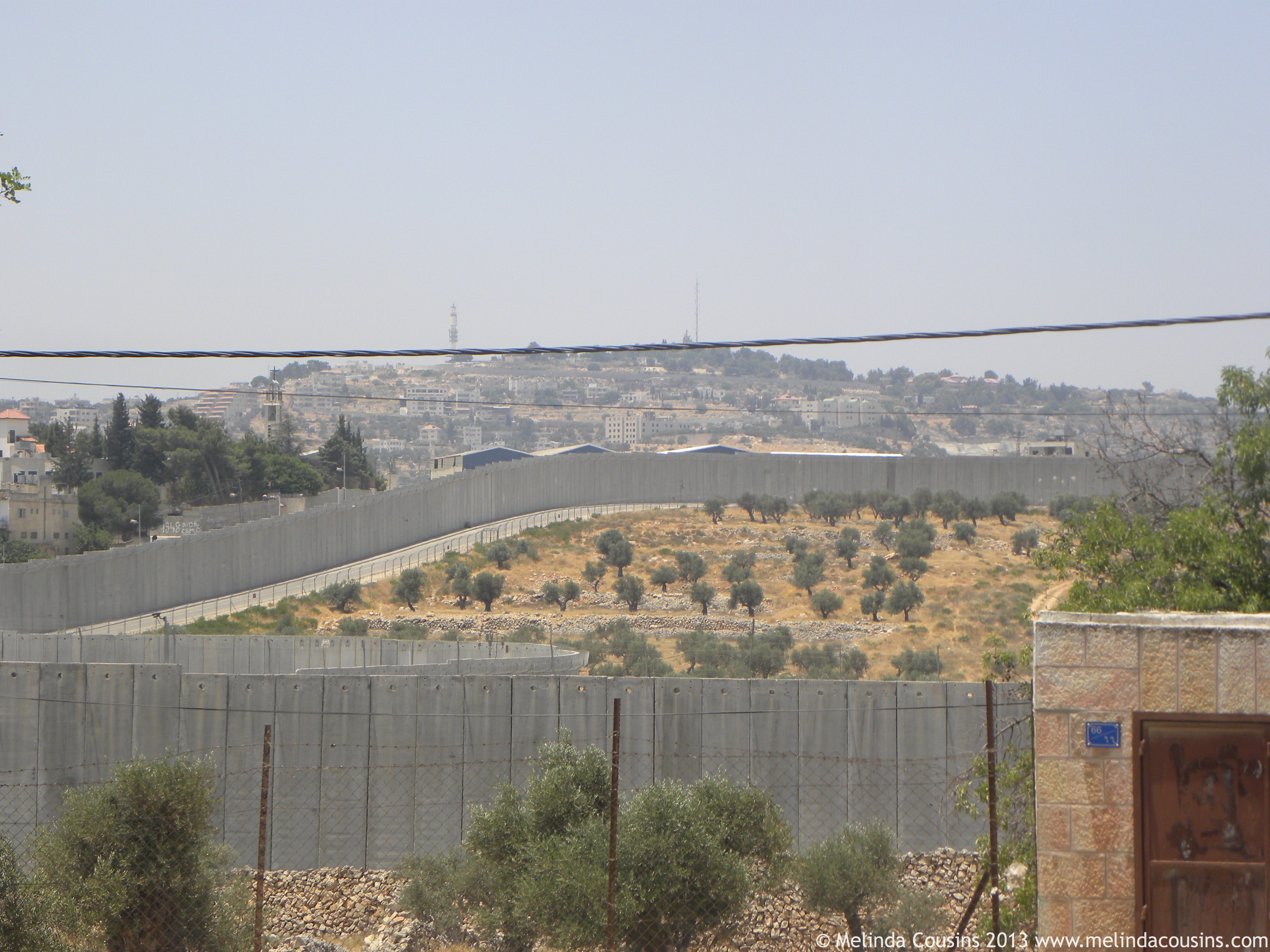
On our visit last year things were much calmer. But none of us could miss seeing the wall. The huge concrete construction which surrounds the town, seemingly making it appear to those outside that there is nothing and no one in there. This time one of the most confronting things I found was sections of the wall which were painted with pretty scenes of empty fields and the Sea’s edge, as if to enable those passing by to imagine that that is what the other side is really like. The reality is quite different. The difference between one side and the other is something like the difference between a ‘first world’ and a ‘third world’ country, if I can use those terms purely to evoke a comparison.

A small part of the separation wall
What did I love about Bethlehem?
Inside the Church of the Nativity

Obviously the main ‘attraction’ is the Church of the Nativity, built to remember the place of Jesus’ birth. The church has been through a lot. But there is a simple beauty in its setting. The tiny front door, supposedly a reminder to enter with humility, certainly makes you slow down as you go in.

Our guide entering the Church of the Nativity

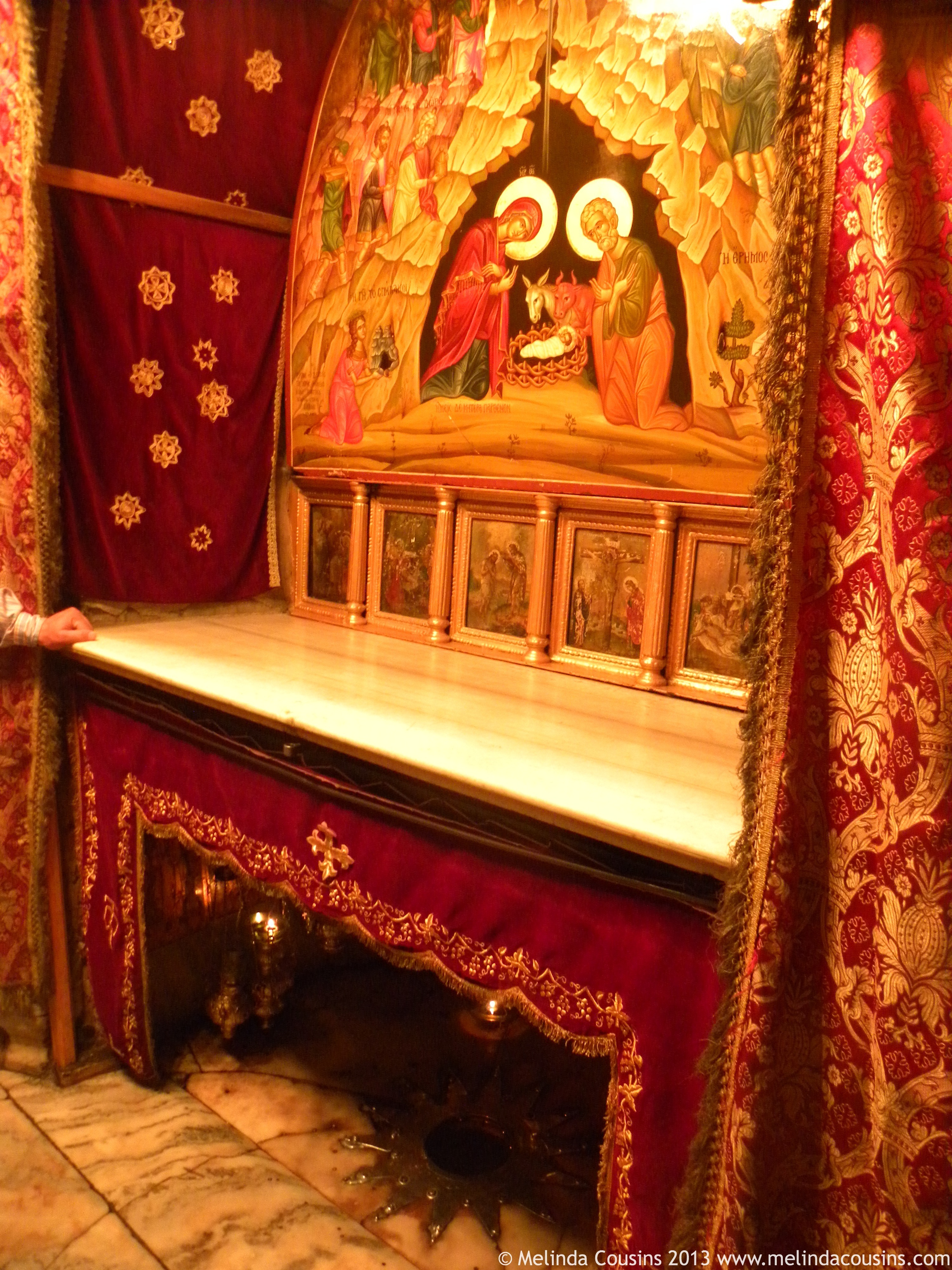
The grotto beneath the church with its star to locate the traditional ‘exact’ site of Jesus’ birth can provoke some cynicism; but is also a testament to the way many believers over thousands of years have remembered and been changed by the events that happened in this town.

Altar with a star on the ground marking the traditional site of Jesus' birth
Altar with a star on the ground marking the traditional site of Jesus’ birth

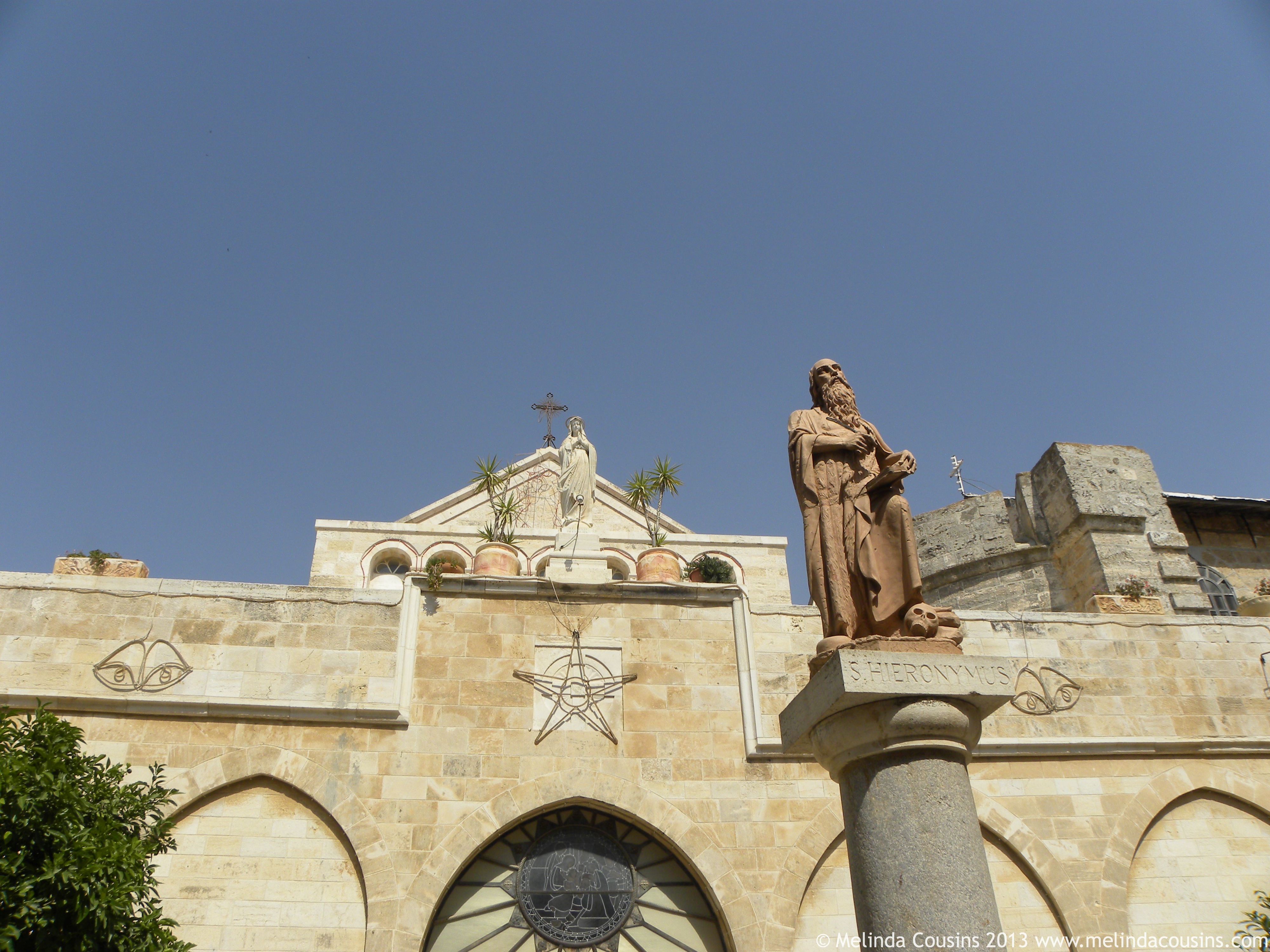
The adjoining chapel where Jerome translated the Bible into Latin is another reminder of those who have come before, and the way we benefit from their devotion and dedication. The statue of Jerome has a skull at his feet because supposedly he carried a human skull with him to remind himself of his own mortality. An interesting choice  not one I would emulate but, hey, if it worked for him …?

Statue of Jerome outside St Catherine's church
Statue of Jerome outside St Catherine’s church

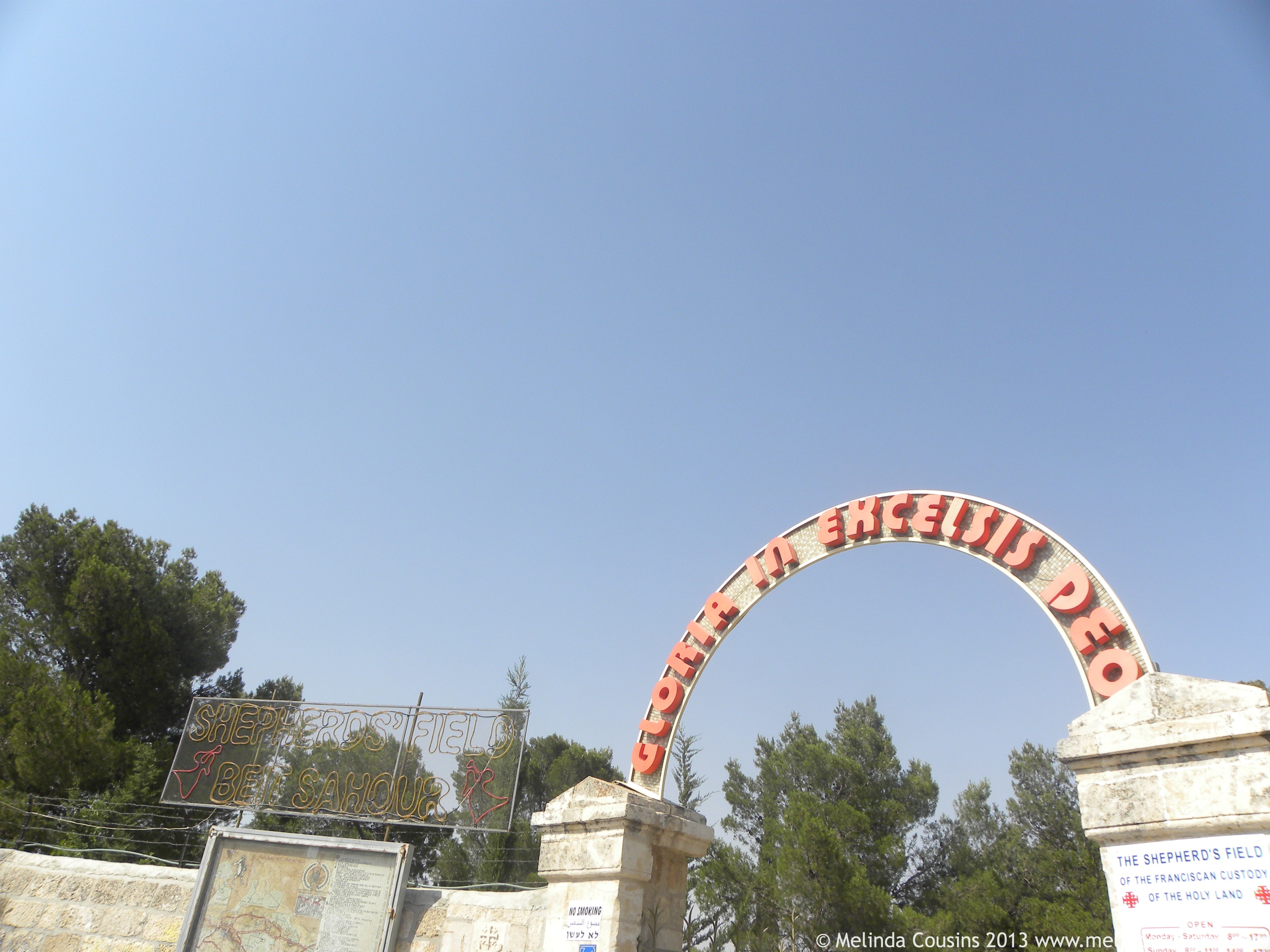
Further afield you can visit the “Shepherds’ Fields,” an area where perhaps the other aspects of the story of Christmas Eve took place. Again, whether the location is exact or not, there is space to reflect and remember the message of hope and peace; the truth proclaimed here that God’s favour rests upon humanity.

Entrance to the Shepherds' Fields
Entrance to the Shepherds’ Fields

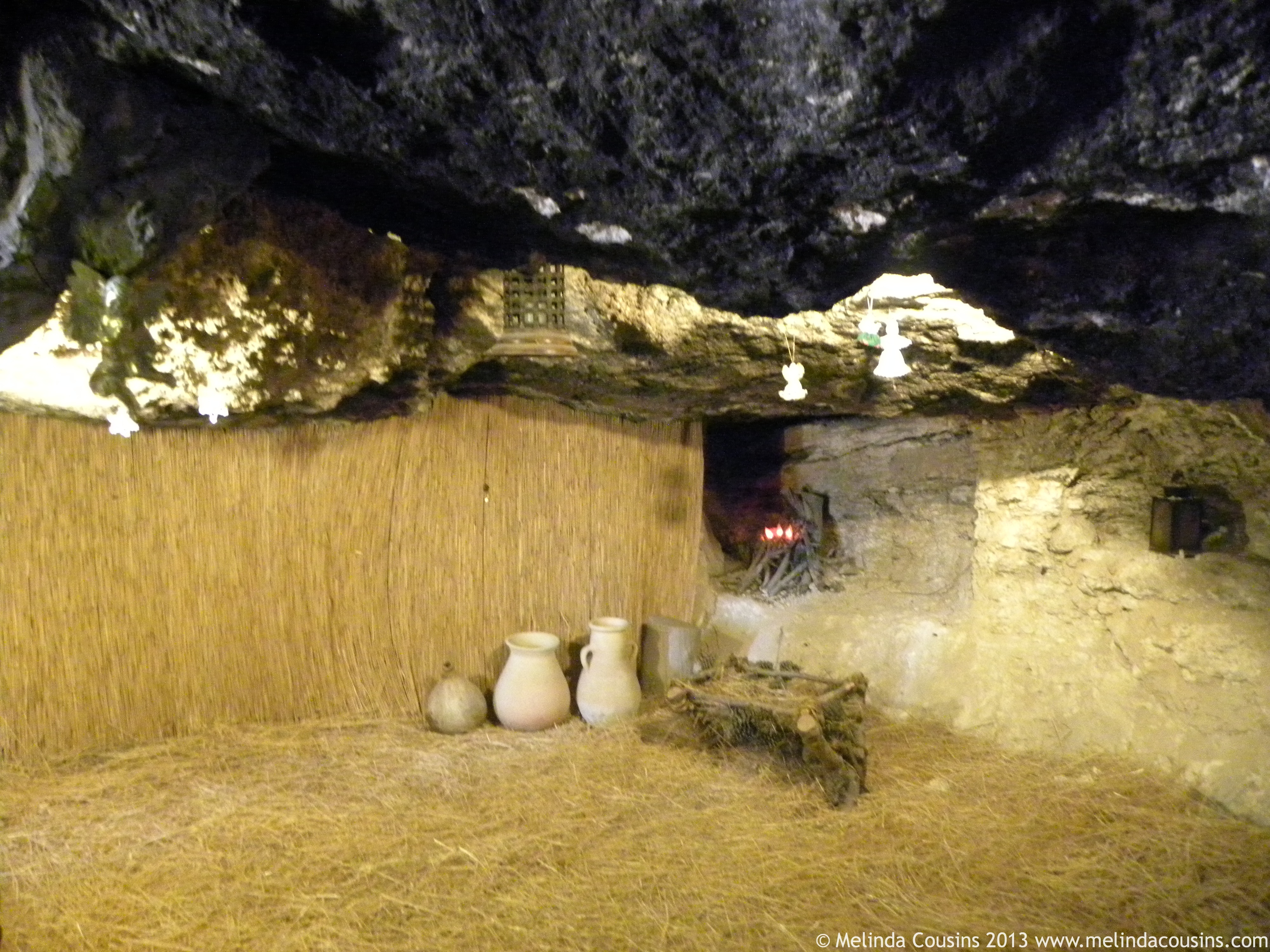
Our study group shared some time in the caves here last year worshiping. I know we can worship our Saviour anywhere, and yet I do appreciate the way a sense of ‘place’ can bring another dimension to our corporate experience.

A place to worship in the cave
What did I learn from Bethlehem?

As well as celebrating both the biblical story and the history of the church, this is one of the places that reminds me why people make pilgrimages. Whether these are physical visits to historical or sacred sites, or more spiritual recognitions of the journey, taking time to enter in, to be still, and to return to the busy-ness of life is an important spiritual practice. I can appreciate the intention of this sign on the door of the church through which we exited.

DSCN8904

We also spent time, and money, in some of the shops and restaurants around the town. Tourism is Bethlehem’s main source of income and it has suffered over many years. It is a privilege to be able to support those there who seek not a handout but a way to engage, serve and connect. It was also wonderful to meet with Palestinian Christians and hear something of their experience and their hopes for the future. They asked us to remember them, to pray for them, and to ask others to pray for them as they seek to find ways to build bridges of peace and reconciliation in such a difficult place.

The Bethlehem Peace Centre: designed to promote peace and cultural diversity (and a good place to shop for souvenirs!)

Like many places in Israel, the history of this place, both ancient and modern, is complicated; the politics perhaps even more so. Is it an accident that it is in this difficult place we remember that we have a God who steps into the mess and muck of humanity? The fullness of God dwelt in a helpless baby. The only ones to hear the angelic choir were those sleeping outside in the dirt with the animals. The birth of this tiny child provoked an attempted genocide. The Christmas story is not neat and tidy; and the place we remember and sing songs about at this time of year isn’t either. But it is a wonderful reminder of the real power of words like hope and peace and joy. They come in the midst of darkness and conflict and despair. They come just where we need them most.