Tag Archives: Israel

Today would be a good day to be at the Garden Tomb

Resurrection Sunday. Easter. The weekend we celebrate the turning point of history, the fact that everything from then on is different, because Jesus was raised to new life. Although I’m sure actually being at the Garden Tomb just outside the current Old City of Jerusalem would be crazy busy at this time of year, today is a great day to reflect on visiting that beautiful place.

20140420-221510.jpg

The Garden Tomb is a peaceful oasis in the midst of the bustling city; a good place to sit and reflect on what happened, whether here or somewhere nearby.
20140420-221618.jpg

The traditional site of Jesus’ tomb and thus resurrection is inside the Church of the Holy Sepulchre, inside the walls of the Old City. But many have noted that it doesn’t totally fit the historical story, and looked for an alternative site.

20140420-221753.jpg

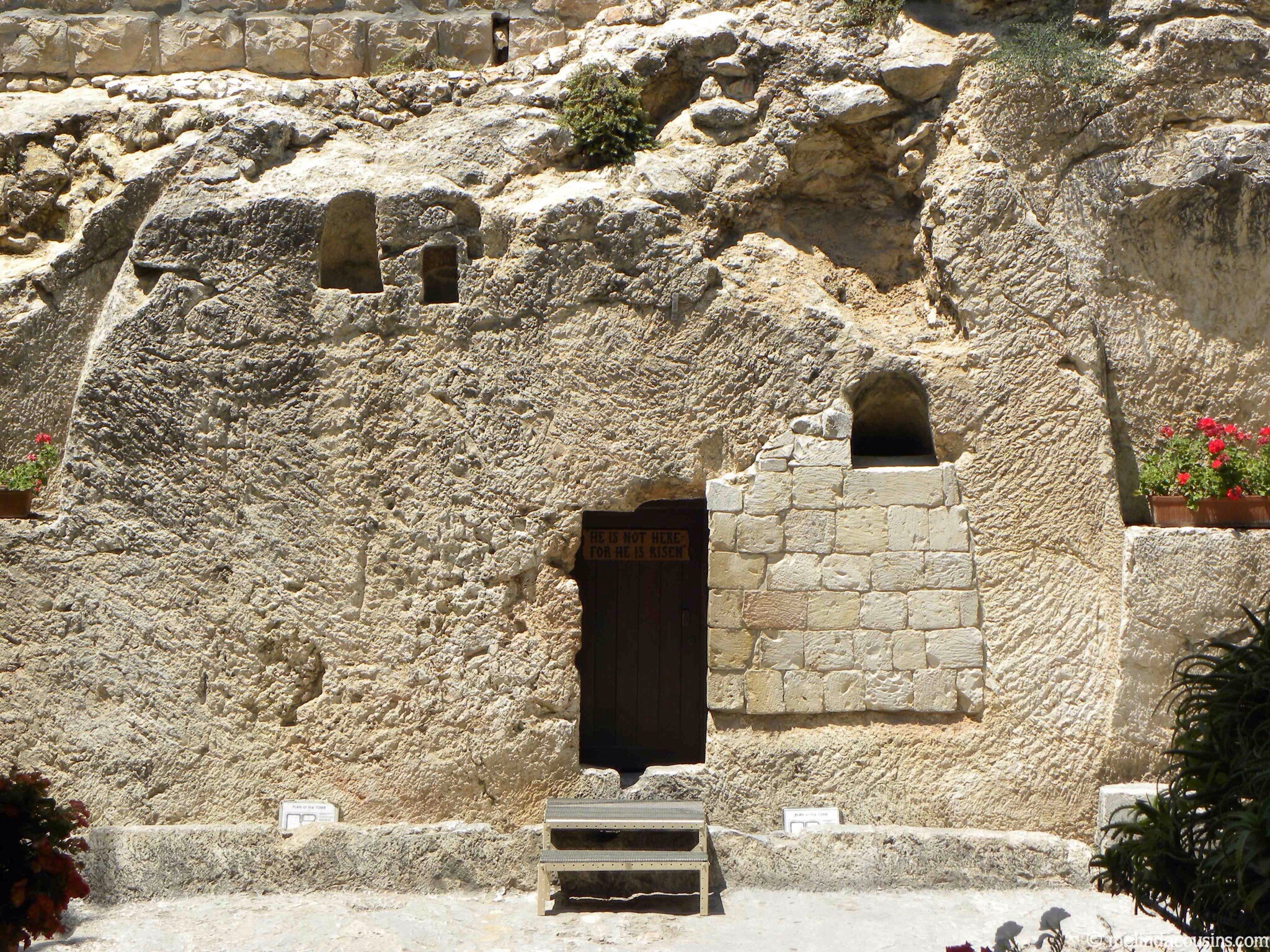
The Garden Tomb was discovered in the 1860s, and has many features which meet the description of the kind of tomb in which Jesus’ body was laid. It is hewn out of the rock, and has a channel in front for a stone to be rolled to close it.

20140420-221930.jpg

Inside there is a burial chamber as well as a weeping chamber for mourners.

20140420-222052.jpg

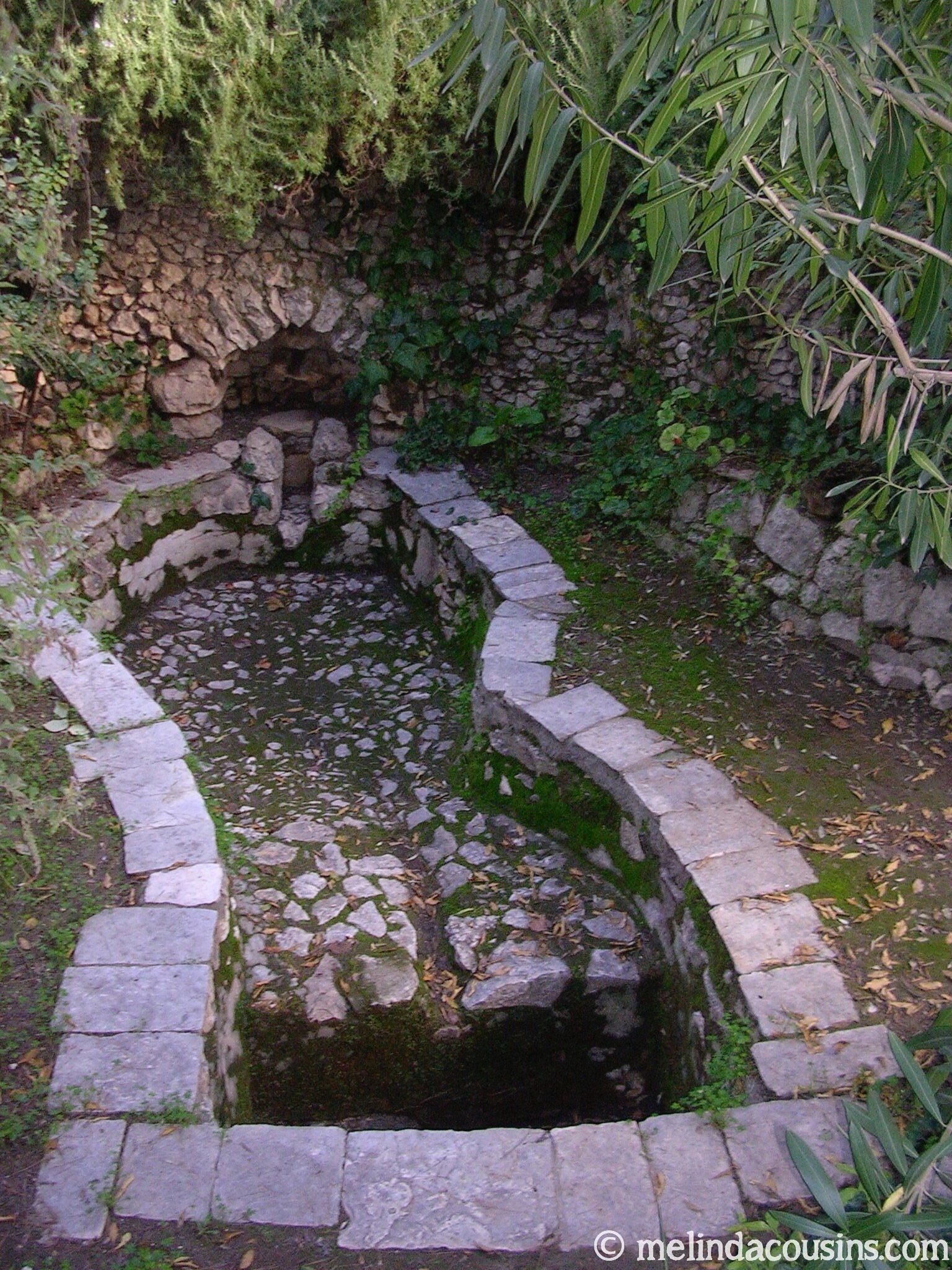
A large cistern and a wine press nearby indicate that this tomb was likely located within a garden in the first century.
20140420-222216.jpg

So, could this be the actual tomb belonging to Joseph of Arimathea in which Jesus was buried for three days? It’s possible. But unlikely.

20140420-222019.jpg

But it doesn’t matter.

20140420-222347.jpg

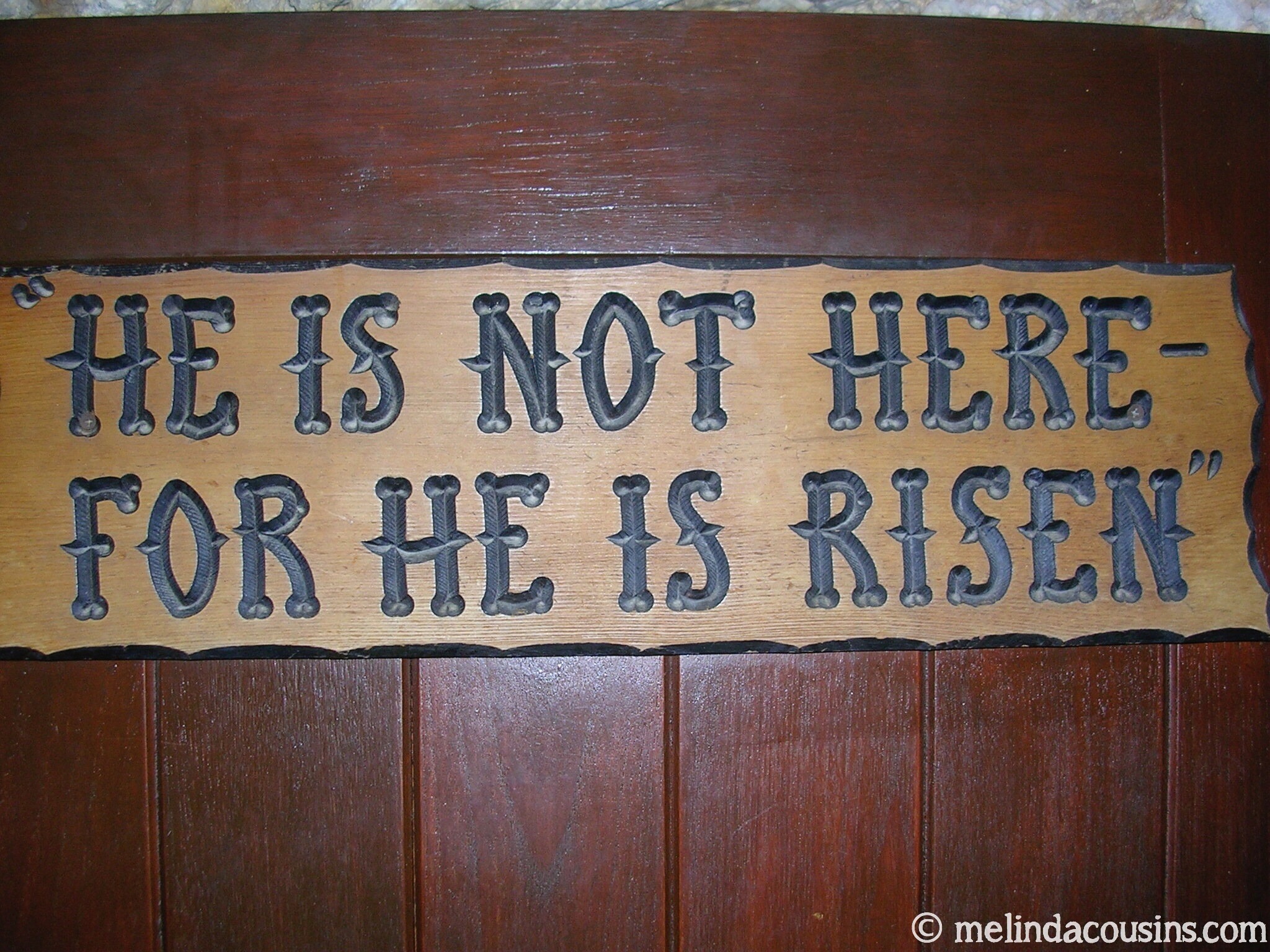
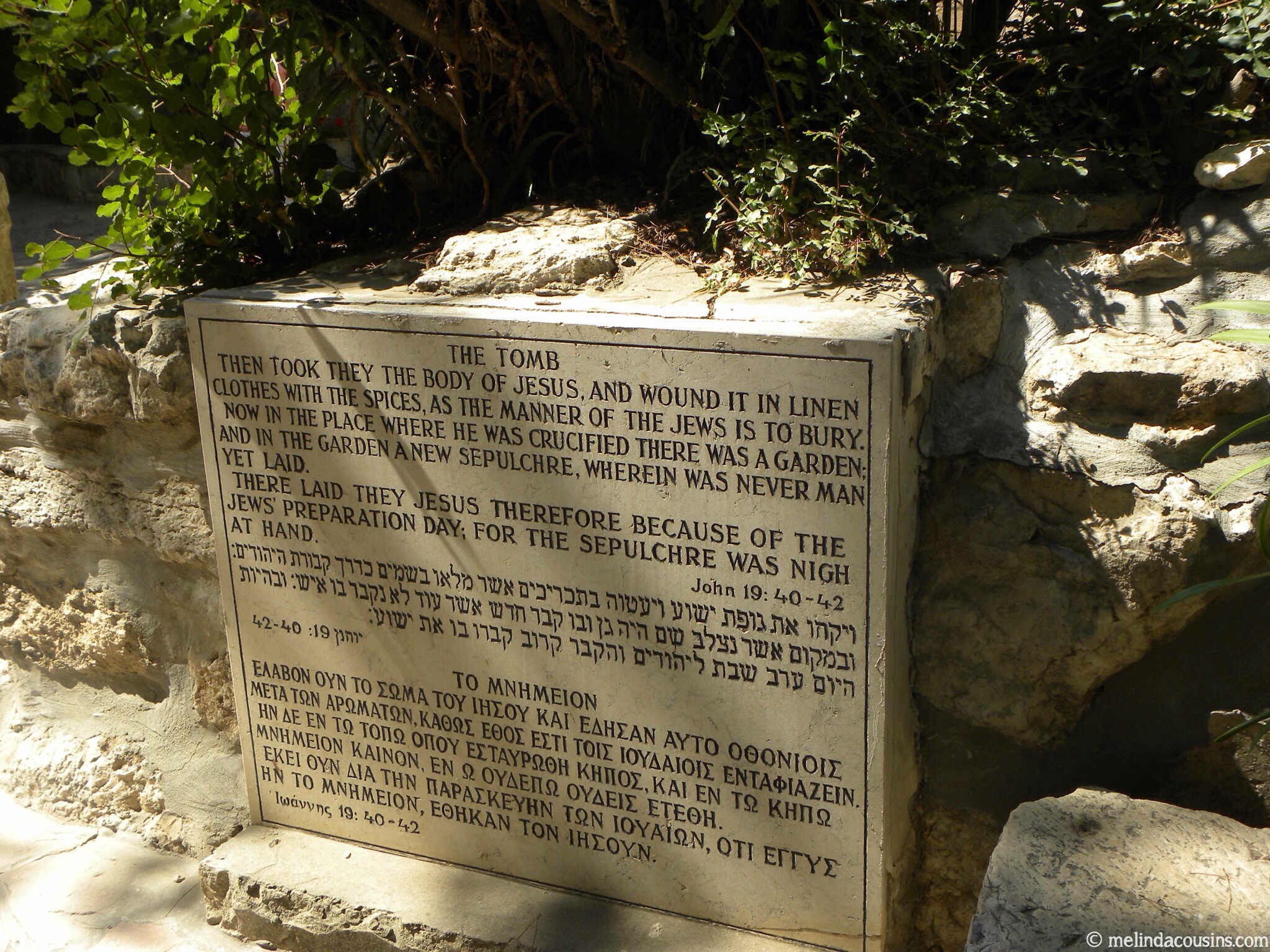
My favourite thing about this place has always been this sign on the door to the tomb. Jesus is not in this tomb, or any tomb. There is no need to locate a tomb for Him.

20140420-222500.jpg

Sure, it’s lovely to have a place to visualise what it may have been like, and to sit and reflect and remember. But the resurrection of Jesus isn’t about a place and time in history. It is about a reality that changes our very understanding of history.
20140420-222623.jpg

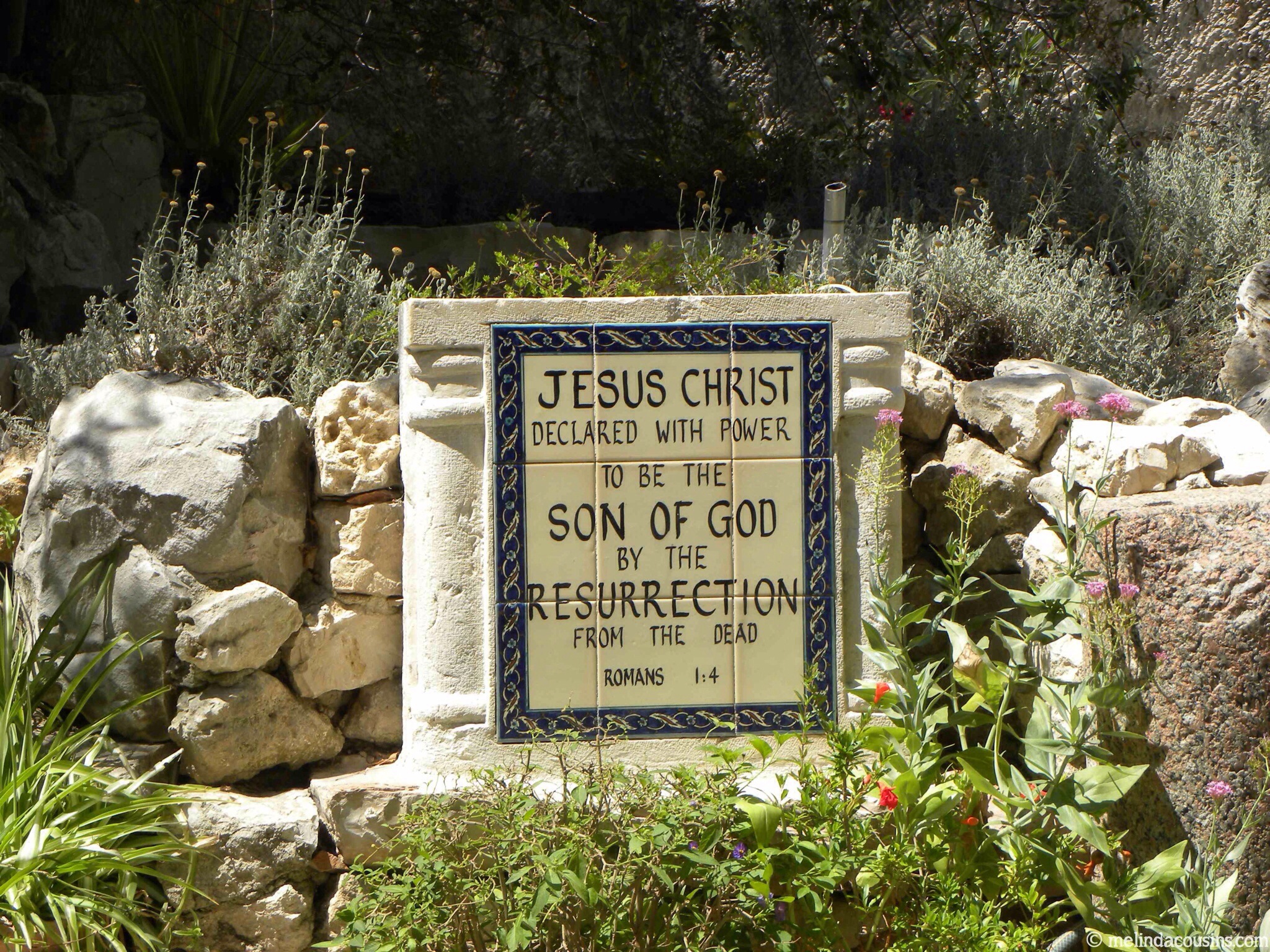
For many years, Christian apologetics focused primarily on the historical evidence for the resurrection. This is helpful and interesting, but if that is as far as we go, then we have missed the central point of what we are celebrating this weekend. Jesus’ resurrection from the dead is the breaking into our world of God’s kingdom and a whole new way of life. Because of Easter Sunday, everything is different.
20140420-222820.jpg

To say, “I believe in the resurrection” is to say so much more than that I believe that Jesus rising to new life was a historical event that actually happened two thousand years ago. I believe it was and it did; but to believe in the resurrection, to put my trust in it, is to choose to enter into the new life that it makes possible. It is to believe that that kind of life is available to everyone here and now, despite all appearances to the contrary.

20140420-223052.jpg

N. T. Wright says, “Jesus’ resurrection is the beginning of God’s new project not to snatch people away from earth to heaven, but to colonise earth with the life of heaven.” Resurrection life is life where miracles are possible, where justice is proclaimed, where renewal is experienced, where righteousness is lived out. It is the breaking in of heaven here on earth, and because of Jesus, it is available to us right here and now.

Today would be a good day to be in Caesarea

For the past year, my church has been teaching through the book of Acts. Yesterday our pastor, Dan, preached a powerful message on Acts 25. At this point in the narrative, Paul has been in Caesarea Maritima for two years as a prisoner, waiting for his trial to be heard. He is offered the opportunity to go back to Jerusalem and have his case heard there, but instead he appeals to Rome. His focus is on getting to the place where he can continue the kingdom ministry he has been called to as the apostle to the Gentiles.

What remains today of Herod Agrippa's palace, where Paul was held
What remains today of Herod Agrippa’s palace, where Paul was held

It made me remember how much I have loved visiting Caesarea, and how each time I’ve been there I’ve been struck by what it must have been like for Paul. To be in this Roman harbour city built by Herod to honour Caesar, at the main port for ships coming to and from Rome, likely kept in the basement of the palace which lies on a promontory overlooking the Mediterranean Sea … looking towards Rome.

What the palace would have looked like when Paul was there

From his letters and other travels, we know of Paul’s strong desire to go to Rome. The centre of the empire was a key place for the spreading of the good news throughout the world. I’m guessing he didn’t originally expect to get there via a prison ship, but when that’s the opportunity that arose, he jumped at it. Paul knew who he was, what he had been called to, and what was worth giving his life to.

Caesarea sign about Paul

So, what did I love about Caesarea?

Seeing its history, particularly the Roman history of the first century.

Timeline of Caesarea's history
A timeline of Caesarea’s history

The artificial harbour constructed by Herod the great.

Caesarea Harbour

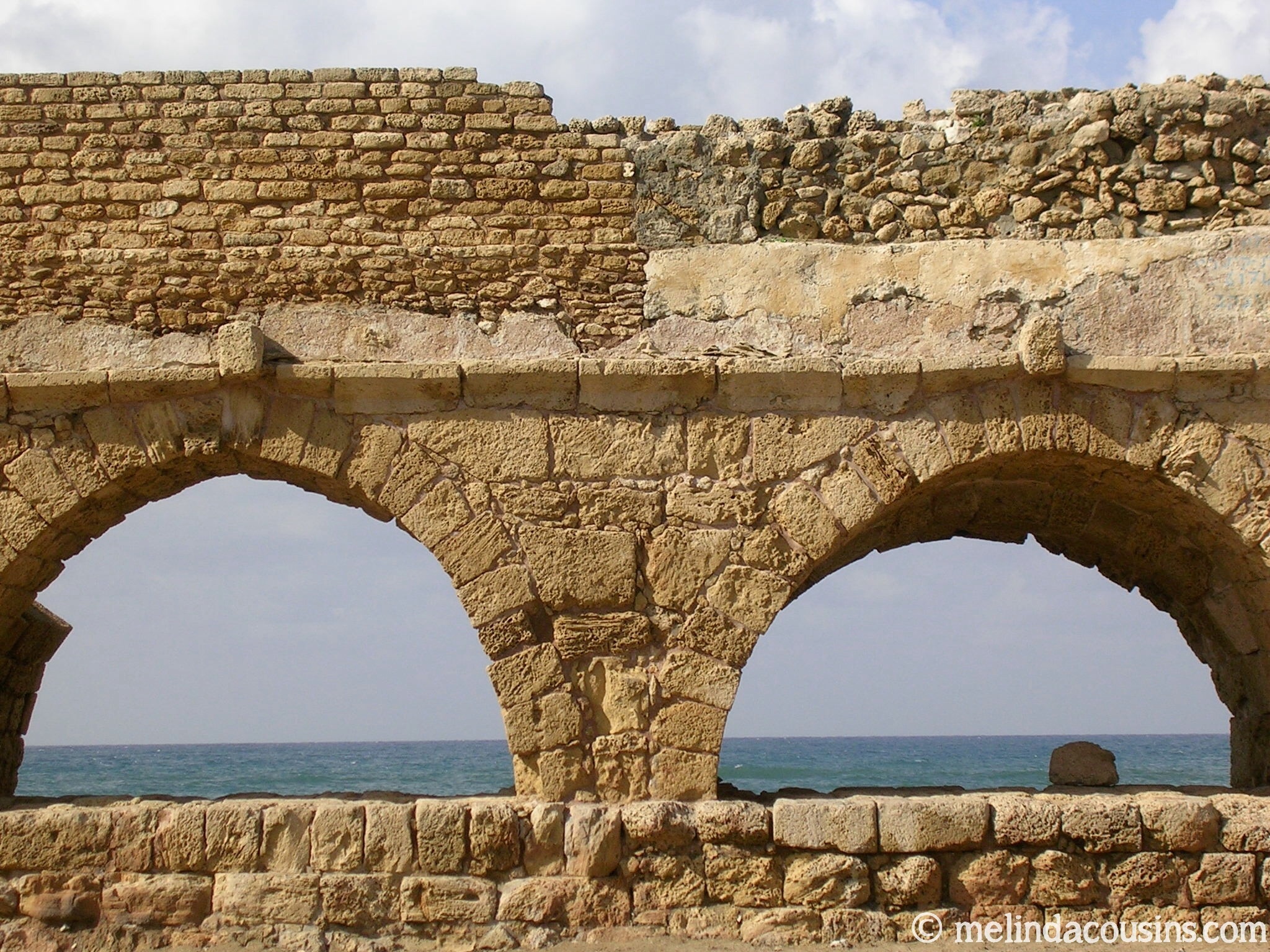
The remains of the ancient Roman aqueduct that brought fresh water to the city.

Aqueduct

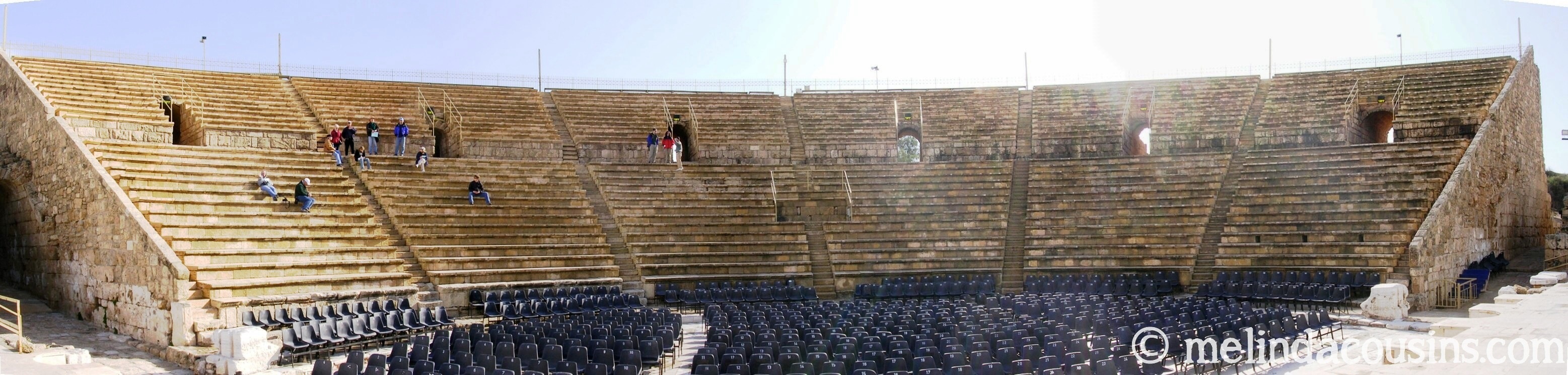
The 4000-seat Roman theatre, completed by Herod in 10BCE and restored to be used for performances today.

Caesarea theatre panorama

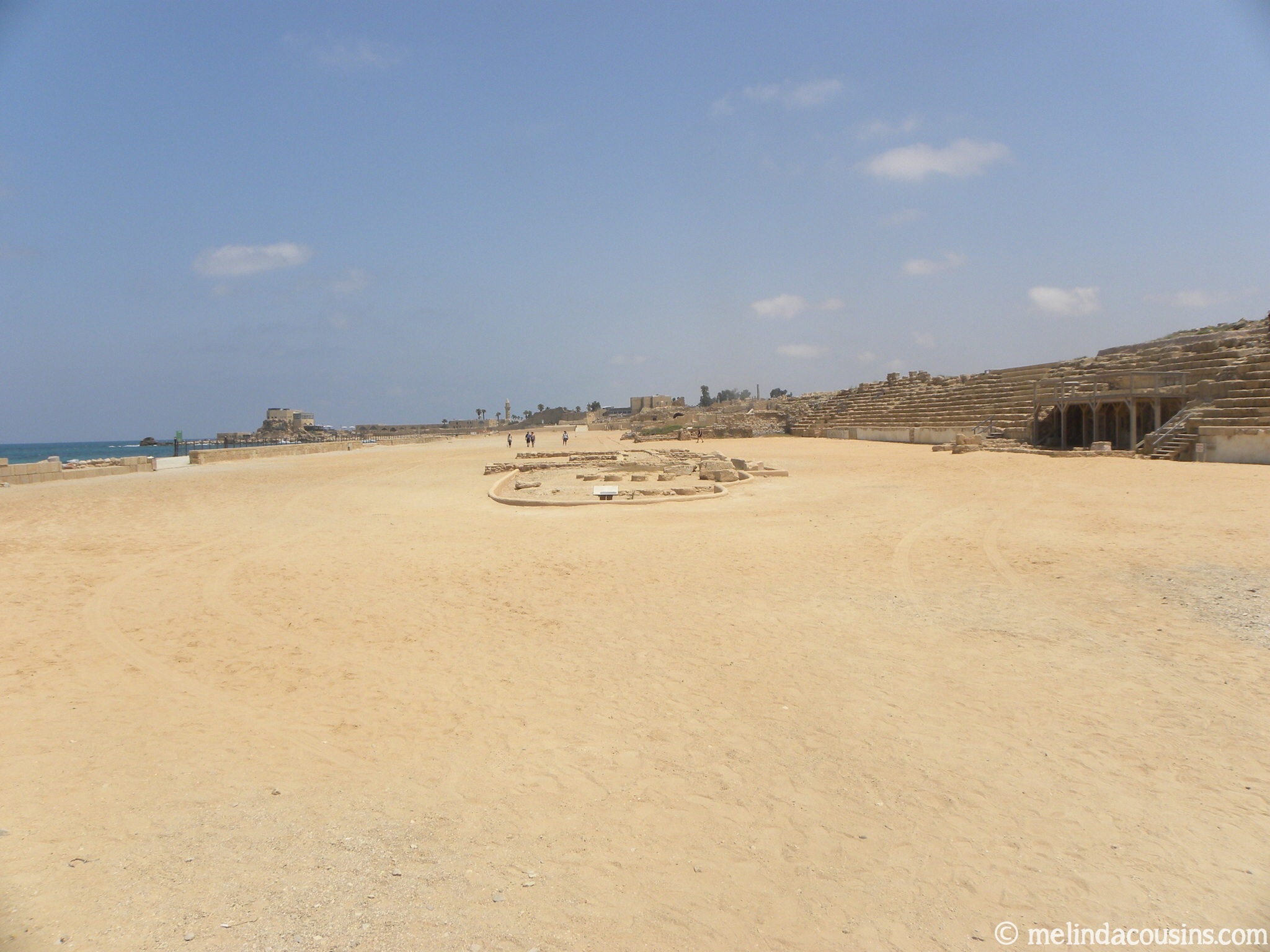
The remnants of Herod’s hippodrome.

Caesarea hippodrome

Caesarea hippodrome seats

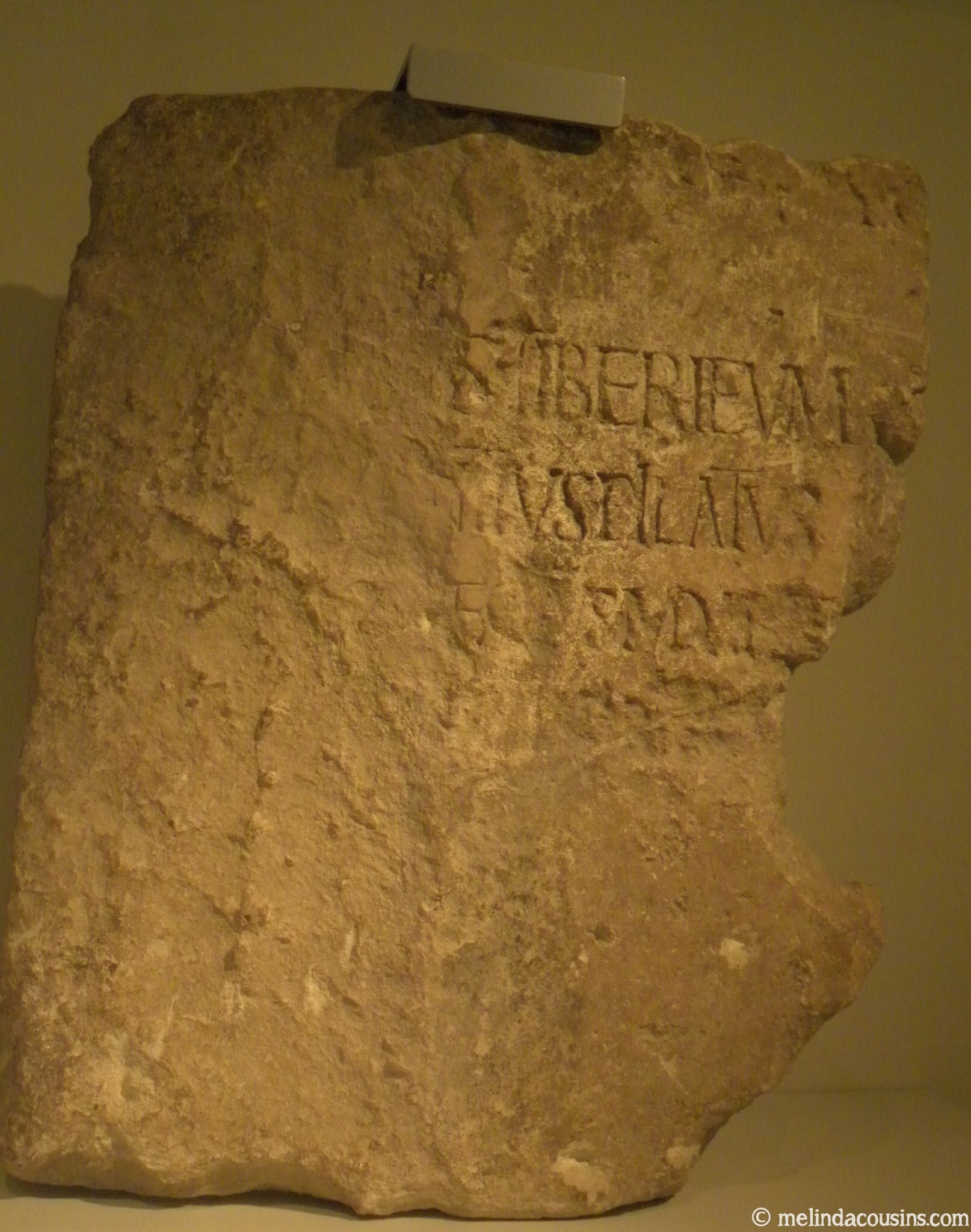
Caesarea is also the place where the Pilate Stone was discovered in the 1960s, the first archaeological item found which mentions the Roman prefect Pontius Pilate, under whom Jesus was crucified.

The inscription mentioning Pilate, in the Israel museum
The inscription mentioning Pilate, in the Israel Museum
What did I learn from Caesarea?

I find it intriguing that in a place built by a king known as “the Great” and built to honour the Emperor of the then known world, the person I remember most is a man who spent two years here as a prisoner. Paul’s legacy, due to his faith in Jesus and commitment to the gospel, has profoundly changed the world. I hold copies of his writings in my hand every day.

The palace where Paul was likely held and tried

It makes me think about what really lasts. In the past few decades there have been wonderful restorations to preserve the city’s history, but the truth is that in the end all great building projects come to ruins.

A 2012 archaeological dig taking place at the western end of the palace ruins

Certainly, glimpses of faded beauty remain.

Mosaics at Caesarea
Mosaics at Caesarea

But watching the waves crash over Herod’s once great breakwater reminds me that so many of the seemingly great achievements in this life will not last; and Paul’s life challenges me once again to commit mine to the things that will.

Waves crashing over part of Herod's breakwater wall
Waves crashing over part of Herod’s breakwater wall

“O Little Town…” or … Today would be a nice day to be in Bethlehem

The "little" town of Bethlehem today
The “little” town of Bethlehem today

It seems appropriate this eve of Christmas Eve to think about spending time in the place where the events we are celebrating took place. I’ve visited Bethlehem three times, just for a day each time, and found it a place of sadness and joy, of tensions and of celebrations. A place which perhaps reflects the breadth of emotions the story of the Incarnation brings in all its fullness.

Mosaic Map of Bethlehem in St Catherine's Church
Mosaic Map of Bethlehem in St Catherine’s Church

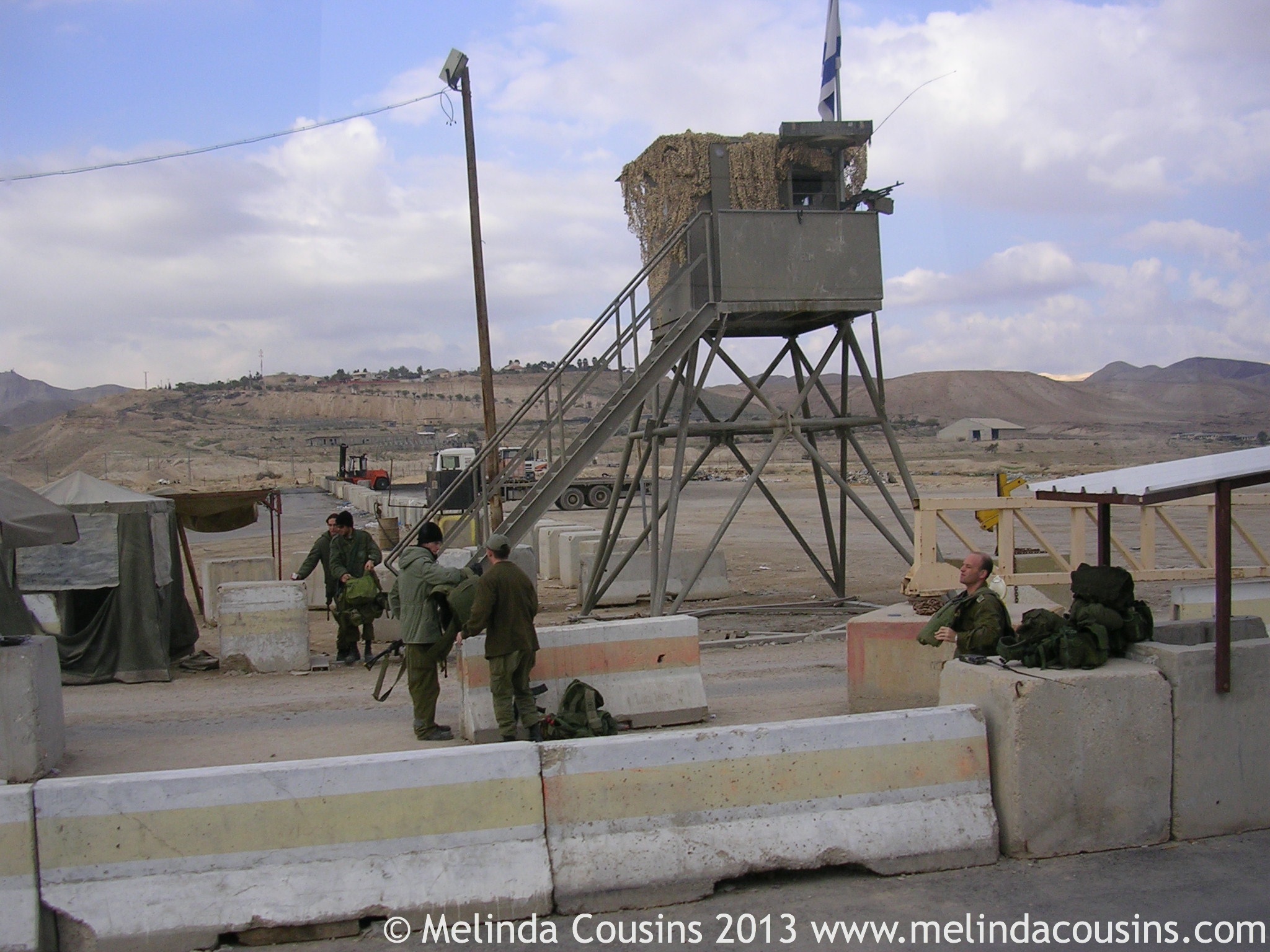
Bethlehem today is located in the West Bank, under Palestinian control. The first time I visited was during the Second Intifada and the experience of entering and exiting the town was quite confronting. Seeing the way those who lived there were roughly and invasively searched and trying to reconcile that with the deferential way we were treated as Westerners was difficult.

A 2005 West Bank checkpoint

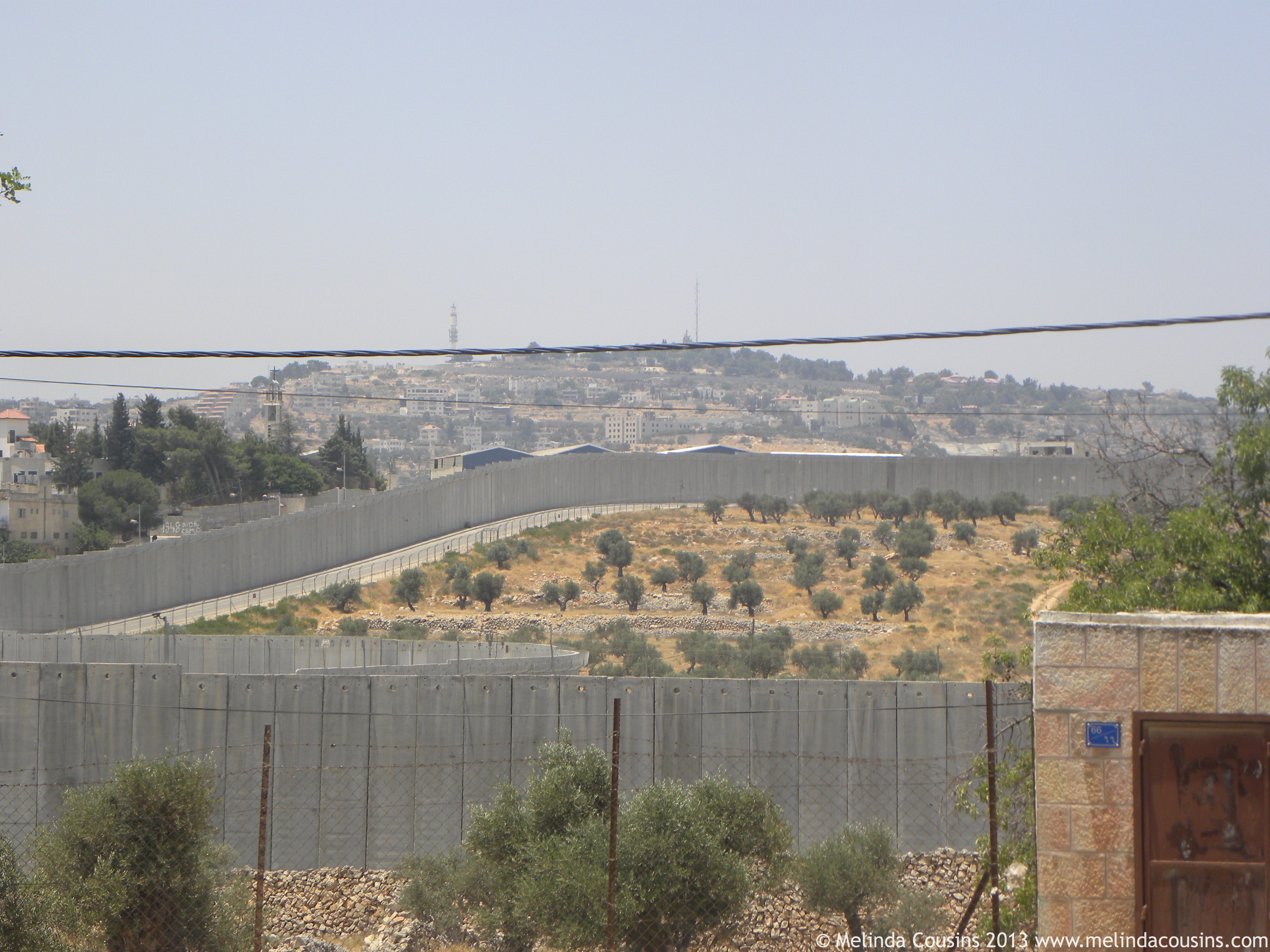
On our visit last year things were much calmer. But none of us could miss seeing the wall. The huge concrete construction which surrounds the town, seemingly making it appear to those outside that there is nothing and no one in there. This time one of the most confronting things I found was sections of the wall which were painted with pretty scenes of empty fields and the Sea’s edge, as if to enable those passing by to imagine that that is what the other side is really like. The reality is quite different. The difference between one side and the other is something like the difference between a ‘first world’ and a ‘third world’ country, if I can use those terms purely to evoke a comparison.

A small part of the separation wall
What did I love about Bethlehem?
Inside the Church of the Nativity

Obviously the main ‘attraction’ is the Church of the Nativity, built to remember the place of Jesus’ birth. The church has been through a lot. But there is a simple beauty in its setting. The tiny front door, supposedly a reminder to enter with humility, certainly makes you slow down as you go in.

Our guide entering the Church of the Nativity

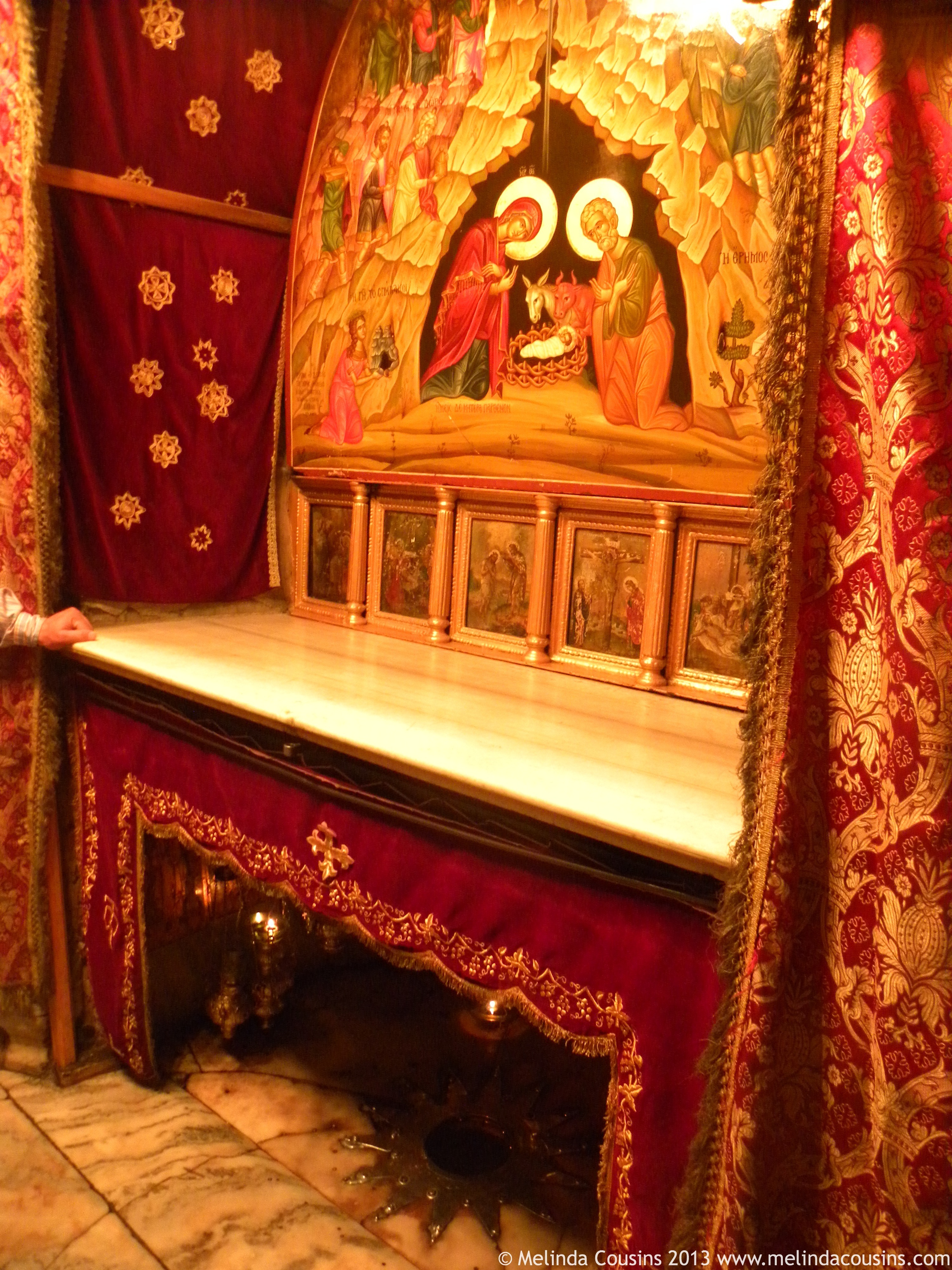
The grotto beneath the church with its star to locate the traditional ‘exact’ site of Jesus’ birth can provoke some cynicism; but is also a testament to the way many believers over thousands of years have remembered and been changed by the events that happened in this town.

Altar with a star on the ground marking the traditional site of Jesus' birth
Altar with a star on the ground marking the traditional site of Jesus’ birth

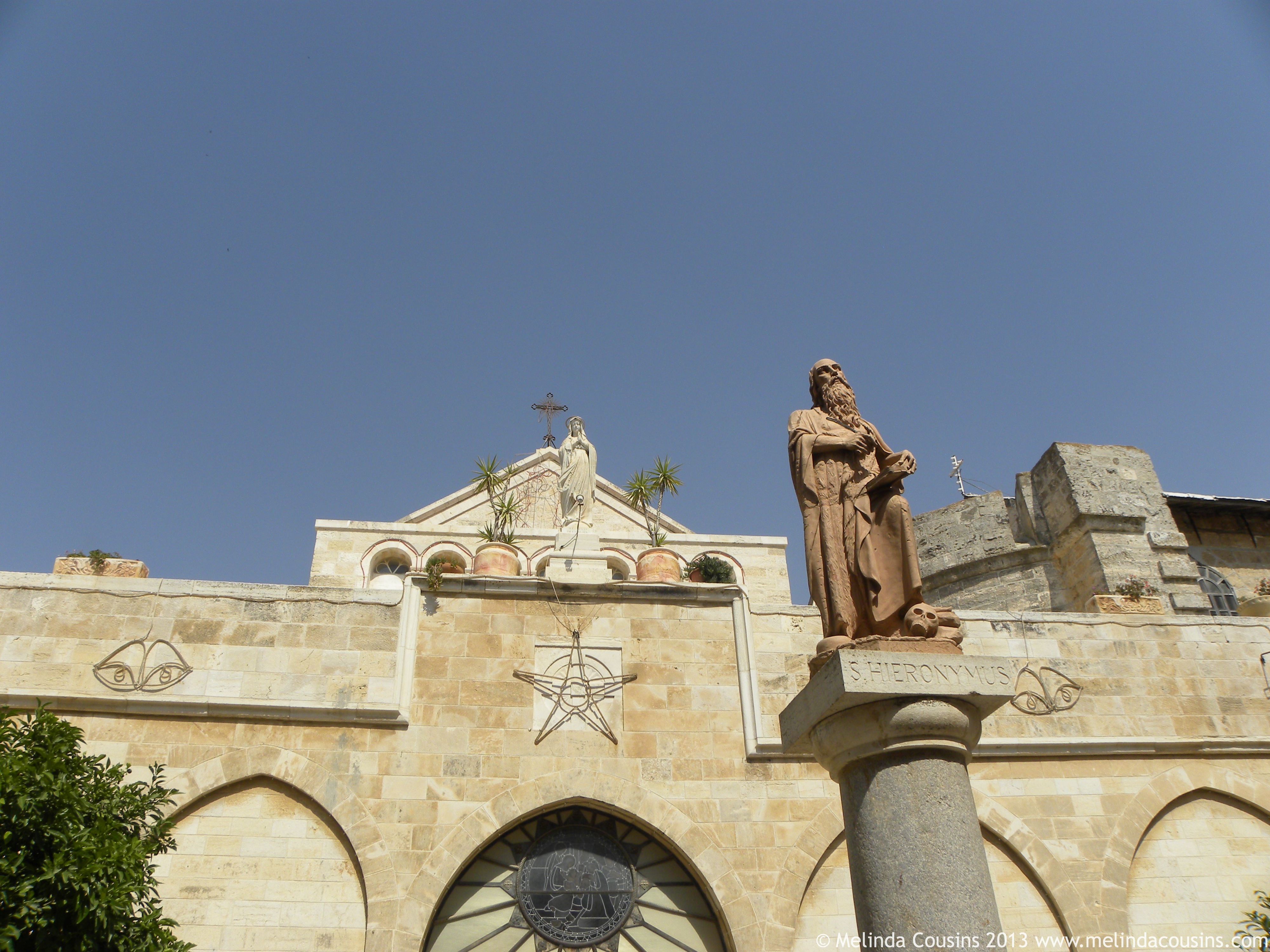
The adjoining chapel where Jerome translated the Bible into Latin is another reminder of those who have come before, and the way we benefit from their devotion and dedication. The statue of Jerome has a skull at his feet because supposedly he carried a human skull with him to remind himself of his own mortality. An interesting choice  not one I would emulate but, hey, if it worked for him …?

Statue of Jerome outside St Catherine's church
Statue of Jerome outside St Catherine’s church

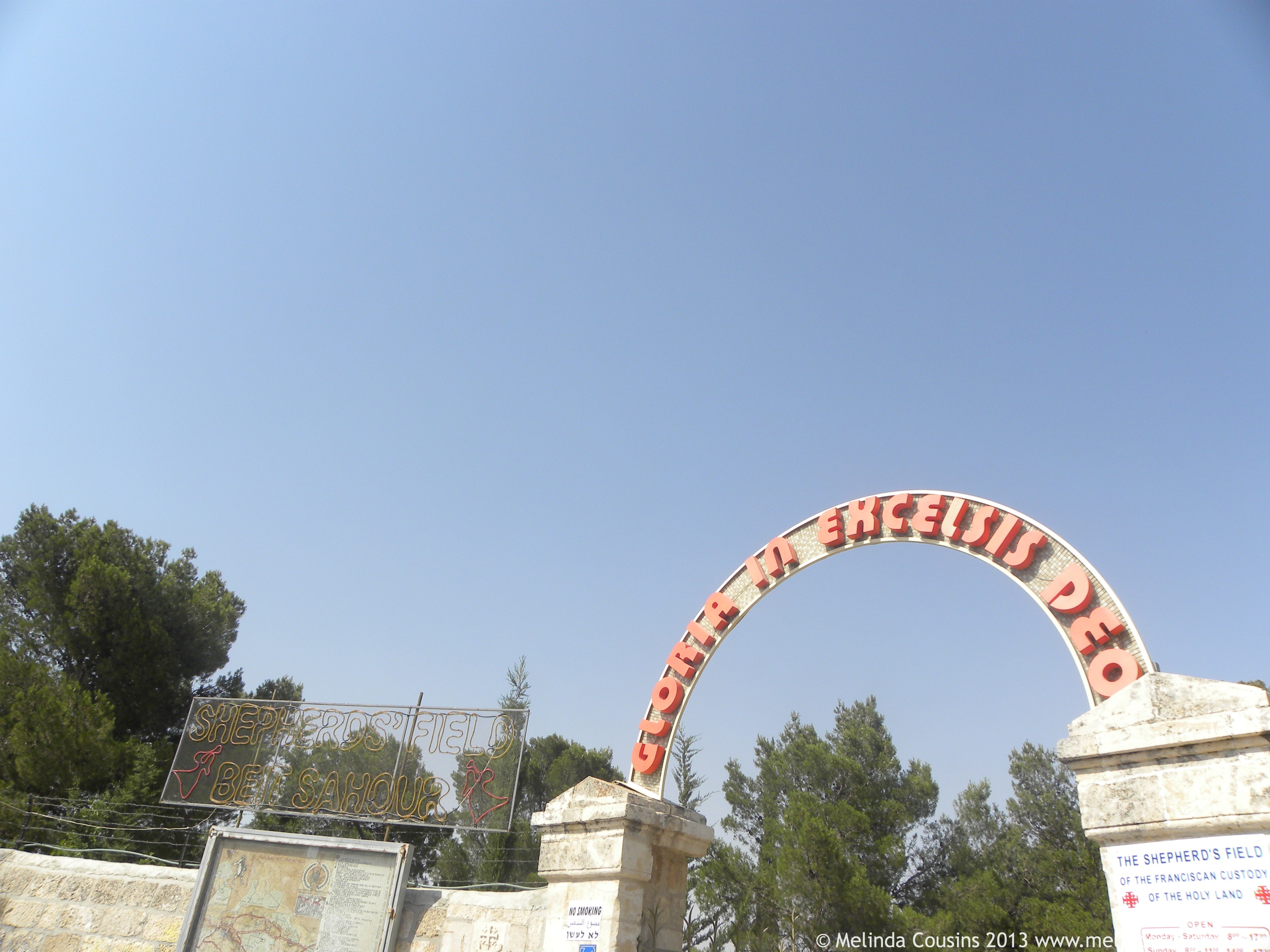
Further afield you can visit the “Shepherds’ Fields,” an area where perhaps the other aspects of the story of Christmas Eve took place. Again, whether the location is exact or not, there is space to reflect and remember the message of hope and peace; the truth proclaimed here that God’s favour rests upon humanity.

Entrance to the Shepherds' Fields
Entrance to the Shepherds’ Fields

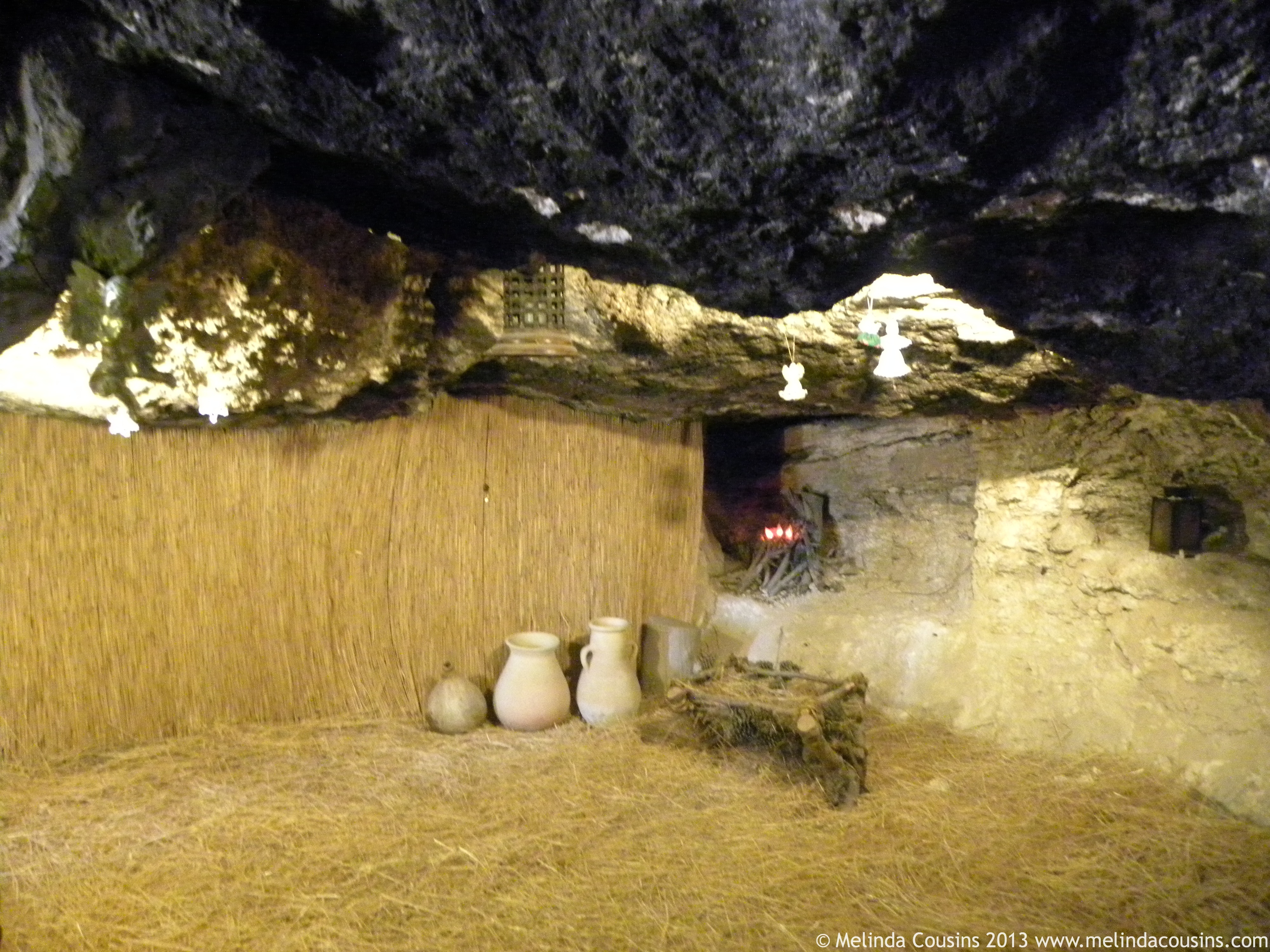
Our study group shared some time in the caves here last year worshiping. I know we can worship our Saviour anywhere, and yet I do appreciate the way a sense of ‘place’ can bring another dimension to our corporate experience.

A place to worship in the cave
What did I learn from Bethlehem?

As well as celebrating both the biblical story and the history of the church, this is one of the places that reminds me why people make pilgrimages. Whether these are physical visits to historical or sacred sites, or more spiritual recognitions of the journey, taking time to enter in, to be still, and to return to the busy-ness of life is an important spiritual practice. I can appreciate the intention of this sign on the door of the church through which we exited.

DSCN8904

We also spent time, and money, in some of the shops and restaurants around the town. Tourism is Bethlehem’s main source of income and it has suffered over many years. It is a privilege to be able to support those there who seek not a handout but a way to engage, serve and connect. It was also wonderful to meet with Palestinian Christians and hear something of their experience and their hopes for the future. They asked us to remember them, to pray for them, and to ask others to pray for them as they seek to find ways to build bridges of peace and reconciliation in such a difficult place.

The Bethlehem Peace Centre: designed to promote peace and cultural diversity (and a good place to shop for souvenirs!)

Like many places in Israel, the history of this place, both ancient and modern, is complicated; the politics perhaps even more so. Is it an accident that it is in this difficult place we remember that we have a God who steps into the mess and muck of humanity? The fullness of God dwelt in a helpless baby. The only ones to hear the angelic choir were those sleeping outside in the dirt with the animals. The birth of this tiny child provoked an attempted genocide. The Christmas story is not neat and tidy; and the place we remember and sing songs about at this time of year isn’t either. But it is a wonderful reminder of the real power of words like hope and peace and joy. They come in the midst of darkness and conflict and despair. They come just where we need them most.