Tag Archives: Jesus

Beauty in the dry season (or, last Monday was a good day to be at Victoria Falls)

I have previously posted a Monday travel blog on Victoria Falls, with photos showing its full capacity and beauty at peak season, along with the abundance of rainbows dancing through the water both by day and night.

View from the Rainbow Bridge   July 2013 / December 2014
View from the Rainbow Bridge December 2014 / July 2013

Visiting Victoria Falls at the moment, at the end of a long, late dry season, is a very different experience. Some people even told us not to bother when we were in southern Africa last week. Because on the Zambian side of the falls there is hardly any water, and on the Zimbabwe side, perhaps 10% of the maximum flow.

Zambian side of Victoria Falls July 2013 / December 2014
Zambian side of Victoria Falls December 2014 / July 2013

But I’m very glad we still had the opportunity to visit. Because there is a unique and fascinating beauty in the dry season. It is different, but equally worthwhile.

Zam falls


The contours of the gorges become much clearer when there is no water to obscure them from view.

Zam falls 2

The colours of the water and the rocks are seen in a different light.

Looking back to Zim


From the air, you can get even closer for your bird’s eye view.*

Sideways air view


The dimensions of the place are easier to make out and understand.

Gorge close up

And of course there is still water rushing over about one quarter of the falls … and its scarcity makes the sight and feel of its cool spray even more precious.

Zim falls

Because there was less water and therefore less danger, we had access to lookouts that are closed most of the year round, giving unique perspectives closer to the falls.

Lookout


And for the really brave (or crazy) there was an opportunity to swim in places that are inaccessible most of the year round.

Devils pool


And I was reminded that there is beauty in the dry seasons of life too.

Close up falls


A Facebook friend commented on one of my photos asking if there was a drought. No, I replied, it’s just the dry season. It comes around every year. There is no expectation that the Falls will look the same year round.

Gorge view


It makes me wonder why so often we seem to expect that our lives will look the same as those of others around us. Just because we do not appear to have what they have does not mean we are in a drought. Whether it is relationships, money, jobs, status, experiences, lifestyle … it is too easy to judge ourselves and others by what we do not have. But we are in our own season and I wonder if we look closely whether we can see and celebrate the unique beauty of where we are right now.

Rockface

What others perceive as a lack may in fact be the very thing that provides us with unique opportunities or perspectives. It may be that we grow more, and we certainly grow differently, in different seasons.

Panorama

As just one example, I’m currently single and perhaps other people look at my life and think there is a “drought”! But this season has brought me all kinds of incredible opportunities to serve and learn and grow (and yes, travel) that might not have been possible had my circumstances been different.

River view

And I wonder if part of the secret to contentment is learning to appreciate the beauty of times that might at first glance appear “dry.” Because in the end, as a follower of Jesus, I truly believe I lack nothing because I have Christ. And so I can learn to be content whether I appear to have everything or to have nothing. And that’s the best kind of beauty of all.

Cataract view


* A very generous anonymous supporter of our mission team provided for us to have the incredible experience of flying over the Falls in a helicopter, which was a wonderful gift.

What might our response to Ebola have to say about what it means to love our neighbours?

Recently, I’ve been thinking about the biblical principle of loving your neighbour and whether I really understand it properly, let alone put it into practice consistently.

Because I’m convicted that even our compassion and advocacy for others can sometimes demonstrate the insidious depths of our culture’s self-interest. When it comes to loving others, I’ve heard a number of people quote the principle this way “Love your neighbour as you love yourself.” The problem is that is not actually quite what the Bible says. The command appears nine times in the Bible, but each time it simply reads, “love your neighbour as yourself.” And it got me wondering what the difference might be.

Does hearing “as you love yourself” feed into the self-focus, and even narcissism, of our modern culture? Would the ancient readers of the Bible even have had such a concept as “self-love”?

More importantly, does “love your neighbour as you love yourself” too often become “love your neighbour after you love yourself”?

Certainly I have heard it explained that way – that you can’t love others until you learn to love yourself. But is that true? Or does it too easily become an excuse for not caring for others because we haven’t got all our own issues sorted out first? Does it stop us from reaching out with compassion to those in need because we subconsciously see ourselves as a higher priority than them?

So, what might be the difference between reading the call as to “love as you love yourself” and to “love as yourself”? Some people might say there isn’t one. But I wonder …

The Hebrew preposition כ used in Lev 19:18 is found all throughout the Old Testament in comparisons, similes and metaphors. Could it be that the idea of loving your neighbour as yourself means actually seeing them as you? Loving them as if they actually were you rather than seeing them as “other” or “outsider”? Certainly Leviticus 19:34 seems to lead in this direction, where the same command is applied corporately to foreigners in the land of Israel – they are to be loved not as outsiders, but just as if they were native-born, insiders.

What would it look like to truly love those who we think are not like us as if they were us? And would that change the world’s response to what is going on right under our noses every day?

So what does all this have to do with Ebola? A friend tweeted me this graph yesterday about the number of people who have died in Africa over the last 8 months. I don’t know about you, but I find it very confronting.

Ebola stats
Image source

It’s confronting to consider the global panic over Ebola in comparison to other diseases and to ask the question, why? What makes the difference in what we choose to care about?

(It’s also confronting to be reminded that we somewhat condescendingly talk about “Africa” as one place with a single story rather than recognise the huge variety of experience within its 54 countries, but perhaps that’s a separate issue).

Could it be that our concern, fear and panic around Ebola is more to do with ourselves than those who are dying from it? At our core, are we afraid of Ebola because if we caught it, we might die from it, whereas the other reasons people across Africa are dying every day don’t bother us so much because we know they are unlikely to happen to us? Is this an example of “loving as we love ourselves” because subconsciously we know if we were hungry we would just eat, whereas if we caught Ebola we might actually have to confront our mortality?

Is this why the death of one person “like us” gets so much more attention than thousands who we see as “other”? (See Rob Oakeshott’s letter to Thomas Eric Duncan for some challenging questions about that)

These are just some of my questions. The more pressing ones are these: How can we respond differently? How do we overcome such deeply ingrained self-interest that it even comes out in the way that we think we are showing compassion and care for others?

We need a whole new paradigm. As a Christian, thankfully I remember that I already have one. Jesus doesn’t just affirm the commandment to love our neighbours as ourselves.

Jesus redefines who our neighbours are, and even calls us to love those we see as our enemies in the same way. And He sets a whole new standard for measuring what love looks like.

In the end, whether its “as you love yourself” or “as yourself”, using ourselves as the standard for how we choose to love others seems to leave us open to excuses and provisos. Jesus gives His disciples a new commandment, using Himself as the standard for what love for others is to look like. “Love one another as I have loved you.” Just imagine if we could begin to show that kind of incarnational, self-sacrificial, servant-hearted love – love that puts others above ourselves – in the way we respond to the every day tragedies of our world. How different might that look?

Is Jesus the true Anzac? Contextualisation and Aussie culture on our most “sacred” day

Anzac Cove, Gallipoli, Turkey

Today, the 25th of April, is for many Australians one of the most significant dates on the calendar. All week I’ve heard the media talk about it as a sacred day. This morning many Australians arose before dawn to participate in services of remembrance. Veterans and their families will march in parades, and it’s a public holiday to commemorate the date.

Many would say that the story of the Anzacs has become foundational to Australian culture. It has become what sociologists call our national myth. Every nation has its own stories, its own celebrations and its own myths. The United States chooses to celebrate events like Independence and Victory. The Swiss celebrate their neutrality and their humanitarianism. The Jews commemorate their endurance despite overwhelming persecution. The Japanese esteem the honour and nobility of the samurai.

As Australians (and New Zealanders), we choose to mark a day on which we suffered a terrible defeat. When thousands of lives were lost in a faraway place where many would say they never should have been in the first place. To many outsiders it seems like a very strange national holiday.

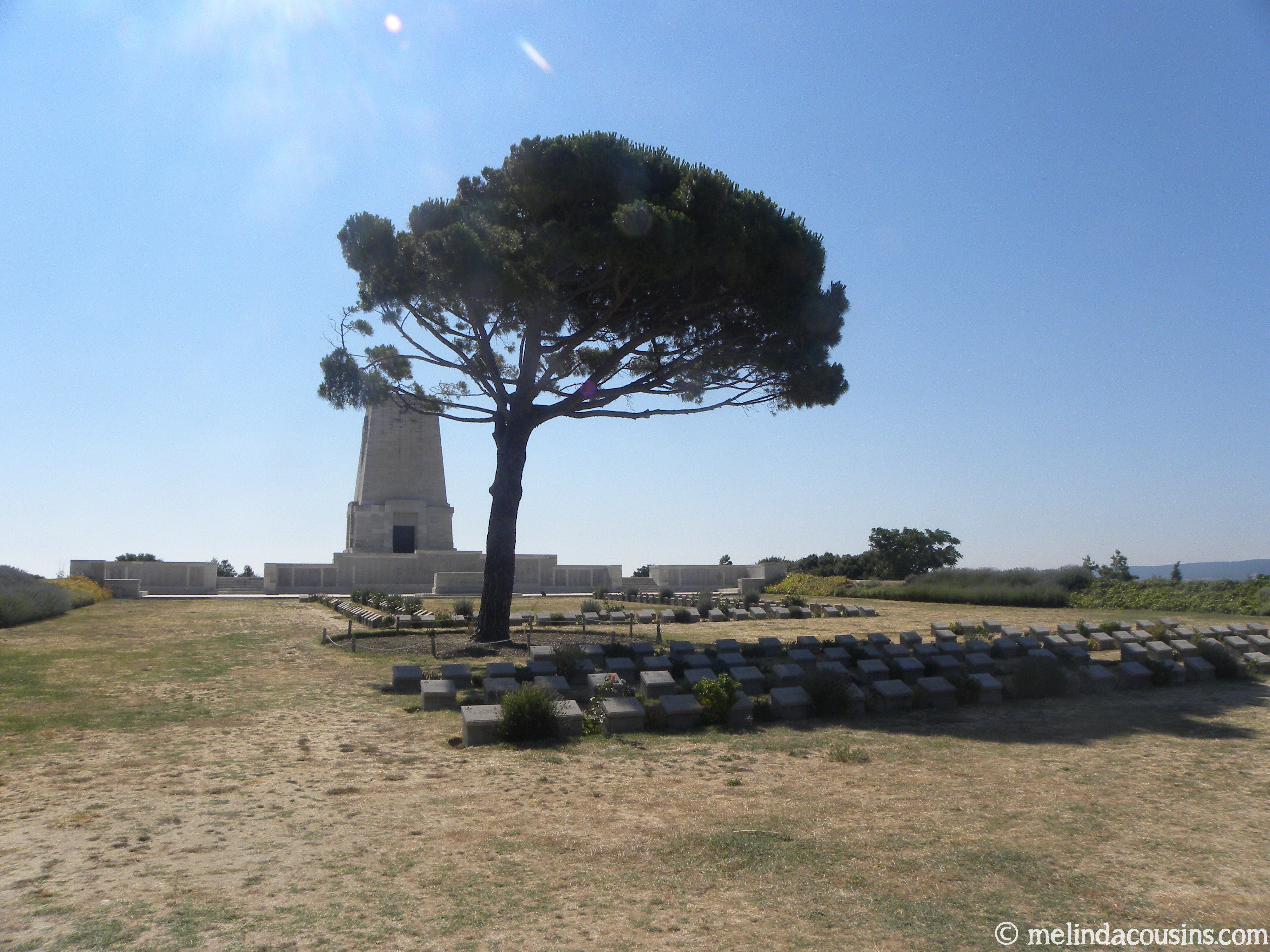
Lone Pine Cemetery, Galllipoli, Turkey

But it is more than the events of that day at Gallipoli 99 years ago that this day is about. For many Australians, the Anzac story or legend has become a story about the kind of people we want to be known as. The values of the Anzacs are tied up in concepts like mateship and loyalty, with hints of larrikinism and good humour, and ultimately the willingness to give one’s life for others. This is our national story. And I think it provides a fascinating window into our culture.

The thing about national myths or stories is that they are both inspirational and aspirational.

They tell us what we value, and they tell us how we would like to see ourselves. This is who we as Australians would like to be. We know that on the world stage we are not the most powerful, or the most efficient. But we do want to be the ones who will always play fair, have a go, stand up for one another, and give all we have to give. These are human qualities to be admired by everyone, but there is something quite unique in our Australian culture that prizes them in a way that not all other nations do.

When people prepare to serve in other cultures, they learn about ‘contextualisation,’ which is basically trying to find ways to share God’s love that are particularly relevant and connected to the culture in which they find themselves. So I find it interesting on this day to think about how we might find ways to express and share God’s love that are contextualised to our Australian culture. How might the good news of Jesus resonate with people who value ideals like mateship, loyalty, egalitarianism and sacrifice?

The truth is that there is always a gap between how we would like to see ourselves & how we actually are.

We do not live up to our own ideals. We want to value mateship, but there are times when life gets busy and we lose touch with our friends. We want to value loyalty, but there are times when we are pushed by our own needs to put ourselves first. We want to value equality and egalitarianism, but deep down we often treat those who are like us better than we treat those who are different. And we’d all like to think that in extreme circumstances we’d be willing to lay down our lives for our family & friends, but in our everyday mundane circumstances we sometimes find it difficult to lay down just a bit of our time or money for their benefit.

But still we remember and celebrate and aspire. We esteem and honour the ideal of what we hope we could be. And what many Australians respect and revere as the ideals and values of the Anzacs, are actually what Christians believe are ideals and values ultimately found in Jesus Christ alone.

We believe there is a man who values mateship, who is the best friend anyone in this world will ever know. There is a man who values loyalty, who has promised to stick by us through thick and thin & will never renege on that promise. There is a man who values equality, who treats each one of as valuable & worthwhile regardless of where we come from or what we have achieved.

And there is a man who was willing to lay down His life in our place.

The gospel declares that Jesus is the One who fulfils all of our aspirations. That what we are looking for in others, what we would like to think we can find in ourselves, ultimately we will only find in Him.

It seems to me that the Anzac story provides a window into our own culture, a culture that still longs to find meaning and hope and values, but which is unaware of the true source of all that it is looking for. For those who know Jesus Christ, this puts us in the same situation that the apostle Paul found himself in when he visited Athens. Paul commended the Athenians for their worship of an unknown God. He recognised that they were seeking, hoping, aspiring to something greater than themselves. But he also wanted to tell them the truth: that what they were looking for could be found in Jesus.

So too, we can commend and affirm the desire in Australian culture to remember and to celebrate the values that the “Anzac spirit” seeks to encapsulate. But the challenge for followers of Jesus is to find ways to proclaim the truth that these values and aspirations point us to the need for someone who can fulfil them in a way that no one else ever has or ever can. That Jesus, dare I say it, is the true Anzac, the one we should be remembering and worshipping. Perhaps that’s a risky image to use, but the Bible uses risky pictures and metaphors for God all the time as it seeks to find ways for people to understand who God is and how He wants to relate to them.

Perhaps I’ll be accused of hijacking a secular event and trying to bring religion into it. If so, I make no apologies for that. Because as a follower of Jesus, as a Christian first and foremost, I believe that Jesus is the only hope for the whole world. And He calls me to bring His good news into the lives and worlds of my friends, and my neighbours, and my nation.