All posts by melindacousins

Why do we need International Women’s Day?

OLYMPUS DIGITAL CAMERA
For her

March 8th, today, is International Women’s Day. Lots of countries have some kind of celebration to mark the day, but still plenty of people question whether we should have a special day to celebrate women, or why there is no International Men’s Day.* (I remember as a child wondering why there was a Mothers’ Day and a Fathers’ Day but no Kids’ Day, but as I got older the answer to that question became pretty obvious, as I think the answer to this question should be!)

For me, IWD is less about “celebrating women” – while that is lovely, I absolutely agree we should celebrate the value of all people regardless of gender. For me, IWD is more about recognising that gender inequality exists in the world and it is an injustice that affects ALL of us, male and female.

… and for her
… and for her

A couple of years ago on IWD, I posted a Facebook status with some statistics from the UN – that women make up 51+% of the world’s population but earn 10% of the world’s income and own 1% of the wealth. Those are some pretty sobering statistics that I would hope prompt some reflection on all kinds of injustice in the world. What I didn’t expect was the statistic that was created in response – 100% of the men who commented on my status made light of it in some way. And these are not men I would have called sexist, chauvinistic or people who belittle women in any way. Just ordinary Aussie (Christian!) guys. That’s why I was so surprised. That’s what reminded me that we still need International Women’s Day.

I have previously written about how as a Christian I don’t always like to accept other labels, including feminist, because of the baggage of other people’s perceptions. But as a global citizen, there is no question for me that I need to speak up about what is probably the greatest injustice in the world today, because women are human beings just as men are, and until they are treated as such we are all suffering.
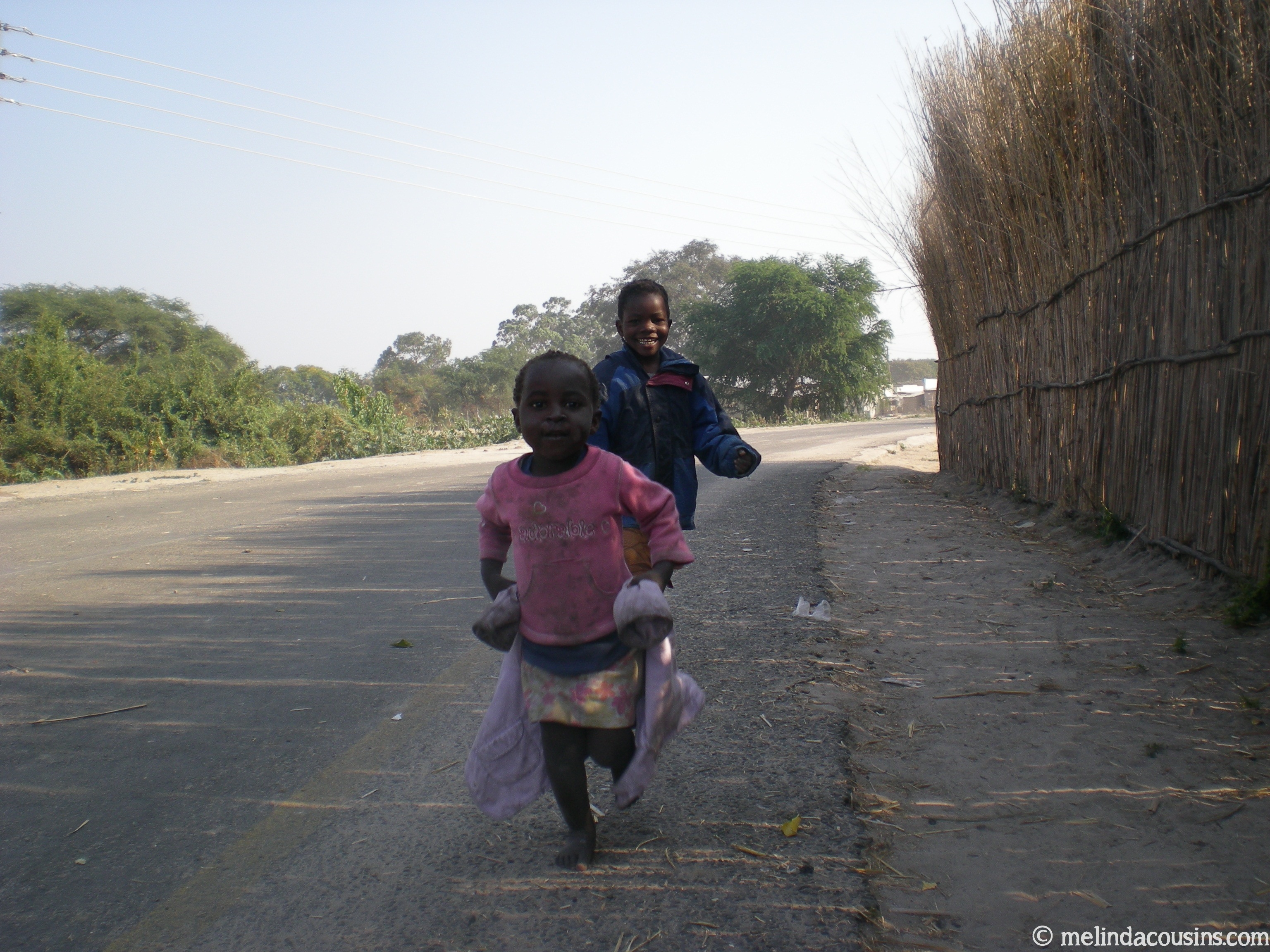
… and for them.

It remains terrifyingly true that 1 in 3 women will experience sexual assault during her lifetime. 75% of the 21 million victims of human trafficking each year are female, with the majority of those forced into sexual slavery.

The new World Bank report notes that despite many improvements, women continue to trail behind men on EVERY SINGLE economic measure.  There is no country on earth where women have wage parity with men. (And this is not simply about a man being paid more than a woman for the same work, although that still happens more often than you might think. The bigger problem is systemic:  jobs typically done by women are far less valued than jobs typically done by men).

This UNESCO report shows that 2/3 of the world’s illiterate adults are women, and that girls are disproportionately excluded from education. The education of girls benefits everyone, and has been demonstrated to decrease infant mortality rates, reduce HIV rates, and generally reduce the factors that lead to poverty. Not poverty for women, poverty for everyone.

So … some good things to share from today. Check some of these out:

1. UN General Secretary Ban Ki-moon’s IWD 2014 message on how equality for women benefits everyone

2. Google’s doodle video celebrating IWD 2014

3. Buzzfeed’s list of 22 inspirational Australian women

4. Reuters article on why educating girls can help eradicate poverty

5. World Vision’s project for the education of girls – how for $35 you can make a huge generational difference and help eradicate poverty

6. And if you’ve got a bit of time, watch Chimamanda Adichie’s 30 minute TEDx talk  … especially for any woman who has ever felt she needs to apologise for being smart or opinionated or just for being female … and for any man who doesn’t understand why we still need feminism. (Thanks Tamie for putting me on to this!)

* For any men still wondering, there IS an International Men’s Day (November 19) but thanks for reading to the end to find out! In many places around the world it’s also pretty much International Men’s Day tomorrow, and Monday, and Tuesday, and Wednesday, and Thursday ….

Today would be a good day to be in Beijing

I missed my regular Monday travel post last week due to study deadlines, some of which are still looming. So today I’m thinking it would be really nice to be able to go somewhere different enough that my mind would be compelled to think about things in different ways, to be opened up to new perspectives. And the place that comes to mind is Beijing, the first place I visited in China, and a place that certainly reminded me that different cultures and histories lead to very different ways of viewing the world.

Tiananmen Square
Tiananmen Square
What did I love about Beijing?

Great Wall 3

The beauty of its history and culture.

The northwest corner tower of the Forbidden City

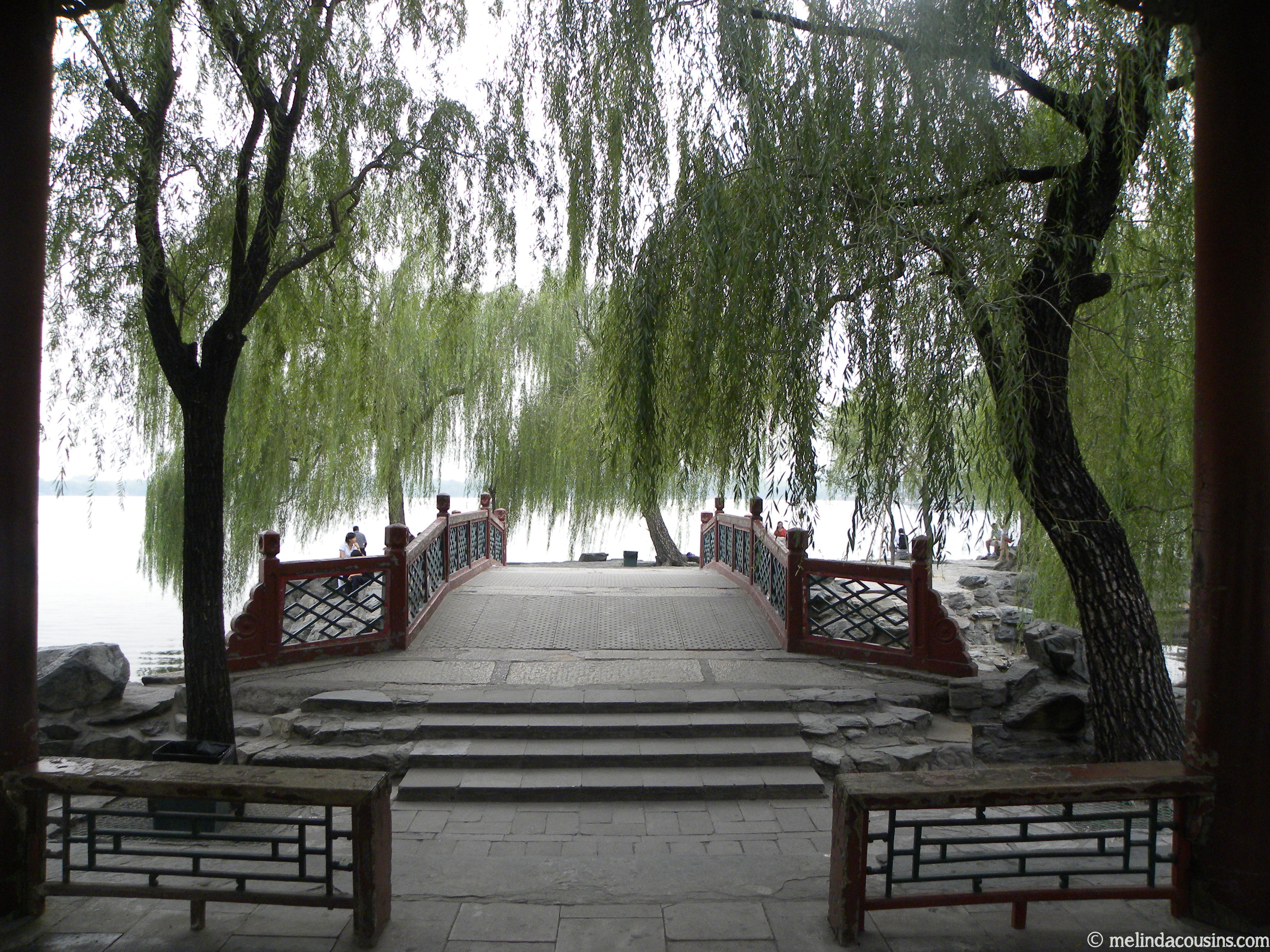
The peacefulness of the grounds at the Summer Palace, an oasis in a bustling city.

Summer Palace groundsSummer Palace view

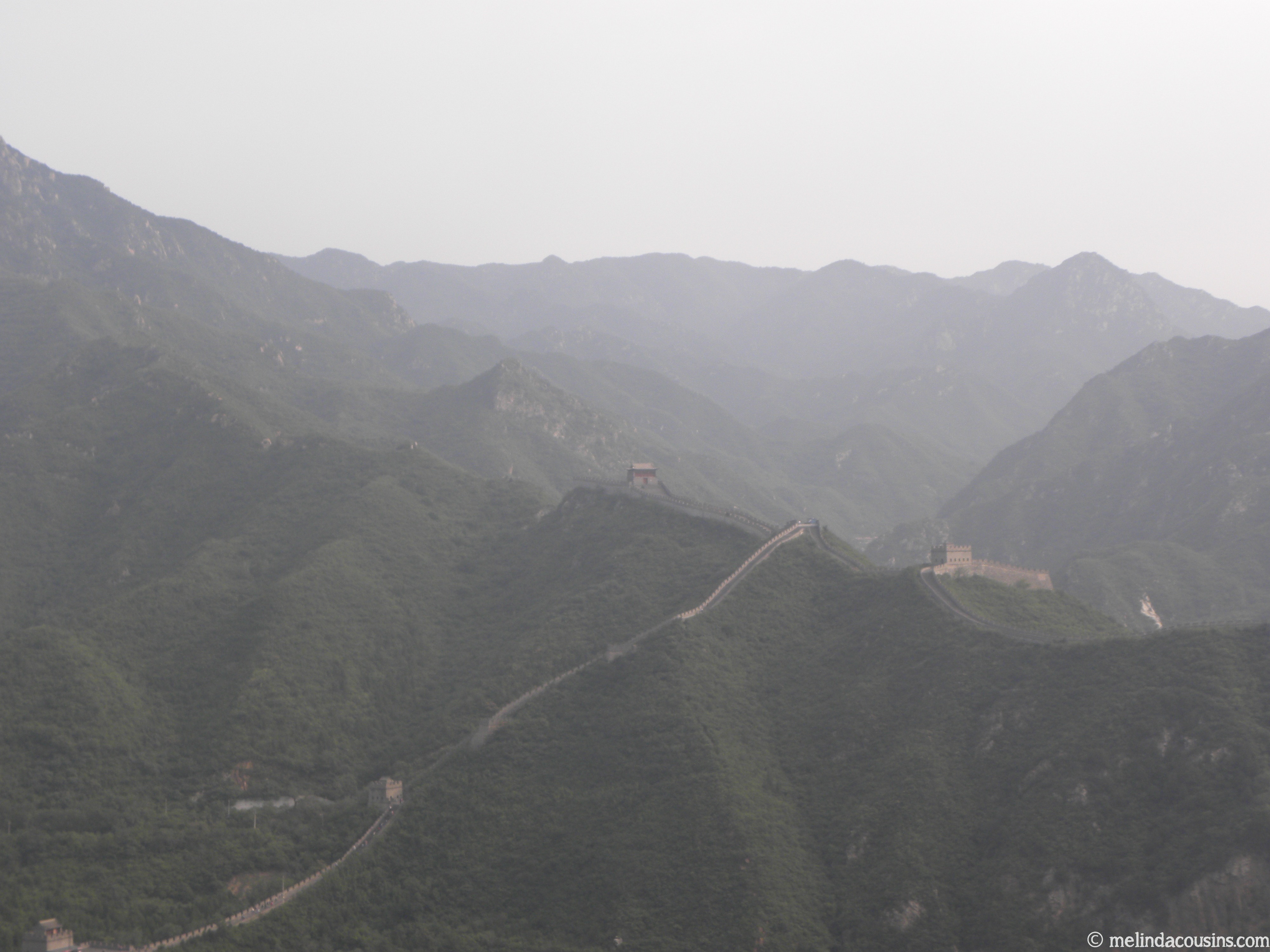
The grand spectacle of just a small section of the Great Wall a few miles outside town

Great Wall 2

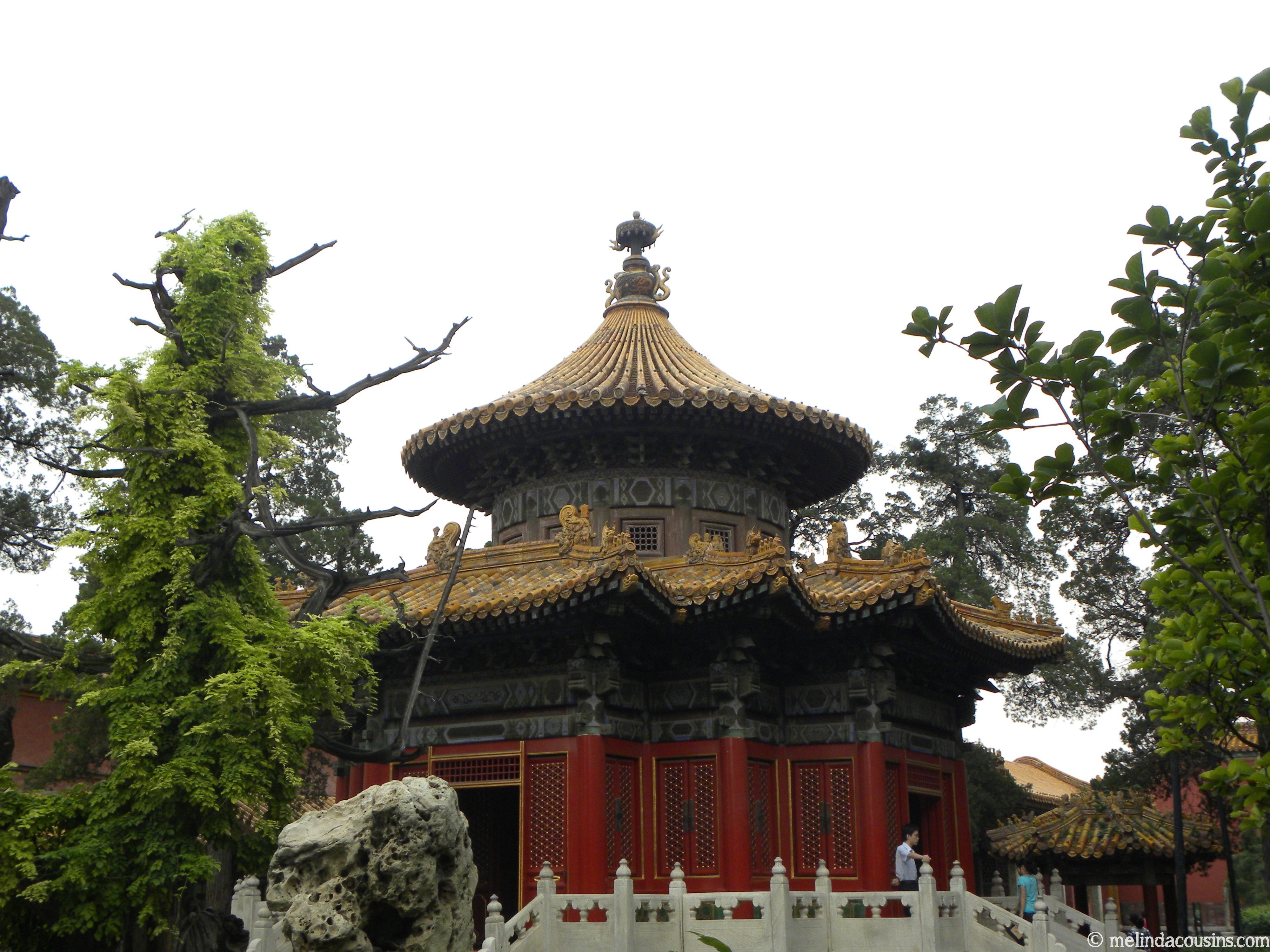
The ancient temples bearing witness to generations of people’s commitment and devotion.

Forbidden City temple

The opulence of the Great Hall of the People.

Inside Great Hall 2

I was taken by the simple and profound art displayed inside too.

wall painting 1

I also enjoyed seeing the pride of the people in the way they had pulled off the Olympics a couple of years prior to my visit.

The Watercube, Olympic Swimming Centre
Birdsnest
The Birdsnest Stadium
What did I learn from Beijing?

I certainly often felt like an outsider. I didn’t always understand what was going on. It is good for me to experience that sometimes, and hopefully it helps me develop compassion for those who feel it in places where I feel comfortable and at home.

The Great Hall of the People

Nowhere was my lack of understanding clearer than at the most popular attraction in Tiananmen Square – the Mausoleum of Mao Zedong. After walking straight into the Art Museum and Great Hall, it was a surprise to me to see a queue that went several times around the block. After checking in cameras, bags, phones etc., I joined the line which moved at a brisk pace, almost “marching” into the foyer overflowing with fresh flowers, and then solemnly filing past Mao’s embalmed body. It was over before I really knew what I had seen, and while it seemed for many locals to be a sombre, even sacred experience, for me it was quite surreal.

Exiting the Masouleum

I was also very conscious of looking like an outsider; an oddity. At times this presented the wonderful gift of meeting people – people who were usually apprehensive but pleased to make my acquaintance. At the Forbidden City I had a couple of individuals come and ask to have their photo taken with me. At the Summer Palace I had a lovely lady stop me to practice her English on me. I was reminded of the privilege that comes with the colour of my skin and the language of my tongue. Even if I am greeted with bewilderment, I am rarely rejected outright.

The Summer Palace
The Summer Palace

That’s not to say that I didn’t experience being stared at and even being “stalked.” I was walking down the street one day and a young couple were walking in front of me. They had obviously noticed me and wanted to get a photo with me. So the girl slowed down until she was walking beside me, then called out to the guy who quickly turned around and snapped a photo of the two of us, before they both sheepishly ran away. My best guess is that they were visiting from another part of China, and wanted to be able to show their friends at home the white person they “met” while in Beijing. I would have been happy to be photographed with them if they had asked, but I realised perhaps my privilege also makes me intimidating.

The Forbidden City
The Forbidden City

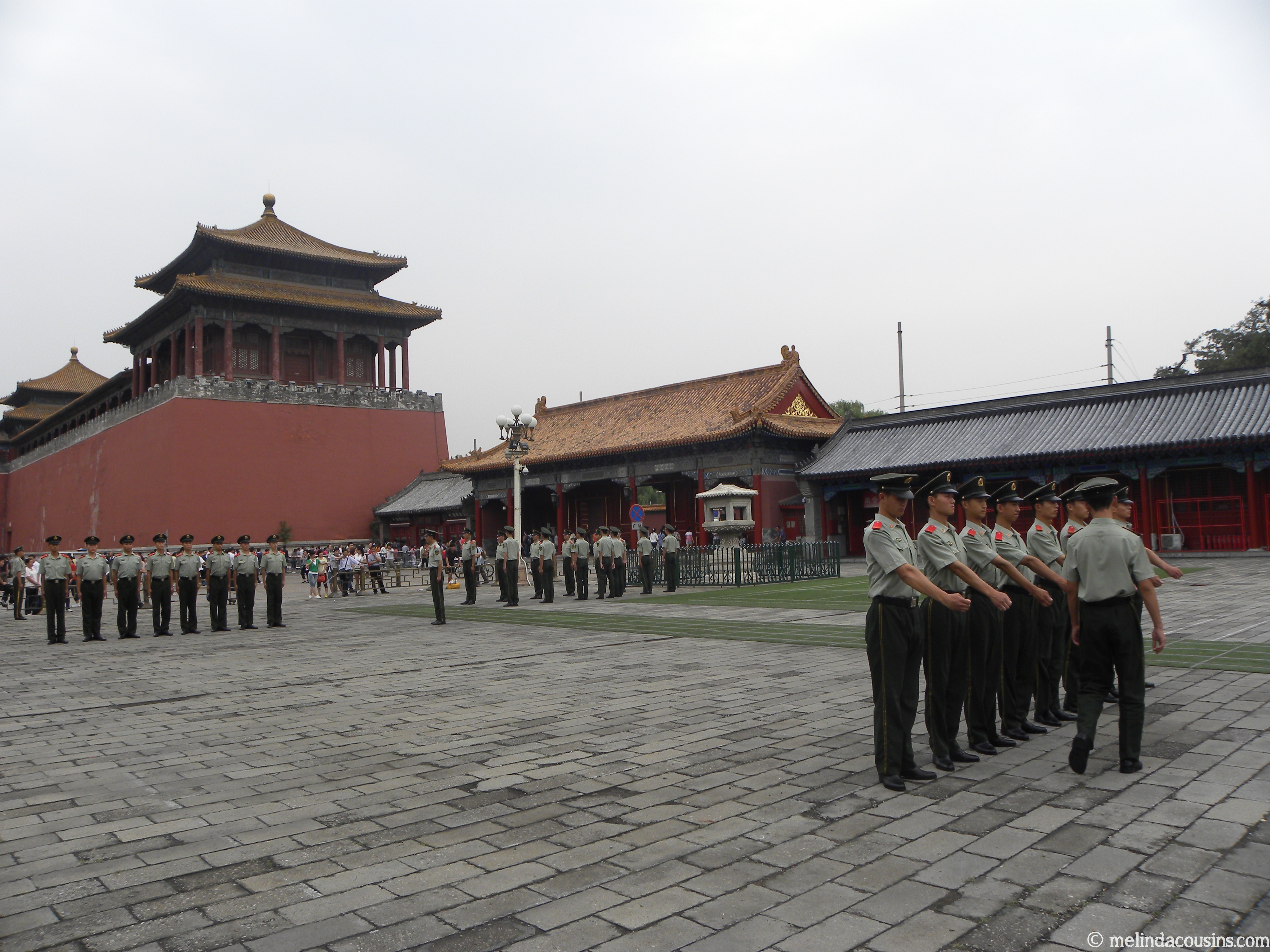
The strong presence of the army was something else I am not used to from my own country. I spent a fascinating 20 minutes in Tiananmen Square watching as an officer meticulously corrected one of his soldier’s hand movements, and pondering the many choices I have had in my life that others have not.

Army

I wondered about the ancient mindset of building a wall to protect your nation’s borders; especially as perhaps the only parallel in my own country’s history is a fence to keep the rabbits out.

Great Wall

I also wondered anew how much of my own perspective is shaped by growing up under the political, social and economic systems I did, and thought a lot about how easy it is to judge others without really being able to understand where they are coming from. As I find happens so often when visiting different cultures, I asked as many questions about myself as I did about the people I saw and met.

Inside the Great Hall of the People

And of course, in the end, I caught enough glimpses of every day life to be reminded once again that people are people everywhere, even in places that seem about as different from what I am used to as I can imagine. I may find the way they do things a little unusual, but their hopes and dreams and hearts are really much the same.

Inside the water cube, an indoor beach


Are we willing to question our assumptions about self-interest and economics?

It was announced this week that Poverty Reduction has been officially removed from the goals of Australia’s foreign aid. Many people have asked, quite fairly I think, if reducing poerty is not the goal of foreign aid, then what is? There are some possibly good answers to that question, but my fear is that the real answer is either self-interest, economics or politics (which may or may not all be one and the same).

Now perhaps it is naive and idealistic of me to think that it has ever been any way but thus. After last year’s election, the new federal government changed the status of AUSAid from a separate agency to part of the Department of Foreign Affairs and Trade, which seems a fairly clear indication that our aid goals are subservient to our political or diplomatic ones. It has recently emerged that our previous government gave specific amounts of aid to certain countries as “incentives” for votes to secure us a UN Security Council seat, which also makes a fairly blatant statement about our priorities.

It seems to me that the government knows that most people won’t care and will just accept that this is of course the ways things work. That a government’s role is always political before it is humanitarian. However, I find the priorities this reflects, and the assumptions it makes about what our community wants, quite frightening.

This week I also listened to a radio interview with the Premier and Opposition Leader in the leadup to our state election. They were asked about their plan for the state, and both gave answers solely about the economy. Now, I don’t want to deny that economics is important, but the assumption that economy = state is similarly one that I find problematic.

Surely there is more to what it means to be a community than how much revenue we can generate. Surely life is not valued in dollar terms alone. Surely we look for more in a government than simply who can make us have the most money in our pocket, like for starters, perhaps, oh I don’t know, … maybe who can govern well?!

Both these examples seem to be symptoms of a wider issue, where political decisions are being made on the twin assumptions that money is the only indicator of success, and that self-interest is the only motivation for people to act.

As a follower of Jesus, I do not share those assumptions and priorities. I follow the life and teachings of a Man who says, “Love your enemies, do good, lend, expecting nothing in return“(Luke 6:37-38) and “It is more blessed to give than to receive.” (Acts 20:35)

But I’d also challenge those in my community who do not share my Christian faith to consider whether those assumptions really reflect the kind of nation they want us to be. When we strip away the details and debates and niceties, is that really a bottom line we are comfortable standing for?

I am reminded again of a question asked by my favourite fictional politician, one which caused him to reflect on his assumptions and actions. The context is a conversation with one of his staffers about foreign aid, and aid in particular to the fictional nation of Equatorial Kundu.

President Bartlet: Why is a Kundunese life worth less to me than an American life?

Will Bailey: I don’t know, sir, but it is.

The West Wing, Episode 4 x 15, Inuguration: Over There

I worry that in Australia today not only does it seem we are unwilling to consider the answers to those kind of questions, but that apparently it doesn’t even occur to us to think of asking them.