All posts by melindacousins

Today would be a good day for me to be in Las Vegas … for a reason you may not expect

I’m aware my Monday travel posts can get a little bit “gushy” as I talk about places I’ve visited and what I loved about them. Today is not going to be like that. Because to be honest, I really didn’t like Las Vegas. I’m sure it’s different for those who live there, but in terms of the ‘tourist’ centre, the Strip, I found it a difficult place to be, and I’m not sure I’d ever really want to return.

Welcome sign

But I had an experience there that I sometimes think about, perhaps because of its unexpectedness in that place, or because of the stark juxtaposition between the images Las Vegas conjures up for many people and the strongest image I took away from the place. Revisiting that experience challenges me about the way I live in and respond to this world, a challenge that I think I need to reminded of today.

New York in Las Vegas

I hadn’t really planned on visiting Vegas, but I went there on my way to the Grand Canyon. I know many other people love it so I figured I should spend the weekend there and see what all the fuss was about.
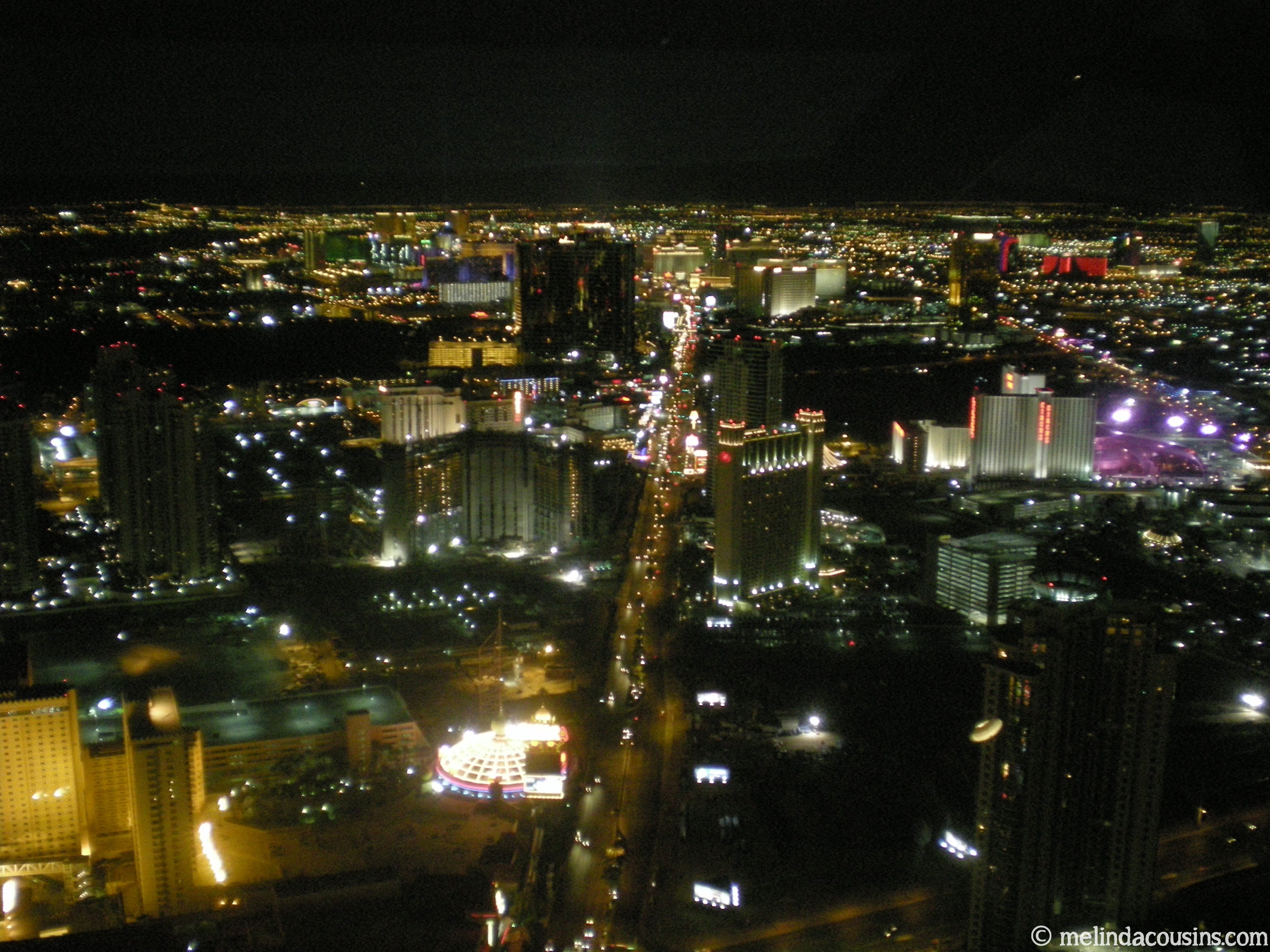
Looking down on the Strip

It was the middle of winter and so it was freezing outside. But that doesn’t matter in Las Vegas. You can pretty much make your way from one end of the four mile long Strip to the other and back again without ever having to step outside, and that’s what most people do. From brightly lit casino to brightly lit casino, with shows and bars and zoos and buffets and hotels lining your path. You are totally unaware of whether it is light or dark outside, cold or warm. Time becomes irrelevant. There is constant noise and movement and entertainment and lights and money and food and excess . And it made me feel, for the first time in my life … claustrophobic. I was desperate for some fresh air, and it was like a maze trying to find a way out into it.

Paris in Las Vegas
Paris in Las Vegas

When I got out onto the street, things could not have been more different. Hardly any people around, as it was cold and getting dark even though I think it was mid afternoon. Who I remember seeing on the street were two different kinds of men. First, there were those flicking their little cards advertising ‘escorts’ at you as you walked by. Second, there were those begging for money. I walked outside down the Strip in Las Vegas that day, and I found myself crying. I’ve been to villages in Africa and Asia where people have literally nothing, and yet this felt to me like the saddest place in the world.
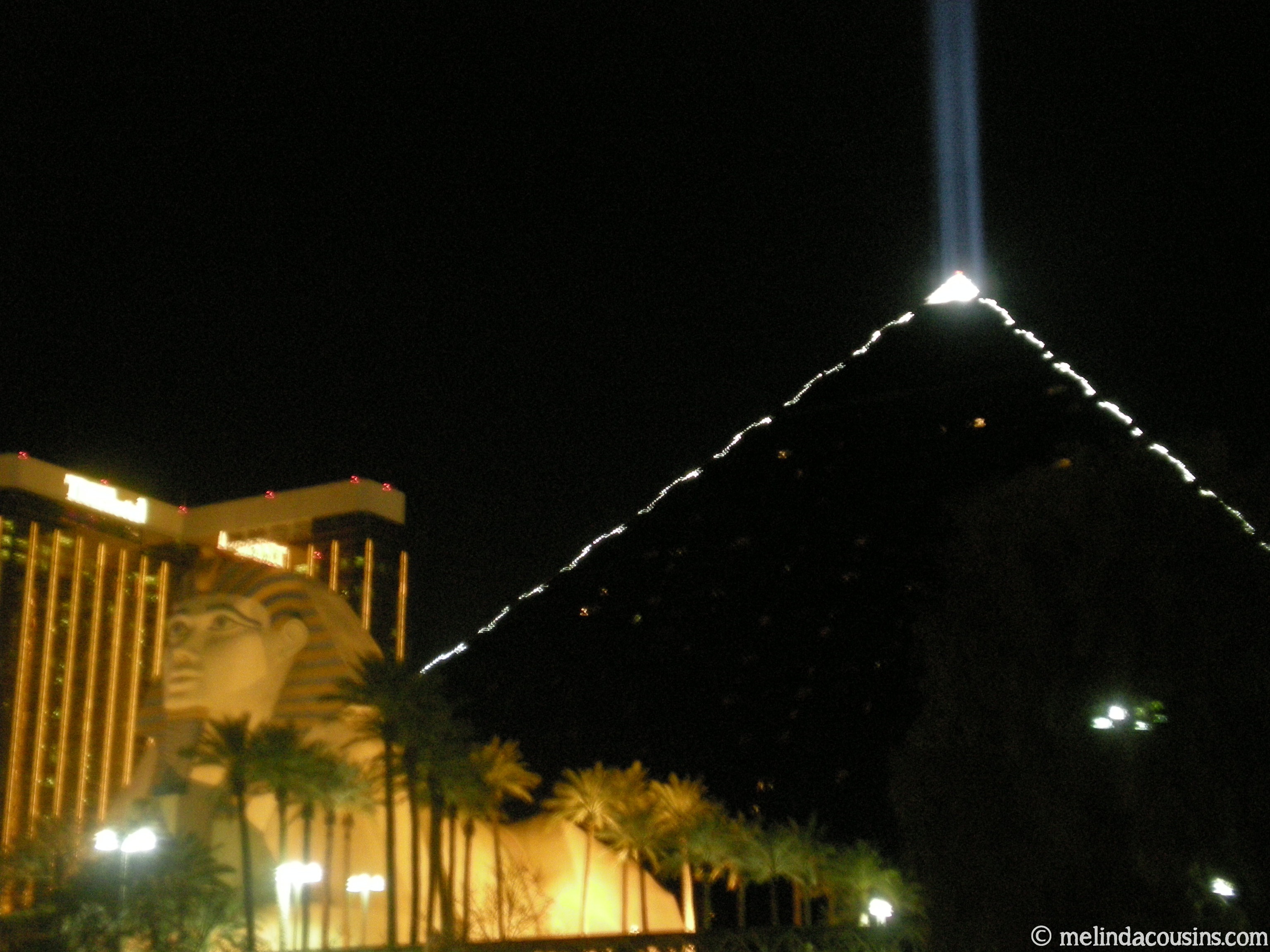
Egypt in Las Vegas
Egypt in Las Vegas

I went to get dinner at a Chinese takeaway. After getting my plate of food, I was still feeling stifled, so I went to the tables outside. No other patrons were crazy enough to be out there eating in that cold! As I sat down at the table, a man came up and began to go through the garbage bin nearby looking for food scraps. I didn’t think about it, I didn’t question it. It was somehow instinctive and perhaps even involuntary. I just got up, walked over to him, pointed him to my full plate on the table, and walked away. And that is my abiding memory of Las Vegas.

Monte Carlo in Las Vegas

That’s what I learned from Las Vegas, and why I sometimes wonder if I need to go back there. Somehow what I saw and felt there led to this completely spontaneous and natural act of compassion, and it has stuck in my mind ever since. Because to be honest, that’s not normally how I respond to situations like that.  I tend to analyse everything (some would say over analyse!) I’m the person who passes the beggar on the street and then thinks, “I could have helped them. Should I? Can I go back and give them something? What do I have? How much is right? What if they use it for the ‘wrong’ kinds of things? Is it better to try and fix the systemic issues rather than give money to an individual?” For many years those questions would paralyse me, or I wouldn’t even think of them until it was too late. As I get older, I’m learning to go back quicker, to turn around when I get the first thoughts of “I could have done something to help.” But it’s still not always the case for me that a compassionate act just comes so automatically and spontaneously. So why did it happen that way in Las Vegas?

Chinese Garden in Las Vegas

Perhaps it was the stark contrast between money being thrown away at the gambling tables and people rummaging through garbage bins for food. Perhaps it was the subtle sense of people being bought and sold on the street. Perhaps it was seeing so clearly the excess with which some of us in the world live (myself included) side by side with the reality of poverty that many more face every day. Perhaps it was realising that all the glitz and the glamour I saw there, as displayed in these photos, is a façade. What might look impressive is not actually real.

Italy in Las Vegas
Italy in Las Vegas

Whatever it was, sometimes when I find myself caught up in the materialism and consumerism and selfishness of my world, I think maybe I need to go back to that moment in a freezing Las Vegas fast food courtyard, and to look the ugly contrast directly in the face again, and so to hopefully be moved with compassion to take some small act to make a difference, even if it’s just for one person in one moment.
No Room for Nuance

Recently a colleague commented to me (in person) about something I’d said in one of my blog posts. What I had written was a bit of a throwaway line, and while it wasn’t inaccurate, his point was that it needed greater nuance. I agreed, and mentioned that I am more than happy for those kind of things to be pointed out in comments – I love getting responses and differing ideas to what I share! But I take his point that in this format it can be very difficult to offer a nuanced perspective without being seen as disagreeing with or undermining the wider point.

One of the challenges with blogging is keeping posts short and readable. What gets sacrificed is the ability to provide nuance, details, explanations, caveats. Obviously this is even more so with platforms like facebook or twitter – it’s very hard to leave room for nuance in 140 characters!

When what is written on a blog or tweet is seen as a thought starter or a distillation of key ideas, and there is space to reply, comment, question and interact, it’s a great format. The problem as I see it arises when ideas expressed in these forms are taken as full and final statements, or when we assume that what someone has said is the only thing they think about a topic, or that they are not open to further discussion, or that new information would not change their perspective.

What really bothers me, however, is that this inability to leave room for nuance seems to be taking over in our national political climate. We demand full and final answers from our leaders, but we demand them in catchy sound-bites. In response we get slogans instead of policies, and leaders who are trying to govern by living up to those slogans.

Don’t we want the leaders of our nation to be people of nuance? People who change their mind when they receive new information and evidence, people who understand complexity and varying perspectives? People who grow and develop in their thinking and practice?

When our national political debate is reduced to un-nuanced, simplistic slogans, I think we all suffer. I am reminded of a quote from my favourite fictional politician,  given in the context of a political debate where people are looking for a “ten word answer” which can form the headline or sound-bite for the next news cycle.

“Every once in a while, every once in a while, there’s a day with an absolute right and an absolute wrong, but those days almost always include body counts. Other than that, there aren’t very many un-nuanced moments in leading a country that’s way too big for ten words.”

President Josiah Bartlet, “Game On,” The West Wing

Photo by Marcia Reed NBC, via The West Wing Continuity Guide (Unofficial)
Photo by Marcia Reed, NBC, via The West Wing Continuity Guide (Unofficial)

What do you think? How can we make room for nuance, whether on social media or in political discourse?

Today would be a good day to be in Caesarea

For the past year, my church has been teaching through the book of Acts. Yesterday our pastor, Dan, preached a powerful message on Acts 25. At this point in the narrative, Paul has been in Caesarea Maritima for two years as a prisoner, waiting for his trial to be heard. He is offered the opportunity to go back to Jerusalem and have his case heard there, but instead he appeals to Rome. His focus is on getting to the place where he can continue the kingdom ministry he has been called to as the apostle to the Gentiles.

What remains today of Herod Agrippa's palace, where Paul was held
What remains today of Herod Agrippa’s palace, where Paul was held

It made me remember how much I have loved visiting Caesarea, and how each time I’ve been there I’ve been struck by what it must have been like for Paul. To be in this Roman harbour city built by Herod to honour Caesar, at the main port for ships coming to and from Rome, likely kept in the basement of the palace which lies on a promontory overlooking the Mediterranean Sea … looking towards Rome.

What the palace would have looked like when Paul was there

From his letters and other travels, we know of Paul’s strong desire to go to Rome. The centre of the empire was a key place for the spreading of the good news throughout the world. I’m guessing he didn’t originally expect to get there via a prison ship, but when that’s the opportunity that arose, he jumped at it. Paul knew who he was, what he had been called to, and what was worth giving his life to.

Caesarea sign about Paul

So, what did I love about Caesarea?

Seeing its history, particularly the Roman history of the first century.

Timeline of Caesarea's history
A timeline of Caesarea’s history

The artificial harbour constructed by Herod the great.

Caesarea Harbour

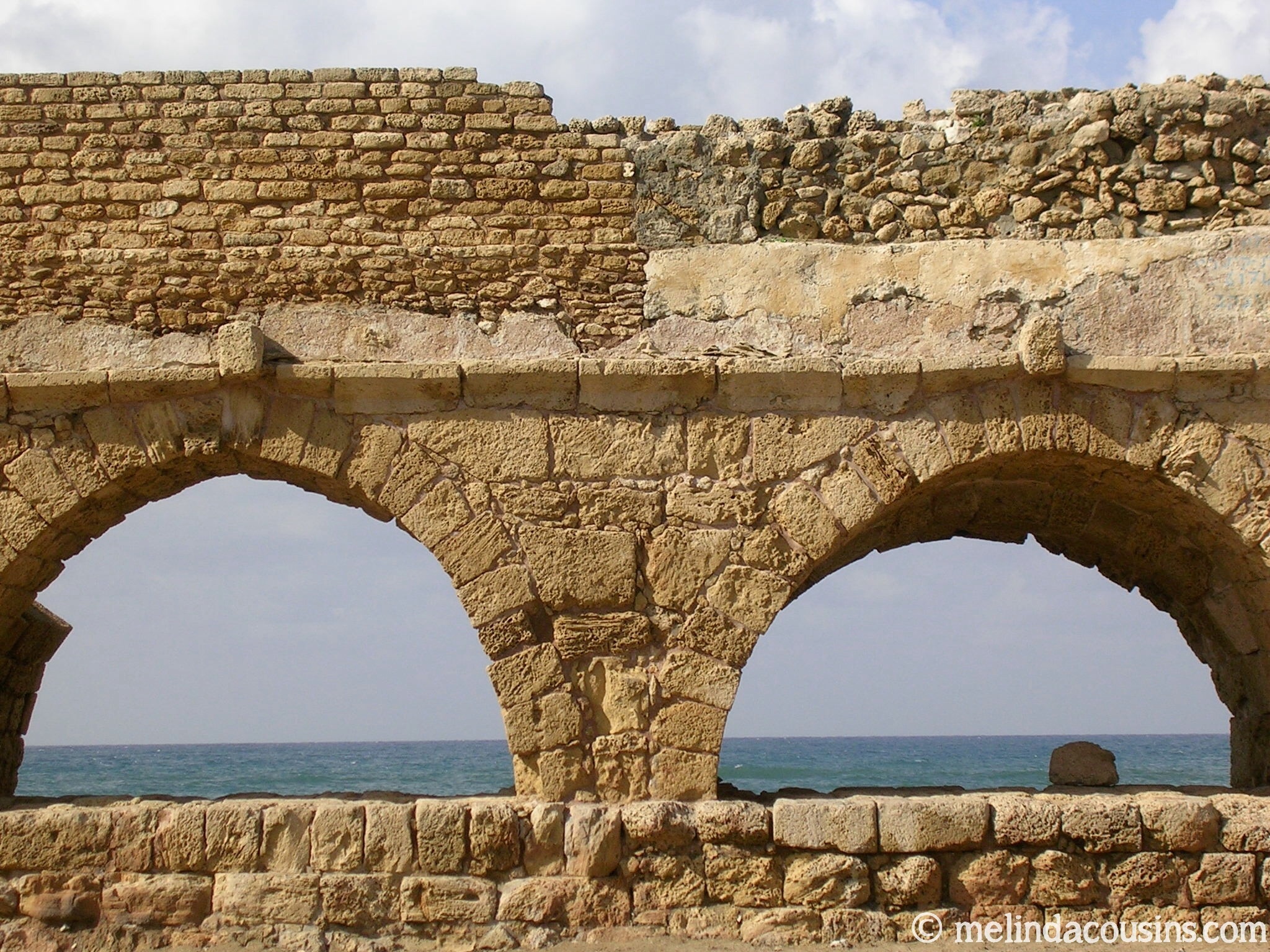
The remains of the ancient Roman aqueduct that brought fresh water to the city.

Aqueduct

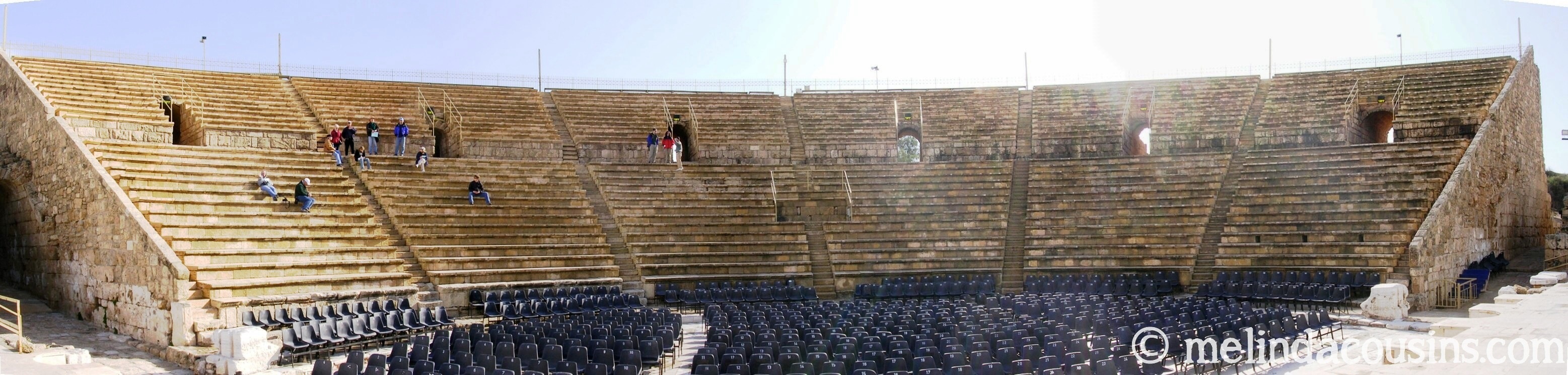
The 4000-seat Roman theatre, completed by Herod in 10BCE and restored to be used for performances today.

Caesarea theatre panorama

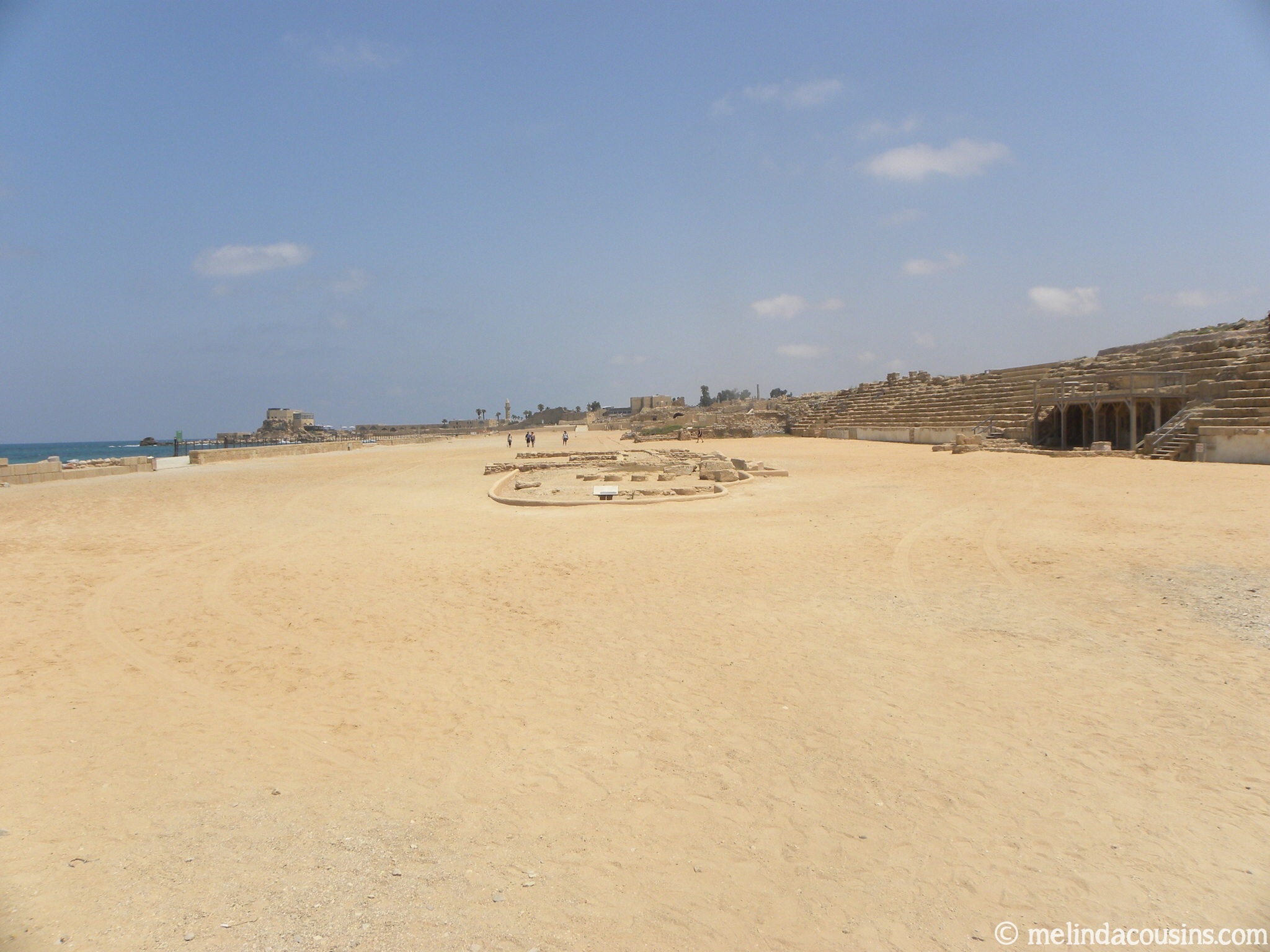
The remnants of Herod’s hippodrome.

Caesarea hippodrome

Caesarea hippodrome seats

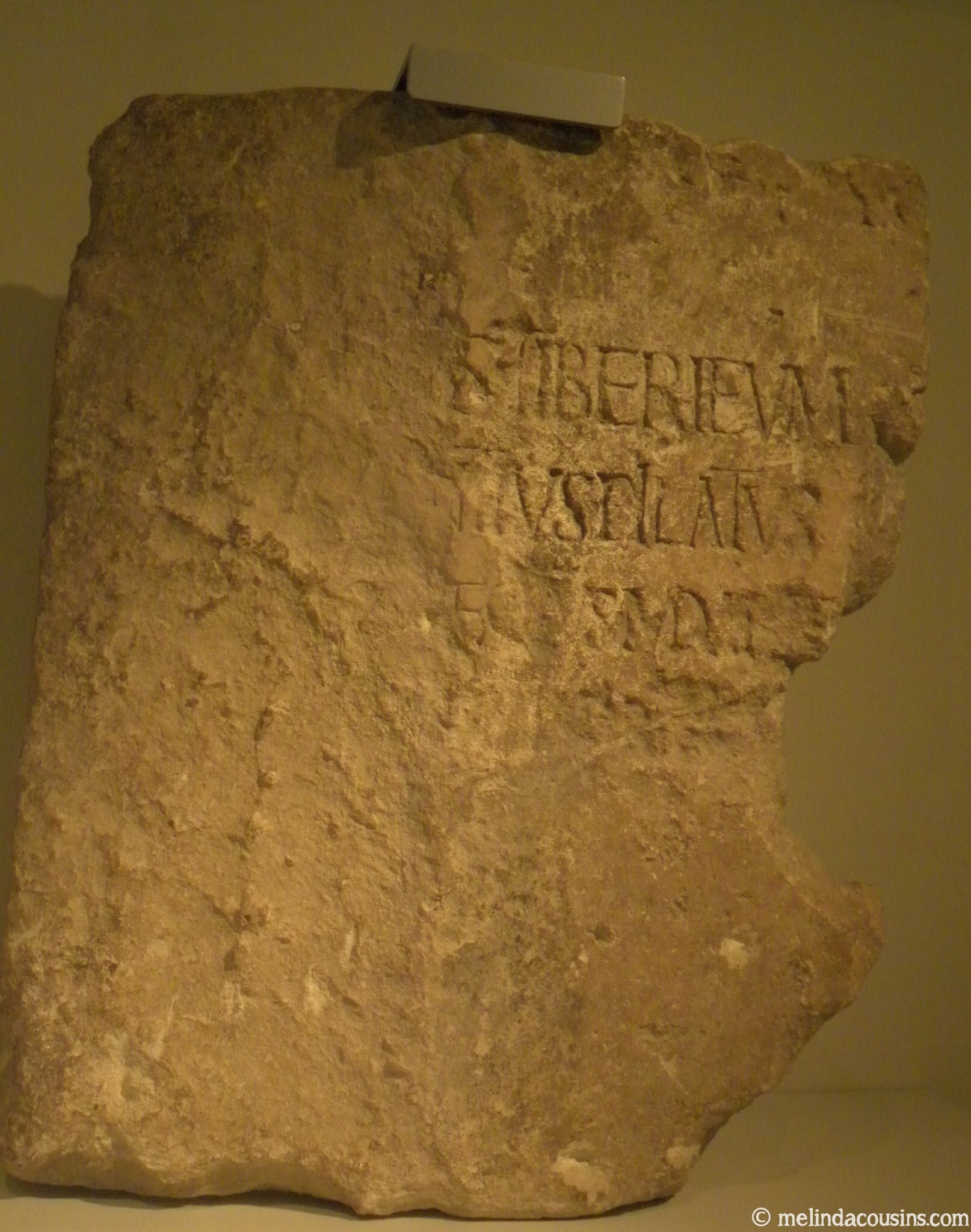
Caesarea is also the place where the Pilate Stone was discovered in the 1960s, the first archaeological item found which mentions the Roman prefect Pontius Pilate, under whom Jesus was crucified.

The inscription mentioning Pilate, in the Israel museum
The inscription mentioning Pilate, in the Israel Museum
What did I learn from Caesarea?

I find it intriguing that in a place built by a king known as “the Great” and built to honour the Emperor of the then known world, the person I remember most is a man who spent two years here as a prisoner. Paul’s legacy, due to his faith in Jesus and commitment to the gospel, has profoundly changed the world. I hold copies of his writings in my hand every day.

The palace where Paul was likely held and tried

It makes me think about what really lasts. In the past few decades there have been wonderful restorations to preserve the city’s history, but the truth is that in the end all great building projects come to ruins.

A 2012 archaeological dig taking place at the western end of the palace ruins

Certainly, glimpses of faded beauty remain.

Mosaics at Caesarea
Mosaics at Caesarea

But watching the waves crash over Herod’s once great breakwater reminds me that so many of the seemingly great achievements in this life will not last; and Paul’s life challenges me once again to commit mine to the things that will.

Waves crashing over part of Herod's breakwater wall
Waves crashing over part of Herod’s breakwater wall