All posts by melindacousins

Subtly objectifying women in the church … and “subjectifying” men?

Last week I blogged some of my thoughts about whether I should call myself a feminist and what that means to me as a Christian. In my church experience, issues of gender inequality are usually subtle rather than overt, and therefore easier to dismiss as trivial. But they are still reasonably commonplace.

I wanted to follow up with a couple of specific examples. These are not necessarily the strongest or best (worst?) examples I’ve seen, just two things I’ve come across recently in my own experience as well as read other people’s blogs about. What I’m noticing is that sometimes the Christian leaders who speak out against harms in our culture are still operating from some of the same underlying assumptions, probably without even realising it.

The first example is a trend of usually young, male pastors making comments about their “smoking hot wife.” (See this great post by Jayson Bradley).

This is said publicly, either from the platform in church or on social media. I understand that it is intended as a compliment to their wives, one I would have no problem with them making to her privately. But when said publicly it makes me wince. Because to the women listening, it reinforces the idea that they are valuable primarily for their sexual desirability … and not much else.

I also wonder what message it is intended to send to the men listening. It could be heard as a boast, “Look at me, how good must I be to have ‘scored’ a wife this sexy?” Does that really have anything to do with your credibility as a minister of the gospel? Or worse, it could be heard as an invitation, “Check out my wife!” Really? You want all the teenage boys in your church to be thinking about how sexy your wife is? Is that helpful for anyone?

The second, more concerning, trend is the refusal of some male pastors (again, usually young) to mentor or counsel women. Any women. Ever. (See this great post by Jenny Rae Armstrong).

Again, I can understand something of the intention. They want to avoid being put in a compromising situation; they want to be “above reproach.” But again, the message they are sending to women is that we are all temptresses. That the only thing that matters about our personhood is our sexuality, and that we can’t be trusted with it.

Simultaneously, it sounds like they are suggesting that men can’t control themselves. That they are incapable of viewing a woman as anything other than a potential sex partner. (Now maybe that’s true of some of the teenage boys posting on the internet, but godly Christian pastors? Really?) In no other profession would it be acceptable to have a blanket rule refusing to meet with people because of their gender.

If these pastors do genuinely have a sex addition or are struggling with lust in a particular case then they absolutely need to get some help. But this should never be a rule which then becomes an excuse as to why women can’t be taught, mentored or encouraged, or even serve on church staff or boards. (Unfortunately, that still happens.) I’d want I remind them that Jesus didn’t say, “If a woman causes you to look at her lustfully, remove her from your sight.” He said, “If your eye causes you to stumble, gouge it out.” (Matt 5:29) He placed the responsibility exactly where it should be!

In both of these situations, silly or well-intentioned as they might sometimes be, what I see happening is an underlying assumption which objectifies women. Let me explain. When women are “objectified,” they are treated as though they are objects. An object, basic English grammar tell us, does not act but is only ever acted upon. This term is usually used in the context of sexual objectification, meaning women are viewed or valued purely for their sexual desirability to the male subject. This means all the other things that make up an individual human being – their intellect, their dreams, their character, their will – are irrelevant. Women are thus treated as less than human; less than who they actually are. That’s not the good news of the gospel and it’s certainly not how Jesus treated women. That’s a problem.

But here’s my other question to those pastors. Aren’t they also “subjectifying” men, if I can make up a word? Aren’t they making men only sexual subjects, who can do nothing else but view women sexually, lust, or be tempted? Aren’t they then also reducing men to one thing, ignoring their character, intelligence, decision-making ability, self-control, wisdom and integrity? By implying that men “can’t help themselves” or are just “boys being boys,” aren’t we then reducing them to a caricature of the full humanity they too were created with? And doesn’t that also run the risk of contributing to the problems we face in our culture rather than addressing them?

Today would be a interesting day to be in Almaty

I would have to say Almaty, Kazakhstan felt like one of the most incongruous or diverse places I have visited. So many aspects of the place felt familiar, but from other places all over the world … and yet when you put it all together, it is an incredibly unique place.

Mountains

The red-dust-edged roads between the city and the villages reminded me of driving through country Australia … although the transport looked more like rural China.

Cart

The apartment blocks in the city reminded me of former communist East Berlin (and the bureaucracy certainly had that Iron Curtain feel!)

Apartments

The snow-capped mountains covered in fir trees could have been in Canada or Switzerland.

Mountain chalets

The crazy traffic reminded me of both Cairo and Bangkok.

Street

The glitzy new shopping mall would have been at home in Paris …

Mega Mall

 while the village food markets were more reminiscent of Africa.

village Street market

The light displays and fountains in President’s Park could have been in many US cities.

Presidents Park fountain

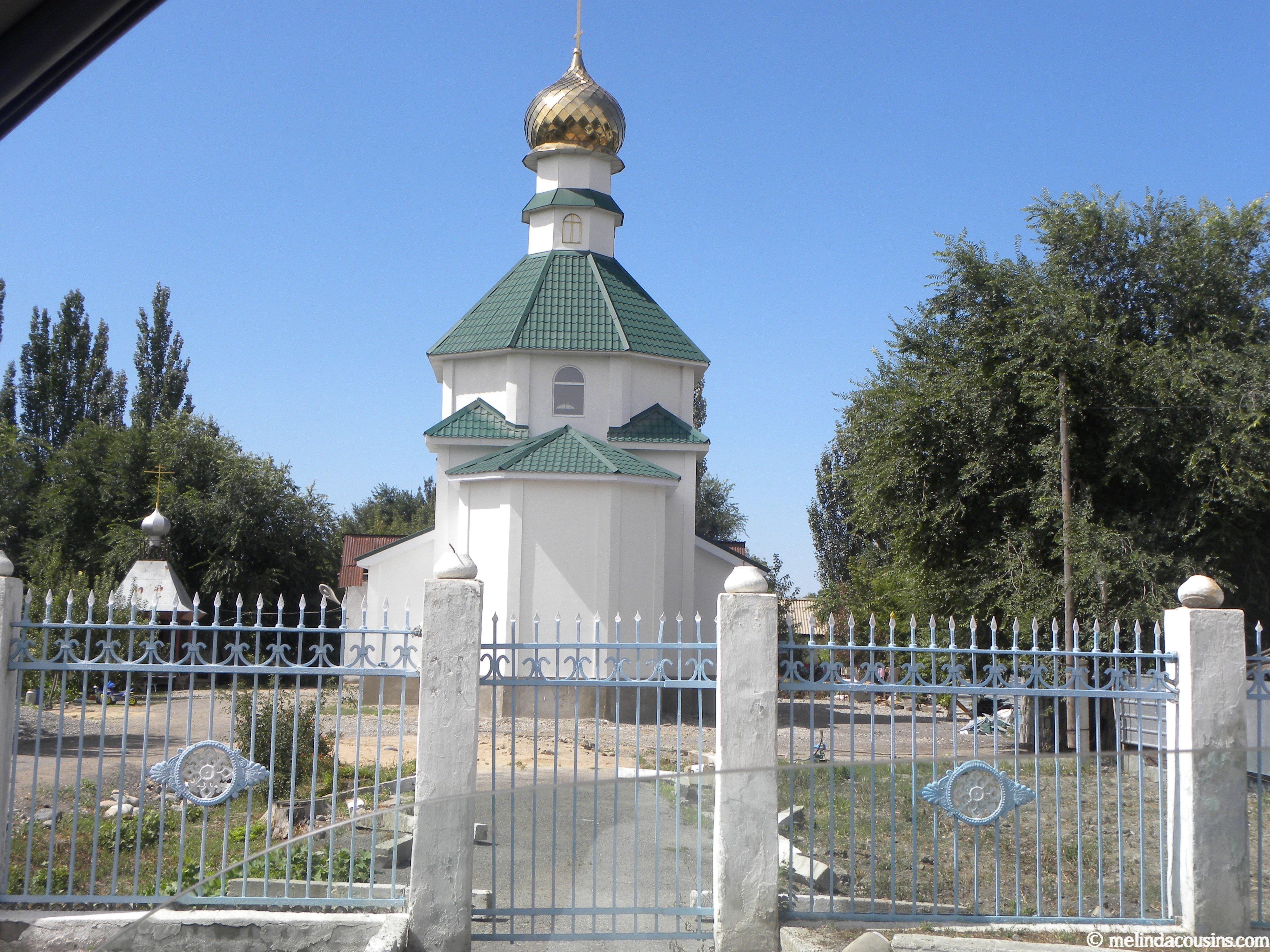
The Russian Orthodox Cathedral is, obviously, very Eastern European …

Russian Church

… while the village mosques were similar to those I saw in Indonesia.

Village mosque

It can be difficult to know whether you are in Asia, Eastern Europe, the West, or the Middle East!

All this is not to criticise! I loved my time in Almaty and think it is a fascinating place, with some amazingly friendly and hospitable people. I particularly loved looking down on the city at night from the mountains above.

Night view

I also loved that pretty much any car is a “taxi”, and I really enjoyed the local shasliks, where there was certainly no skimping on the meat!

Shaslik

So, what did I learn from Almaty?

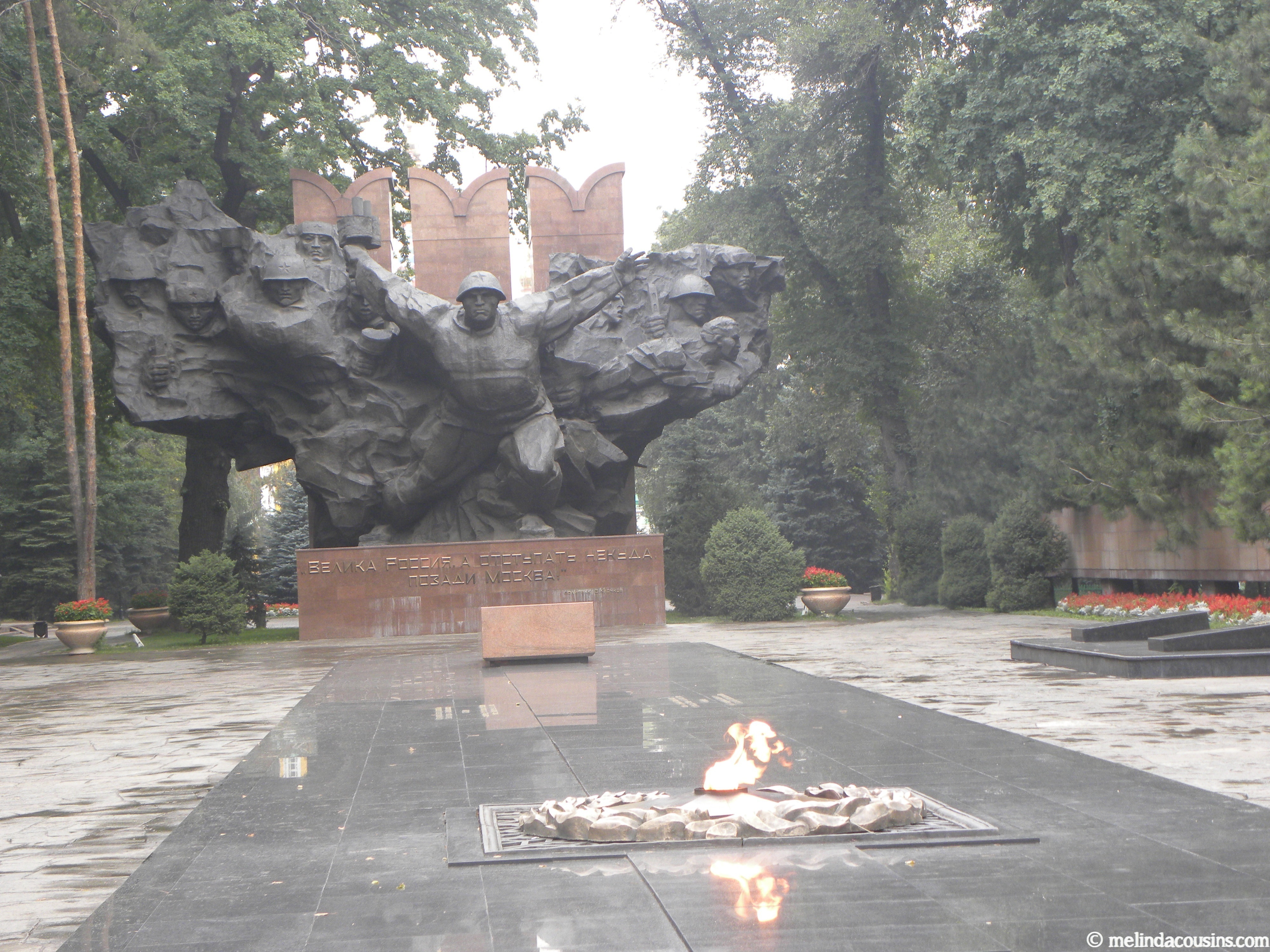
Formerly part of the USSR, the Kazakh people are reclaiming their identity along with their independence, but this makes for lots of challenges in a population made up of two different ethnicities with different languages, cultures, religions, values and dreams. It’s not always easy negotiating the history of past hurt and the competing current agendas.

The Panfilov War Memorial

But they are giving it a go and learning along the way, and while it can be easy for outsiders to criticize, I actually think we have much to learn. I live in a country that claims to be “multicultural” but has not really come to terms with many of these issues and challenges. The diversity I saw in Almaty certainly challenged my thinking about what it might look like to embrace and accept differences. And the hopes of people for justice and peace and significance are the same hopes of people the world over. We are all so very different … and yet so much the same.

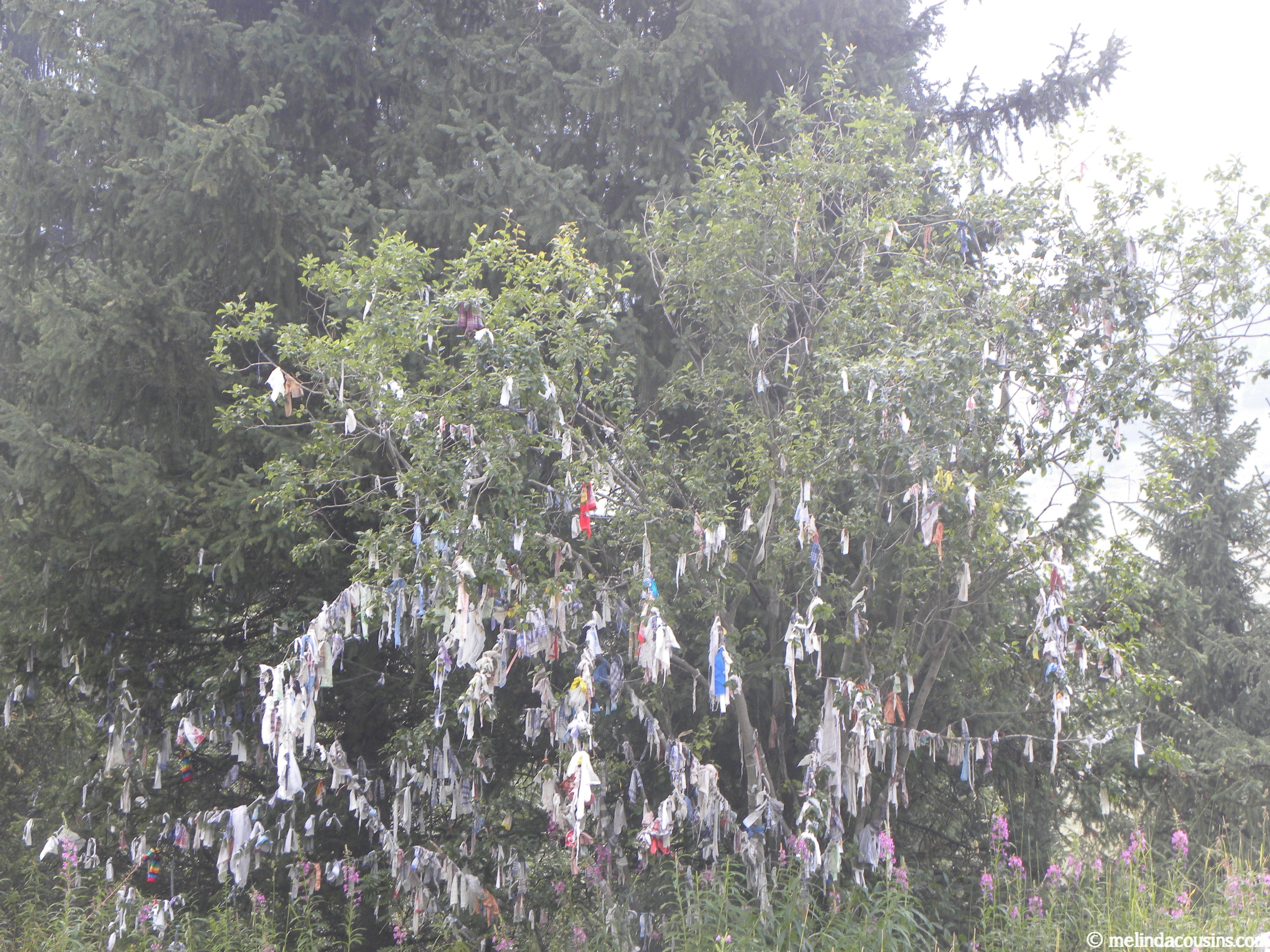
A tree tied with ribbons to represent prayers, luck, hopes (depending who you ask)

Am I a feminist?

“Feminist” is a label I have never been very comfortable with, even if I can understand why others may assume it is one that fits me. Partly it is because I don’t like any labels. Giving yourself a label, or being given one by someone else, seems to me to put a person in a box, assuming they hold a whole set of ideas, values and perspectives. But in my experience most people don’t come in such neat packages, and I know I certainly don’t. I can quite easily hold opinions and perspectives that might seem to others to be contradictory, belonging to two quite different boxes at the same time.

But I think perhaps another reason I haven’t liked “feminist” in particular is that others can see it as self-serving. I am a woman in a profession which was traditionally reserved for men, and so holding views usually associated with ‘women’s rights’ can be seen as having an agenda for myself, pushing myself forward, wanting to get ahead. I hope those who know me know that has never been my motivation for anything. But as a Christian, even the fear that other people would think I had that agenda has sometimes been enough to prevent me from speaking up about issues of gender inequality. I don’t want to be seen as ‘strident’ and I don’t want to be seen as concerned about one single issue when there is so much more to who I am.

I have also had the privilege of being treated equally to men in spaces where people might not have expected that to be the case, and so perhaps I haven’t always felt like I ‘needed’ feminism. But the older I get, and the more the internet and social media allow me glimpses into some of the attitudes others have, the more I have begun to wonder about this. Is it time to start calling myself a feminist?

Only if I get to define what that means to me, and not be judged by your expectations of what that word signifies!

One of the simplest definitions of feminism, oft quoted but apparently originally attributable to Marie Shear, is this:

“Feminism is the radical notion that women are people too.”

Seems obvious and easy to assent to? I like it, but there is a second part needed, as Emer O’Toole points out with humour and punch in this article: feminism also involves the belief that there are systems and attitudes in our world which sometimes lead to women not being treated as such.

Now, as a Christian, I actually don’t think Shear’s definition goes far enough. I would say, “The gospel includes the radical notion that women are created in the image of God, called to play a vital part in God’s plan of redemption for the whole world, and co-heirs with Christ,” as of course men are too. But there have certainly been times, and systems and attitudes, in the church when the people who embody the Christian faith have not treated women as such.

I am thankful to be in a church context where women are accepted and affirmed as members and as ministers. That has not been my ‘fight’ and I’m humbly grateful, knowing that many others throughout history and around the world have not been so fortunate. But sometimes I wonder … does the fact that we can ‘tick the box’ that says women are allowed into ministry sometimes lead us to think that all issues are resolved and we can move on? And do we then fail to notice the more subtle ways in which women can be overlooked or looked down upon? Or the unspoken assumptions that unintentionally reinforce the message they have heard in so many other places, that they are not enough?

Perhaps here lies another reason I have been reluctant to name this issue as one I care about. It is subtle and can therefore seem less important, not worth making a big deal about, especially when there are bigger problems in the world. But we are allowed to care about more than one thing at a time. And given what I am seeing in our culture, this is something I believe the church needs to get right.

So, part of my thinking aloud includes commenting on some of the things I see in the church that can cause her daughters to feel less valued, less called, less gifted or less loved, simply because they are female. I want to use my voice, not because I have an agenda, but because I have an opportunity. I look at the young daughters my sister and my friends are raising in today’s culture and I hope and pray that in the church, of all places, they will know that they are loved and valued not for what they look like but simply because they are. If I can use my voice to play some small part in these young girls knowing and experiencing that they are equally valued and loved by God and are called to play a significant part in His plan, then I will take the opportunity to do that. And if that causes people to give me the label ‘feminist,’ whether as a positive or a negative … well, I guess I am okay with that.