Category Archives: Bible

Learning hospitality from Bedouins … or Today would be a good day to be in Wadi Rum

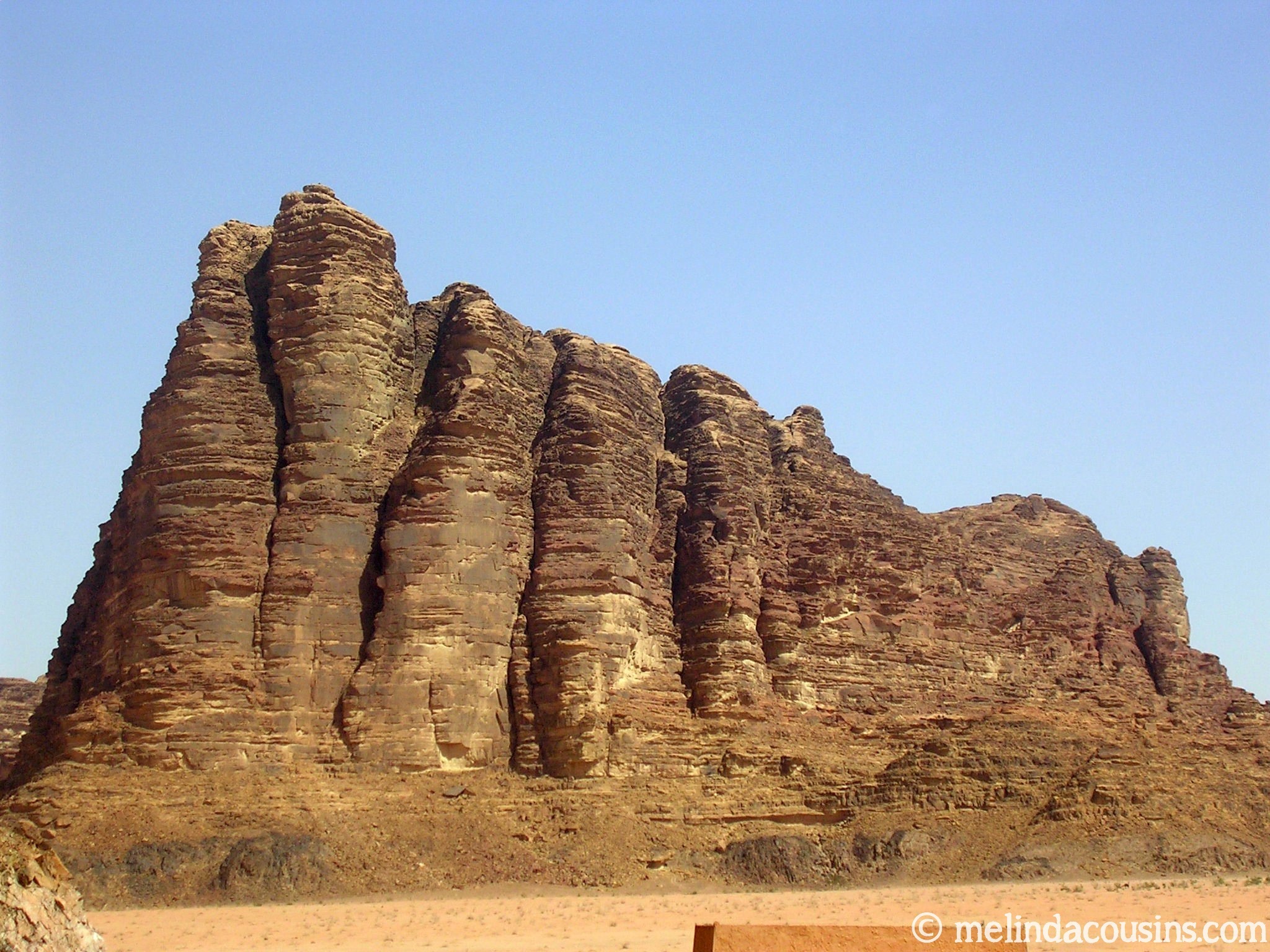
rocks

Monday morning and I’m back into routine, but today I’m thinking about a place about as far away as possible, in the middle of the Jordanian desert. Most tourists to Jordan visit Wadi Rum for a day, zooming through the wilderness in the back of a jeep, and I’ve done so twice in the last few years. It’s a place made famous not only because the Hollywood movie Lawrence of Arabia was filmed here, but because it is the real place British army officer T E Lawrence spent time during World War I. It’s also in the vicinity of where the Israelites travelled from Sinai to the Promised Land, and perhaps one of the easier places to imagine the kind of landscape they experienced during their wilderness wanderings.

landscape

What did I love about Wadi Rum?

Wadi Rum is a place of wide open spaces. The sandy desert is surrounded by majestic rock formations, giving a sense of being cut off from the rest of the world.

open space

It has a breathtaking beauty in its starkness.

sand hill

The colours of the sand and rocks are incredible in their diversity.
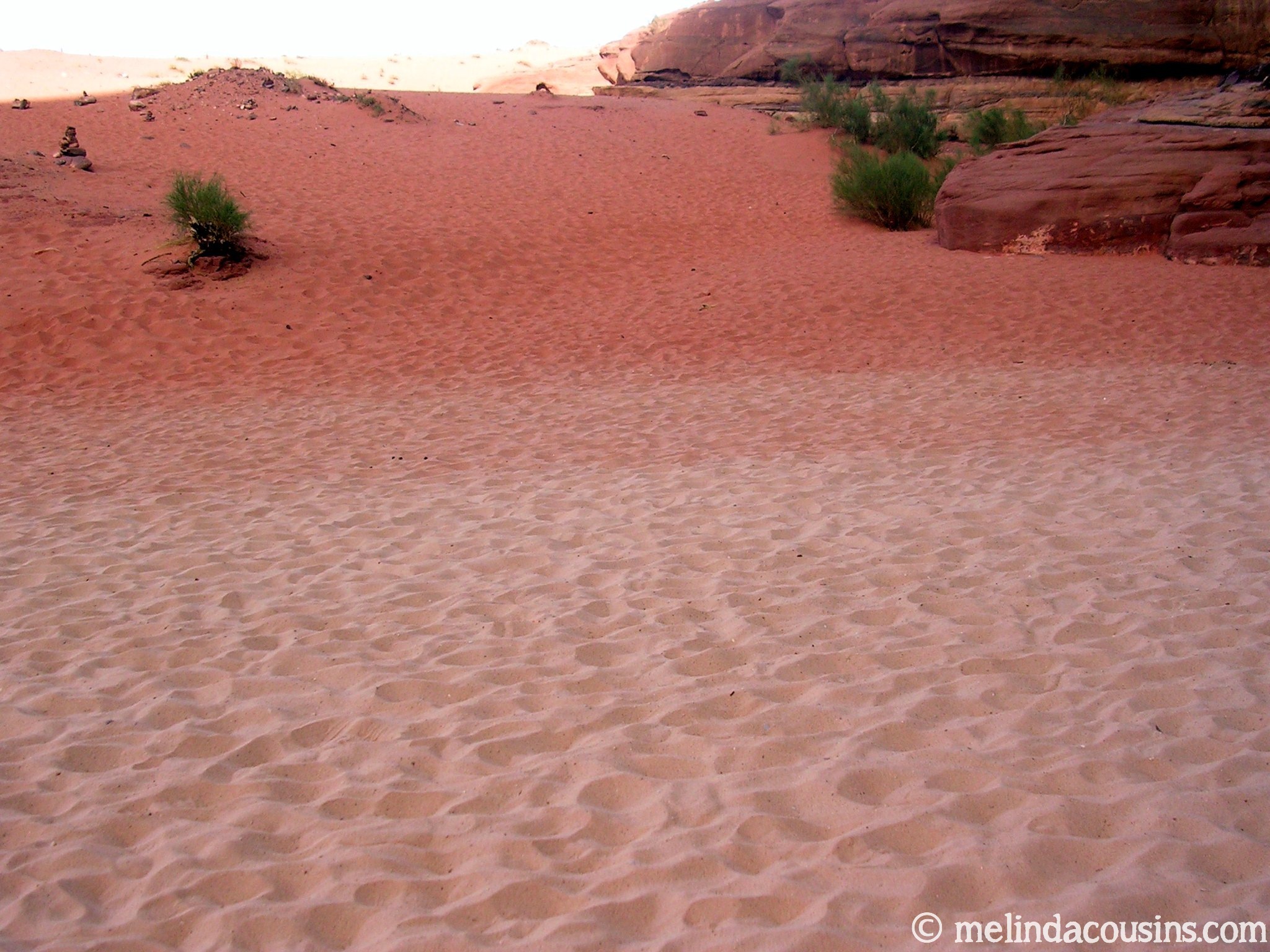
sand colour

It is easy to imagine the past in a place like this, particularly as reminders of those who came before and their way of life are all around.
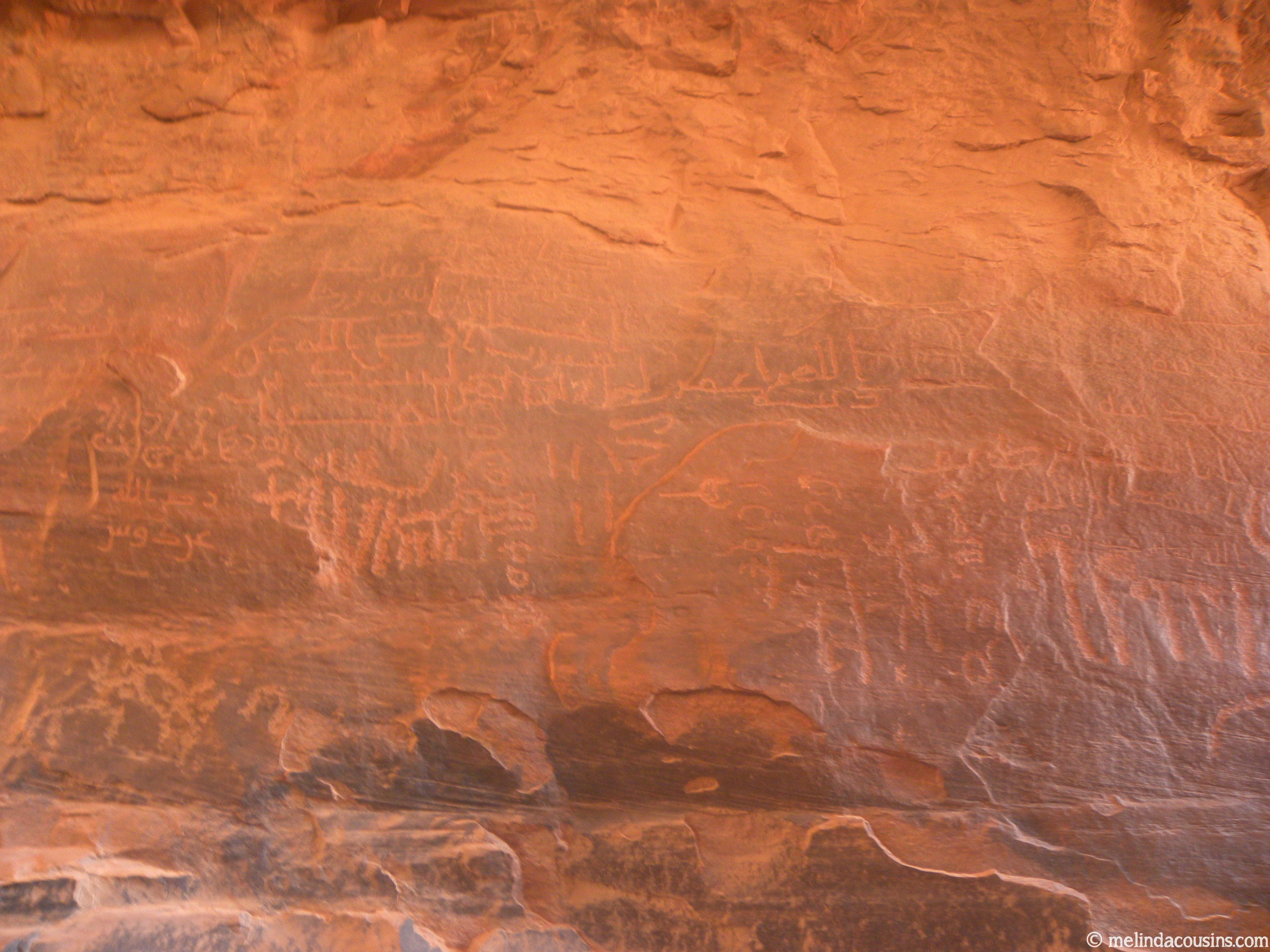
Ancient writing carved into rock caves

It is a place where the locals live simply, with many things not having changed for thousands of years.

shepherd

What did I learn from Wadi Rum?

The local Bedouins welcome visitors to the area, and share something of the life they and their forebears have enjoyed in this place for centuries.

Vehicles ancient and modern

The key practice of the Bedouins that is demonstrated with simplicity and clarity is hospitality. The welcome of the stranger as a friend, the invitation to share, making what they have available with open hands.
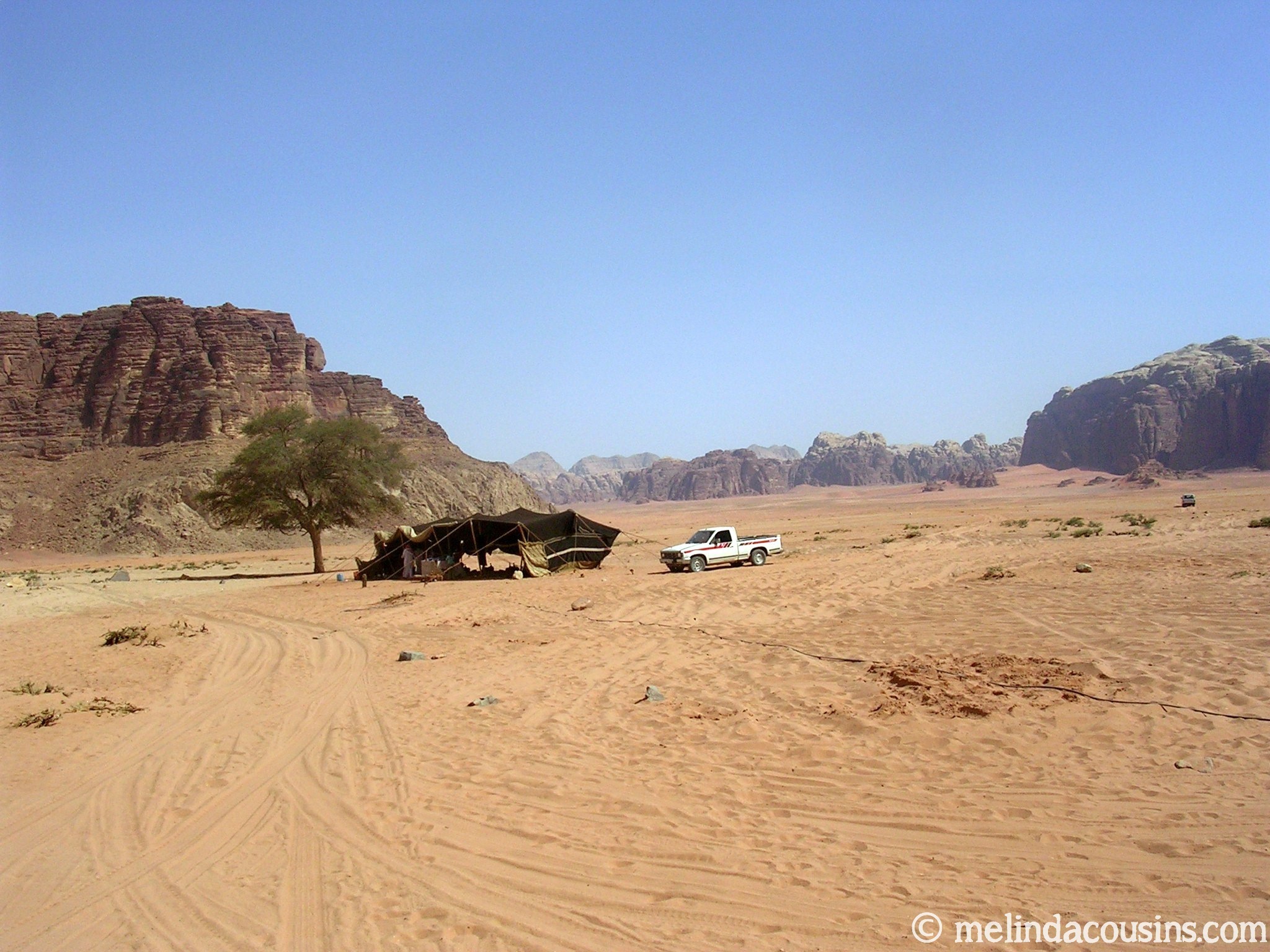
tent in desert

The Bedouin honour code requires even enemies to be provided with food and shelter for three days. In such a harsh place, where survival is on the line, generosity and hospitality are shown in ways not so common in places where we have so much. Too often we think hospitality is about putting a good ‘show’ rather than genuinely inviting people to share what we have as they have need.

rocky desert

The Old Testament was written in this part of the world, and one of its pervasive underlying metaphors is of God as our host. The God who invites His people to eat at His table, to shelter in His dwelling place, to share His home, and to find protection in His blessing. We can miss the power of this picture if we miss the importance of hospitality to the original cultural context.
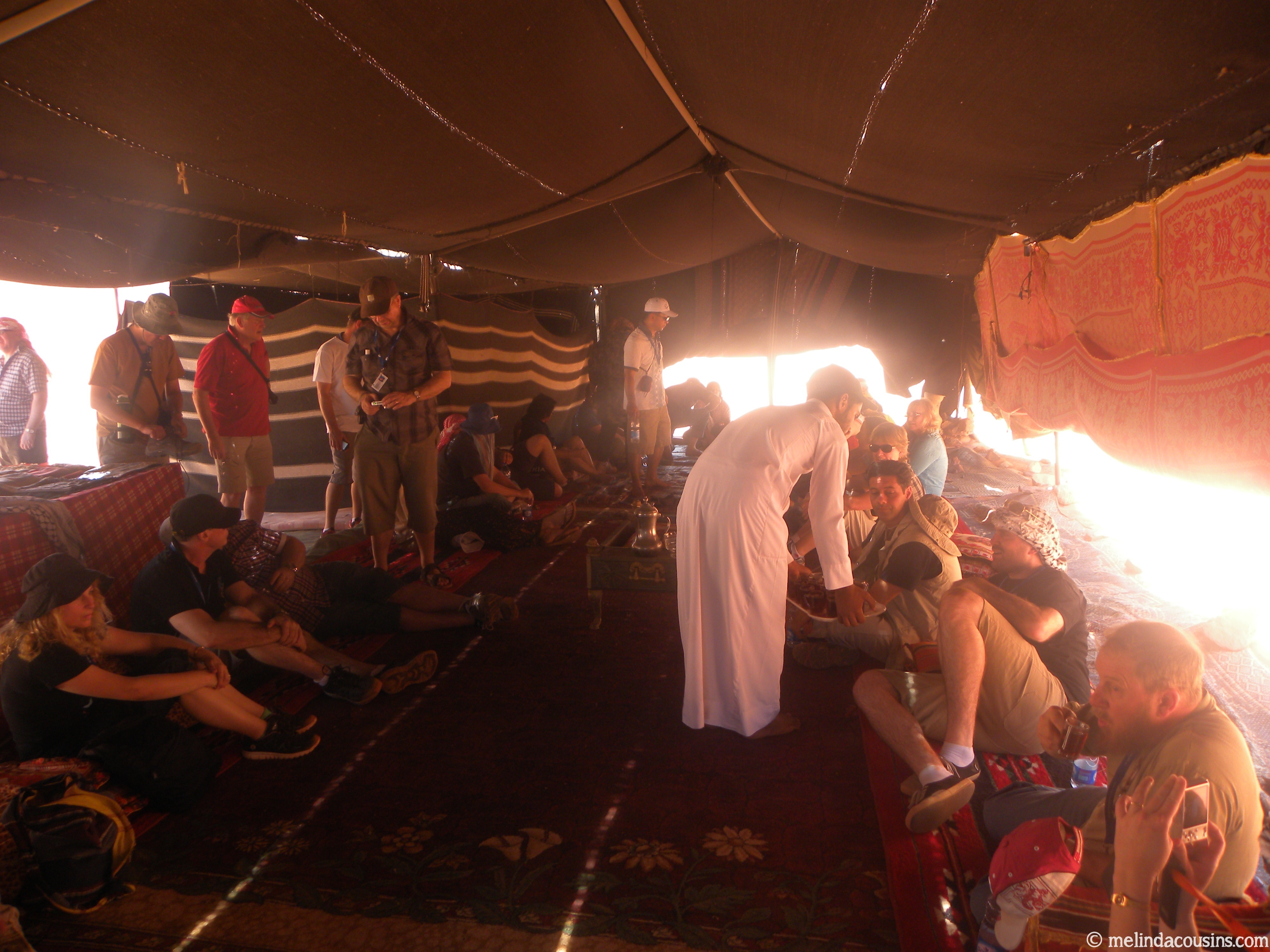
bedouin tent

The people we met in Wadi Rum taught and reminded us of the great gift of hospitality, a gift which is not dependent on appearances, resources or wealth, but on a generous heart and a willingness to invite someone into our lives, treating them not as an alien or stranger, but a friend and neighbour.

bedouin girl in tent

They showed me again a picture of the love God has for me as He invites me into His family, and the love He calls me to show to my neighbours, strangers and even enemies.

Today would be a good day to be in Caesarea

For the past year, my church has been teaching through the book of Acts. Yesterday our pastor, Dan, preached a powerful message on Acts 25. At this point in the narrative, Paul has been in Caesarea Maritima for two years as a prisoner, waiting for his trial to be heard. He is offered the opportunity to go back to Jerusalem and have his case heard there, but instead he appeals to Rome. His focus is on getting to the place where he can continue the kingdom ministry he has been called to as the apostle to the Gentiles.

What remains today of Herod Agrippa's palace, where Paul was held
What remains today of Herod Agrippa’s palace, where Paul was held

It made me remember how much I have loved visiting Caesarea, and how each time I’ve been there I’ve been struck by what it must have been like for Paul. To be in this Roman harbour city built by Herod to honour Caesar, at the main port for ships coming to and from Rome, likely kept in the basement of the palace which lies on a promontory overlooking the Mediterranean Sea … looking towards Rome.

What the palace would have looked like when Paul was there

From his letters and other travels, we know of Paul’s strong desire to go to Rome. The centre of the empire was a key place for the spreading of the good news throughout the world. I’m guessing he didn’t originally expect to get there via a prison ship, but when that’s the opportunity that arose, he jumped at it. Paul knew who he was, what he had been called to, and what was worth giving his life to.

Caesarea sign about Paul

So, what did I love about Caesarea?

Seeing its history, particularly the Roman history of the first century.

Timeline of Caesarea's history
A timeline of Caesarea’s history

The artificial harbour constructed by Herod the great.

Caesarea Harbour

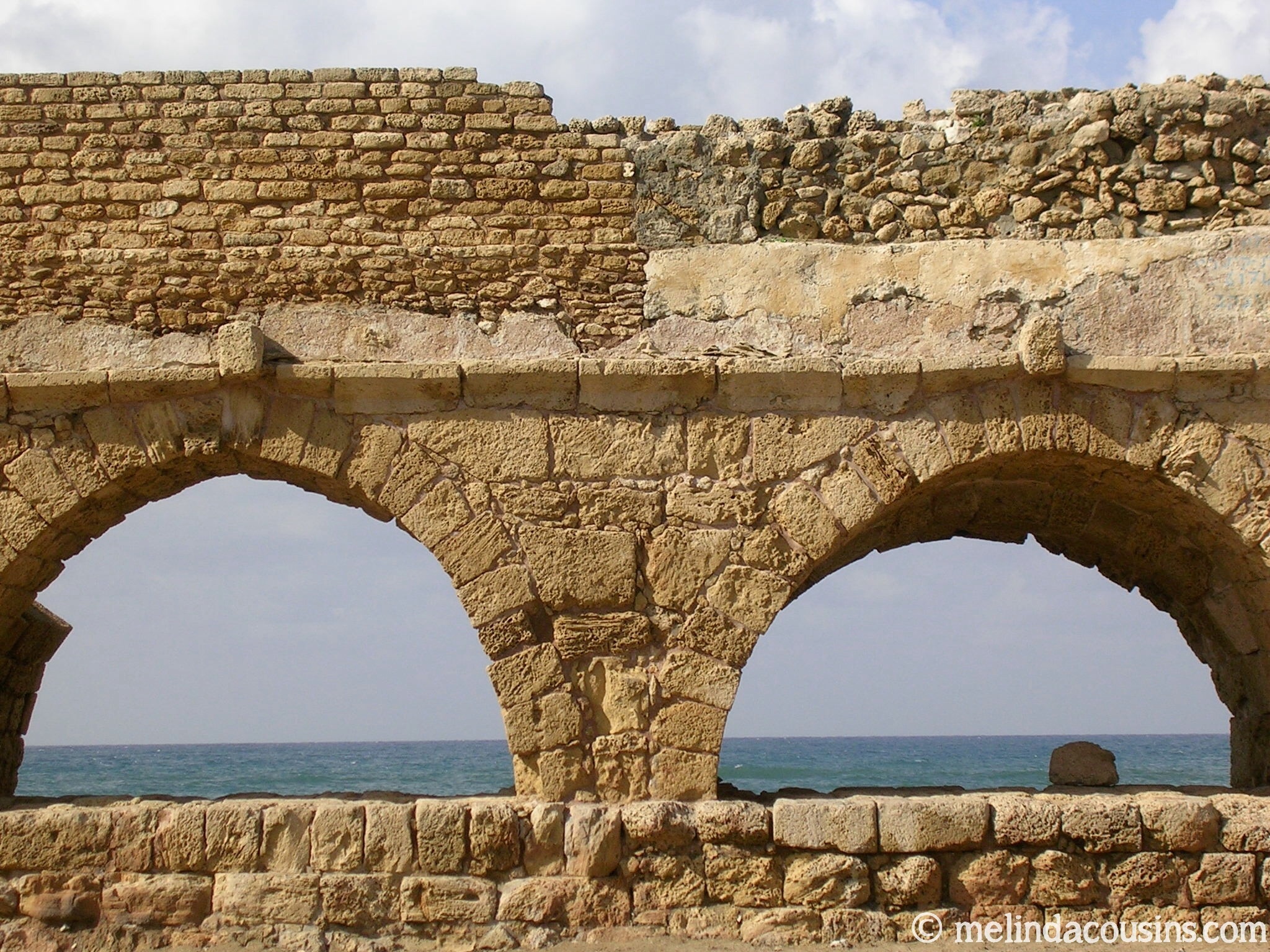
The remains of the ancient Roman aqueduct that brought fresh water to the city.

Aqueduct

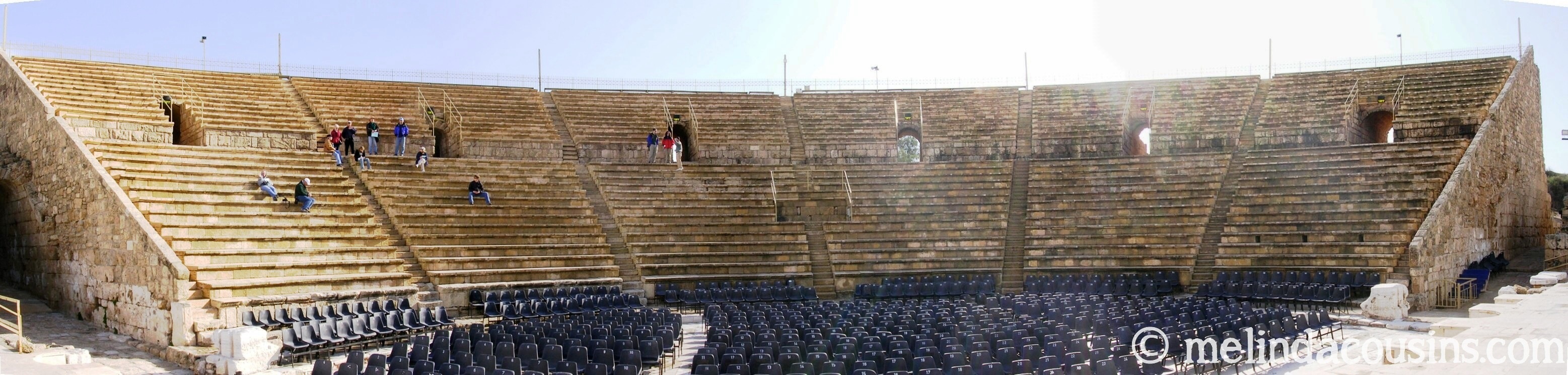
The 4000-seat Roman theatre, completed by Herod in 10BCE and restored to be used for performances today.

Caesarea theatre panorama

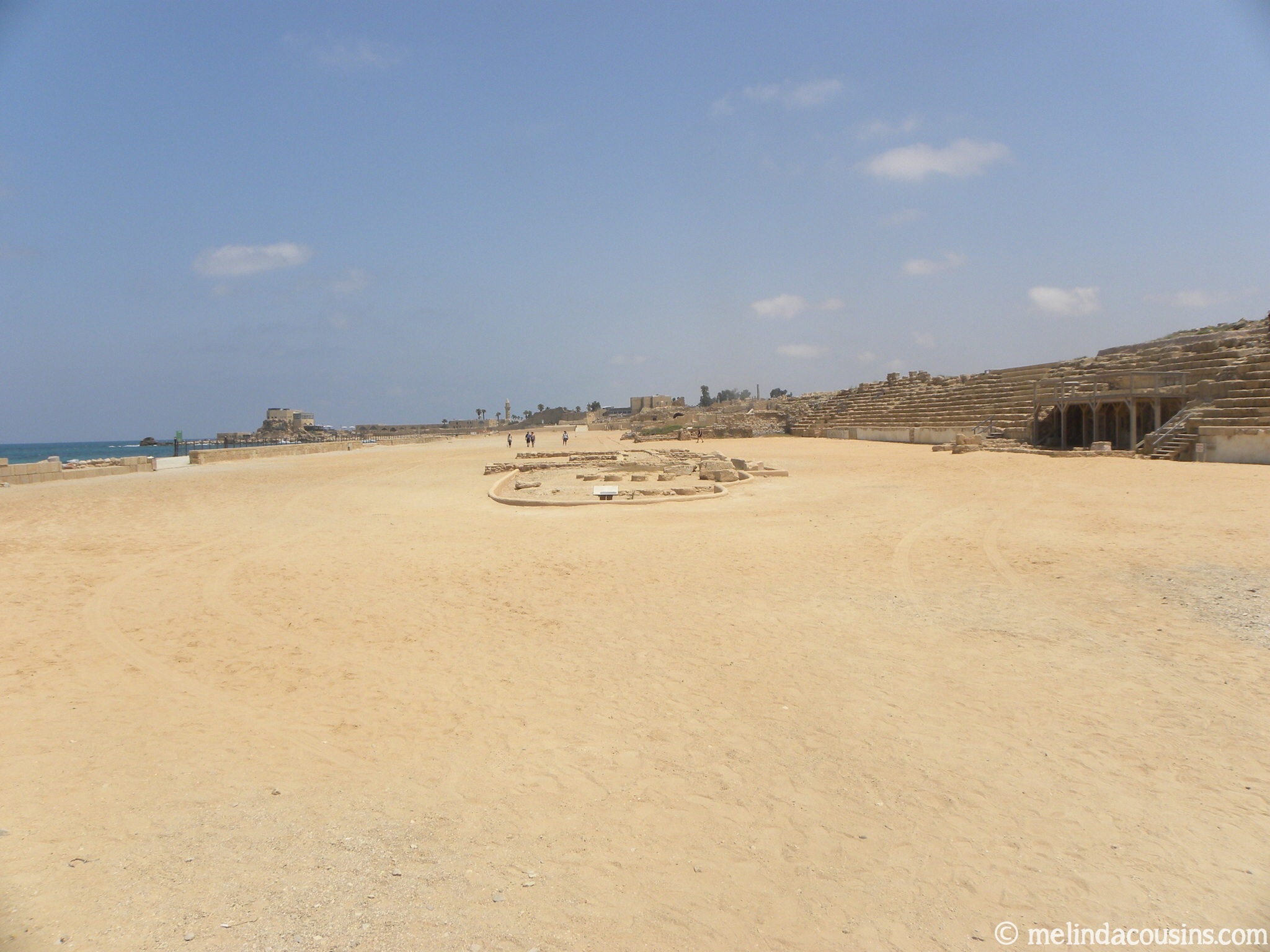
The remnants of Herod’s hippodrome.

Caesarea hippodrome

Caesarea hippodrome seats

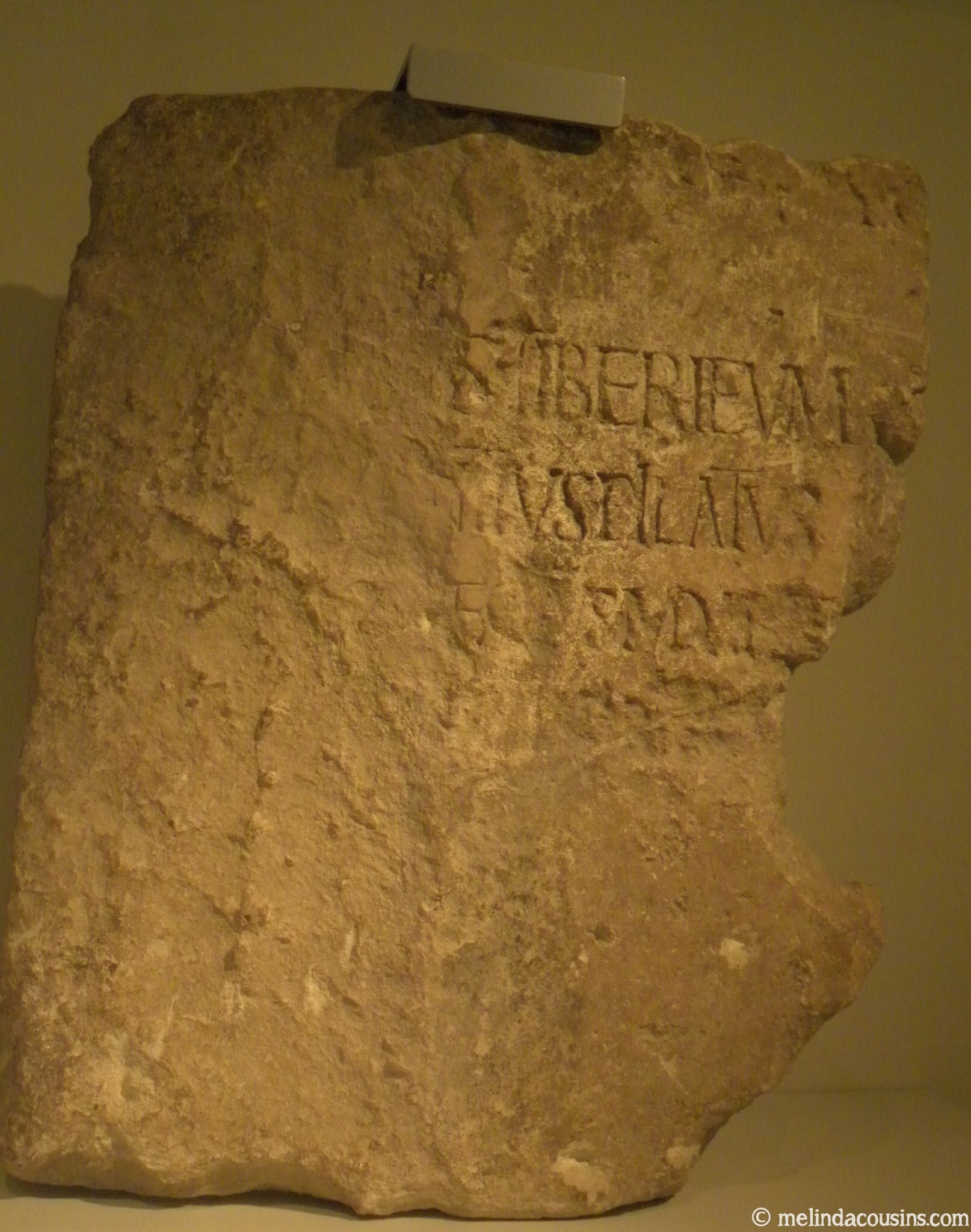
Caesarea is also the place where the Pilate Stone was discovered in the 1960s, the first archaeological item found which mentions the Roman prefect Pontius Pilate, under whom Jesus was crucified.

The inscription mentioning Pilate, in the Israel museum
The inscription mentioning Pilate, in the Israel Museum
What did I learn from Caesarea?

I find it intriguing that in a place built by a king known as “the Great” and built to honour the Emperor of the then known world, the person I remember most is a man who spent two years here as a prisoner. Paul’s legacy, due to his faith in Jesus and commitment to the gospel, has profoundly changed the world. I hold copies of his writings in my hand every day.

The palace where Paul was likely held and tried

It makes me think about what really lasts. In the past few decades there have been wonderful restorations to preserve the city’s history, but the truth is that in the end all great building projects come to ruins.

A 2012 archaeological dig taking place at the western end of the palace ruins

Certainly, glimpses of faded beauty remain.

Mosaics at Caesarea
Mosaics at Caesarea

But watching the waves crash over Herod’s once great breakwater reminds me that so many of the seemingly great achievements in this life will not last; and Paul’s life challenges me once again to commit mine to the things that will.

Waves crashing over part of Herod's breakwater wall
Waves crashing over part of Herod’s breakwater wall

A Better Metaphor for the Bible?

I ran a seminar on the Bible at a recent conference and took with me a glass bowl in which I placed pieces of paper with individual verses from the Bible written on them. I asked each person to take one and that could be an “inspirational word” for them that day. A couple of people were quite encouraged by what their piece of paper said. Most were simply bemused; some even amused. Verses like “He fled naked, leaving his garment behind” (Mark 14:52), “I wish they would castrate themselves” (Galatians 5:12), “Jahaz, Kedemoth, Mephaath” (Joshua 13:18), or even just “He said” (Job 3:2) don’t exactly lend themselves to being emblazoned on inspirational posters.

My point was not to denigrate the Bible. I love the Bible. I have devoted my life to teaching it. But my point is that many Christians treat the Bible as if it is a kind of “promise box” which contains these individual nuggets of wisdom and inspiration called “verses.” We treat it quite flatly, as if each one of them should work in exactly the same way. No wonder so many of us struggle to read it! And no wonder our society sometimes ridicules Christians for following it if we have given the message that that is what the Bible is and how it works. Because it is impossible to read the Bible that way, and I would suggest it is impossible to live in response to the Bible if we are attempting to live out of that metaphor.

For starters, the Bible isn’t made up of verses. It is made up of books (and letters and collections of poems and laws and more.) Books are written as wholes and designed to be read as wholes. Imagine taking To Kill A Mockingbird or A Tale of Two Cities and cutting them into individual one-line pieces and expecting them to impact you in the same way the whole book does. Books just don’t work that way.

The verse numbers we are familiar with were first included in translations of the Bible in the 1550s. And they are very helpful! If we want to study or discuss the Bible in community, it works really well in our literate culture to be able to look up a numerical reference to make sure we are all on the same page. But they were never designed to completely change the way we think about what the Bible is.

So what is a better operating metaphor for the Bible? As a collection of books spanning a variety of types of literature and historical periods, the metaphor that I find resonates well is that of story. The Bible is God’s story; a story in which we are invited to participate. Individual parts of the Bible contribute to that overarching story in a variety of ways. The historical books tell us about the God who made Himself known to different people in different times and places and through them we learn about the God who makes himself known to us in our time and place. The prophets and poets proclaim the words God spoke to His people and the words they spoke to Him and through them we can hear and speak in similar ways. The Gospels reveal to us Jesus Christ: who He is, how He speaks into the world, and His saving death and redemptive resurrection. The letters of the early church reveal the way people applied their faith in Jesus to the realities of their lives and again enable us to do likewise.

One of the dangers of using “story” as our metaphor for the Bible is that sometimes people hear the word story and immediately think fiction. That is not at all how I am using the word. One of my favourite things to do is listen to other people’s stories and share my story and see how they interact. These are not fictional! Rather, telling our stories is the way we relate and engage in community. We live out of stories. And so I love the picture that God invites us to live out of His story.

NT Wright does a much better job of explaining this metaphor than I ever could. He speaks of the Bible as an unfinished drama, one in which we are given the first few acts and the concluding scenes but invited to improvise our own part. This article on the authority of the Bible, and particularly the section on Authority of a Story, is well worth a read if you want to pursue this idea.

But I’ll conclude with another picture. Last year I had the opportunity to visit a church in a Northern Territory Aboriginal community. An indigenous artist has drawn nine paintings which together tell the story of the Bible. They hang on the walls of the church to be “read,” much like the original purpose of the stained glass windows in many European cathedrals. And when the community of God’s people gather in that place, they are literally gathered  within God’s story. That is another metaphor that really resonates for me. The church is constituted in the midst of God’s story. The Bible is not a collection of verses we can pull out as daily motivational sayings, nor wield as weapons in some kind of war. It is the story which gives us life as God’s people and it continually invites us to enter into and embrace the part our own stories can play in His.

Aboriginal Art Revelation