Category Archives: Culture

A Fringe review and some reflections

It’s Mad March in Adelaide again, which means the Festival, the Fringe Festival, Writers Week, the now oddly-cereal-like named Superloop 500, Womadelaide and much more. Living in the city is ideal at this time of year, and I’ve loved the opportunity to wander down to the riverbank to see the Symphony for our World (which was an outstandingly beautiful reflection on creation and creativity) and Yabarra: Gathering of Light (which is an engaging and vital project grounding the city in its long history and culture).

In terms of the Fringe, so far I have seen a truly terrible comedian (who I won’t name and shame here) and an absolutely enjoyable choir performance that I have not only been singing the songs from for days, but has also had me reflecting on some deeper themes it touched on.

So, this is my part review and part reflection on The Choir of Man.

Nine talented performers singing well known songs in impressive harmonies is always going to be a recipe for a good night out. The talent on display is pretty remarkable, including a piano virtuoso, a Dein Perry-esque tap dancer, a poet or three, comedic timing, audience participation, multiple instruments and dancing styles, all held together by nine strong voices. Songs covered include those that had the audience clapping and singing along, like Welcome to the Jungle, I Would Walk 500 MilesSome Nights, and the iconic Aussie favourite You’re the Voice; others that showcased impressive soloists telling stories through melody, like Adele’s Hello, Don Quixote’s The Impossible Dream, and Sia’s Chandelier; a heartrending rendition of Luther Vandross’ Dance With My Father during which you could have heard a pin drop; and an almost benedictory traditional closing song, The Parting Glass.

That this performance is set in a working bar, a classic English pub, where both the performers and the audience are invited to authentic fun and engagement (and to a pint or two) and is drawn together by a narrator who reflects on mateship, community, love and loss, adds to the enjoyment, but also leads me to my deeper musings.

“Some pubs have a football team or a darts club,” we are told. “This pub has a choir.”

The show is a bit of an ode to the local pub, the place where regulars can get together for a drink and share something of life. But we are also told it’s not a “boys don’t cry” kind of pub, and the idea of a community where genuine experience and emotion can be shared and supported – whether just by listening or by lending a hand – is significant throughout the storyline. To me, this is mateship. Friendship. What community should be. What for me as a Christian and a pastor, the church should be. My church is currently doing a sermon series exploring ideas of friendship and community, family, work, rest and play together, and so this show resonated with some of the same ideas, both encouraging and challenging me. Encouraging me that the church at its best has something valuable to say to our culture on this; challenging me that we can too often think we have a monopoly on it or hold it to ourselves, rather than championing it wherever we see it and inviting others into it.

This is also a show by, for, and about men. The (male) friend who recommended it to me warned that I might find it “a bit blokey.” And I did. But in a way that I loved. The characters in the pub are all pretty blokely blokes. (And yes, there is a song performed at a urinal). As a group, there’s a lot of testosterone on display. But there are men with hipster beards and man buns, as well as men with six pack muscles and classically strong jawlines. There are also men of less than average height and of over average weight. More importantly, these are not only men who sing and dance together, but men who are unafraid to both laugh and cry together. These are men who provide a glimpse into what male camaraderie and mateship can be.

And while there is some serenading of women in the audience and relationship woes played for laughs, at the end of the night I realised that they had managed to put on a public performance of broad-shouldered masculinity that didn’t need to objectify or degrade women to do so. (Unlike the aforementioned comedian, who the less said about the better). One review of The Choir of Man I read said this was a picture of the “opposite of toxic masculinity” and that’s not a bad description. In a cultural moment where there are certain voices criticising feminism for seeking to emasculate men, these guys affirm that it is a not an either/or proposition. They reminded me in some ways of my brothers and what I love about them. And in a week where unfortunately I had yet again had some (men) devalue what I do simply because of my gender, I needed to be reminded of that.

Of course, these brothers of mine, in my church family and community, go much further than a 90-minute performance. They don’t just meet the minimum standard of “not degrading women,” but champion and advocate for women, make space for us, support us and honour us, all without compromising their masculinity.  I value what they as men have to offer that I cannot, as they value what I as a woman bring. I love doing life alongside them.

As I watched this performance, in the back of my mind was the sermon I had been writing for Sunday. Perhaps that’s what put me in such a reflective mood. Talking about what ‘rest’ and ‘play’ look like for the church, I was challenged to consider how we encourage one another to explore and appreciate creativity in all its forms, and where we are talking about what we see and hear and experience in art, song, comedy, music, where it resonates with the creativity of our Creator, and how it keeps us hearing his calls to life in all its flourishing.

For me, the ongoing questions are how Jesus calls men and women to life together, and all of us to the expression of community, in ways that reflect and point to who He is and what He is bringing about.

Beyond #changethedate, how do we #changetheheart?

Here we are again. January 26. A day on which I am often tempted to engage with all kinds of ideas and questions and debates. Last year, I posted about some of the things that I have learned over the last couple of decades that have led me to think we need to #changethedate.

But this year, through listening to some of my Aboriginal sisters and brothers I have learned it is so much more than that.

We need to #changetheheart in order to #changethenation. 

Because in terms of the big picture, the reality is that since this time last year, nothing has really changed. Australia still has the world’s largest life expectancy gap between indigenous and non-indigenous people. A Human Rights Report Card released this month gives us a dismal F-minus for progress on indigenous rights this year. And changing the date will not itself change these realities.

Hearing again the statistics leads me to mourning and despair again. But I also know that my own heart has been softened, challenged, and broken further over this past year. And that is probably a good place to start.

This year I’ve tried to open my eyes to see the First Nations people around me in my city, to appreciate what I have to learn from them and to be confronted with the suffering too many of them are enduring.

While in Israel in April, what I saw challenged me to recognise myself as someone who lives on a land that is not my own, and to consider what it would mean in practice to identify myself this way.

After coming home, I took some time to read through and reflect on the Uluru Statement from the Heart. How can I respond to its calls for truth telling and walking together?

In June I was challenged to learn each day of National Reconciliation Week, hearing and sharing some of the horrific stories of the history of our nation’s response to our indigenous people.

In October I had the privilege of standing side by side with Aboriginal Christian leader Brooke Prentis as our church accepted her hand of friendship as we continue to journey in listening to our Aboriginal sisters and brothers.

This week I attended a service of Lament and Prayer and joined with indigenous and non-indigenous sisters and brothers in hope for a better future in this land.

I don’t list these things to make it sound like I have achieved anything or arrived anywhere. Each of these have been simple and small steps, and I have still have so much to learn.

But I want to keep challenging myself, and I want to challenge you, to keep taking steps of friendship and reconciliation. To let my heart and not just my head be impacted by what this day means for First Nations peoples and so to grow in understanding, respect and acknowledgment.

These are the things that have been changing my heart and I hope there are more to come. What is changing yours?

Photo of Common Grace #changetheheart flyer for 2019 prayer services

Walls and Windows: an initial reflection

I spent most of April in Israel and the West Bank, perhaps my favourite part of the world, and also one of the places I find the most confronting, confusing, challenging and heartbreaking. There is so much I want to share but so much I am still processing and so much I don’t understand. So much that I want those who live there to be able to share for themselves. It’s difficult when people ask for highlights to try to summarise what stood out. But looking through my photos from this trip, I was struck by the preponderance of these two images: walls and windows. Perhaps exploring them will capture something of all that I am reflecting on.

Walls represent barriers, boundaries, and demarcations. They stand for keeping people in and keeping people out. They often divide. Each one tells many stories, all with at least two sides.

Windows represent visibility, perspective and viewing. They are there not so much to be looked at as to be looked through.  Each one invites reflection, and the opportunity to look at things from a new angle.
Ancient city walls

Walls have been part of human history for millennia. This gate, built by the Canaanites in the second millennium BCE, is what remains of the oldest wall I saw, one which it is probable people like Abraham would have passed through.

It’s at a site called Tel Dan, where there are also these ‘newer’ Israelite city walls – dating to the 9th century BCE.

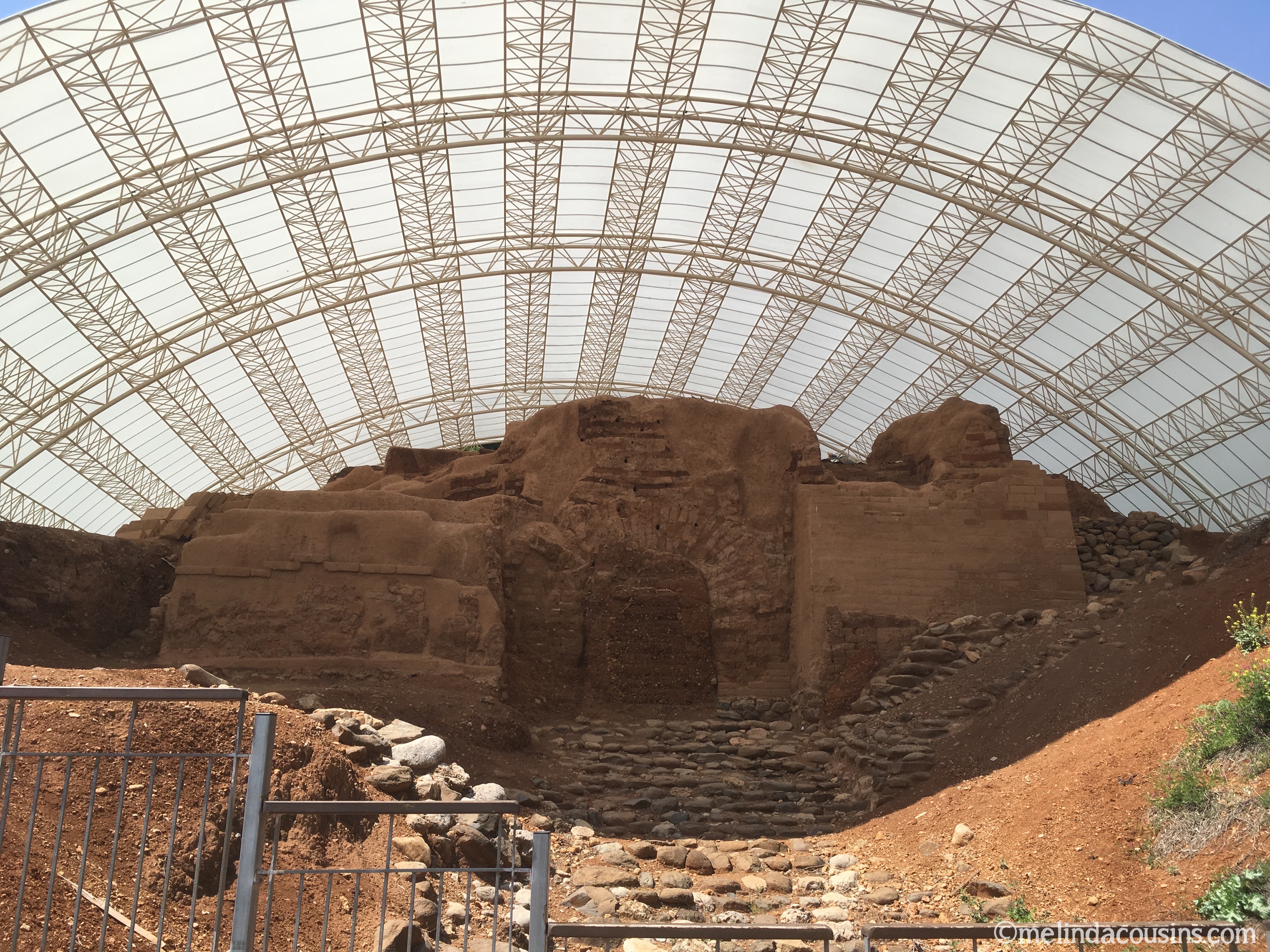
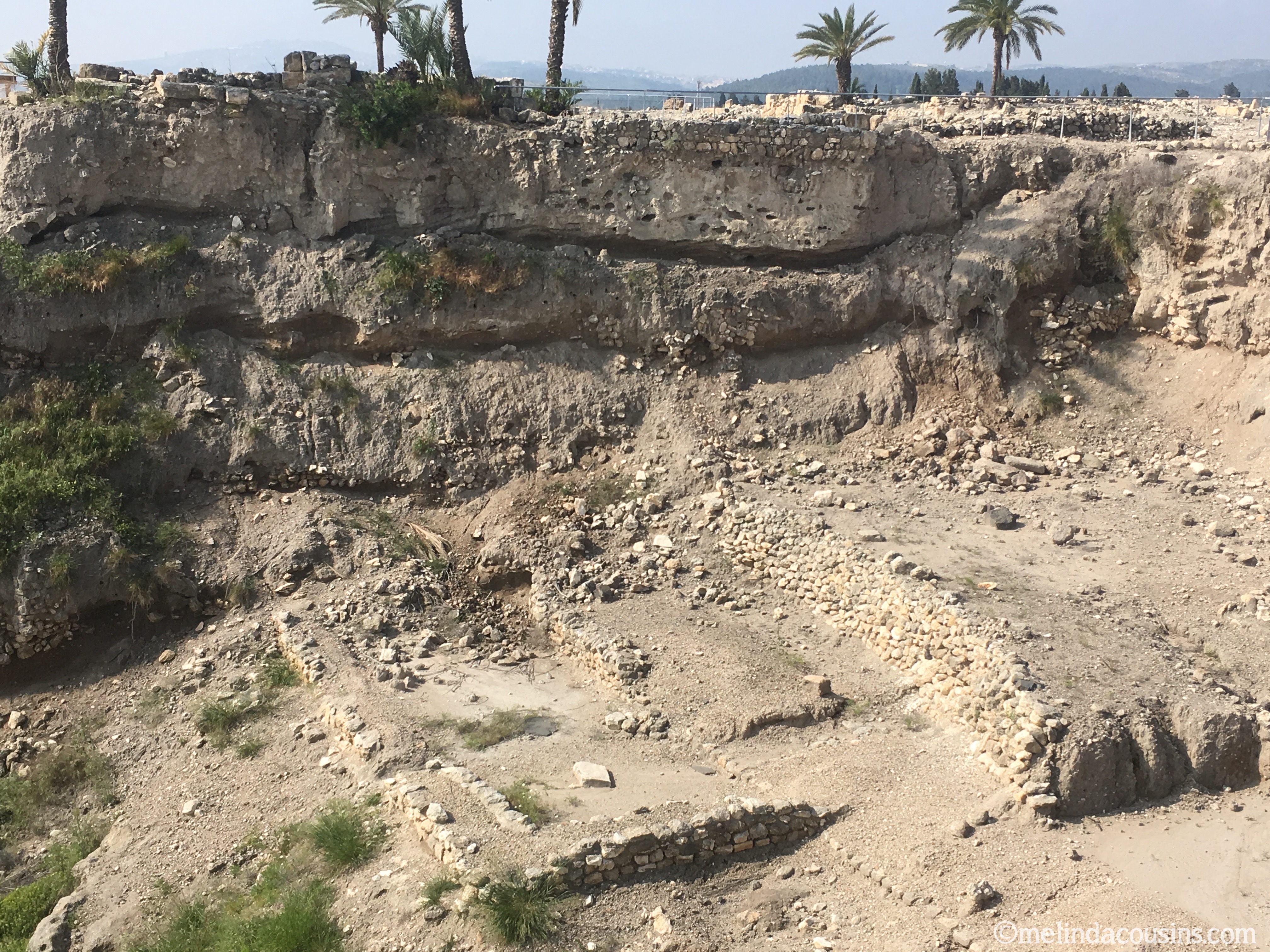
At Megiddo, excavations lay bare the layers of various city walls built over thousands of years in this city which was destroyed and rebuilt 25 times.

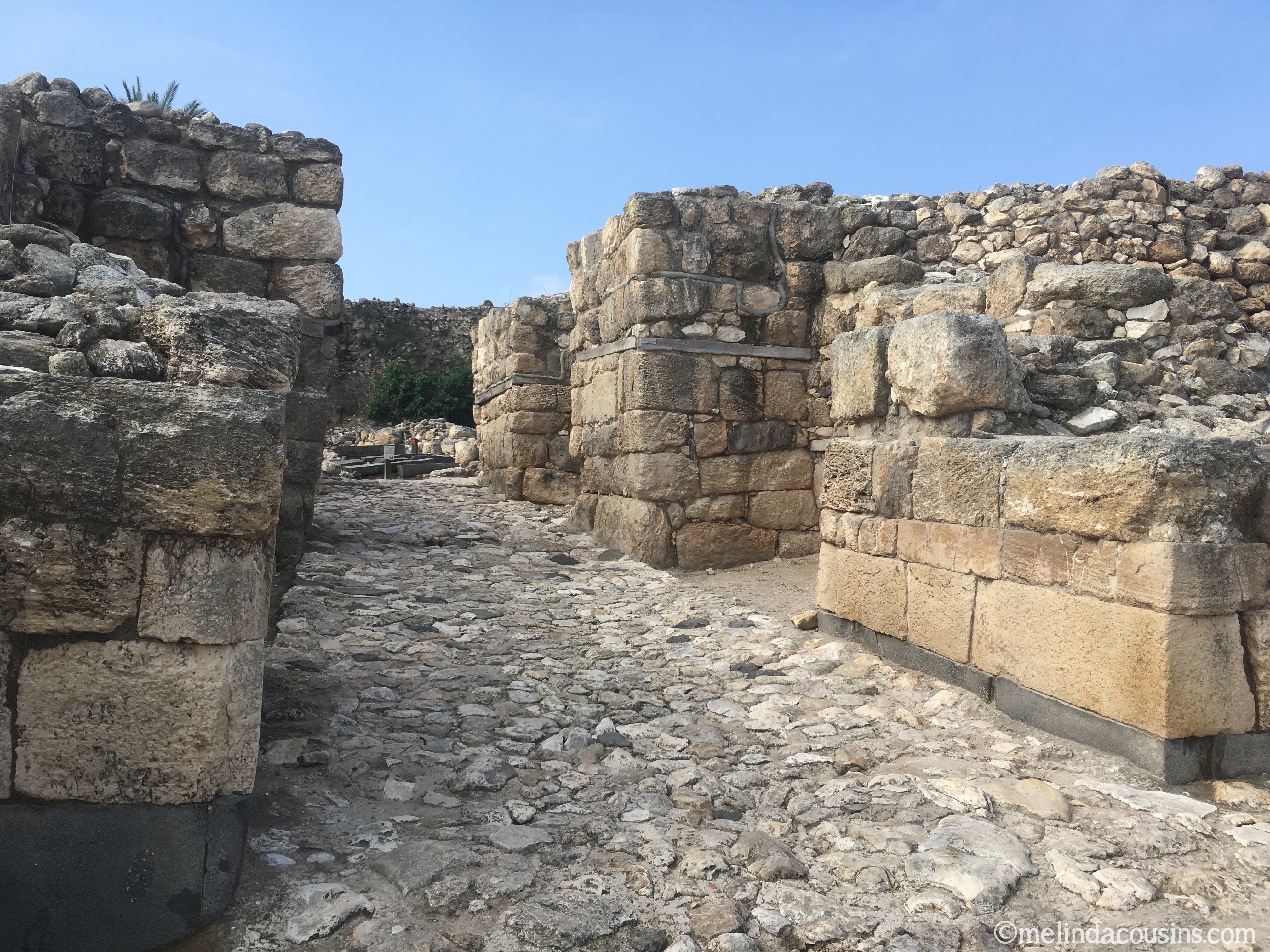
At the entrance to the city are the walls of the fortified city King Solomon built.

At Masada, the remains of walls built to protect a desert mountain fortress still stand.

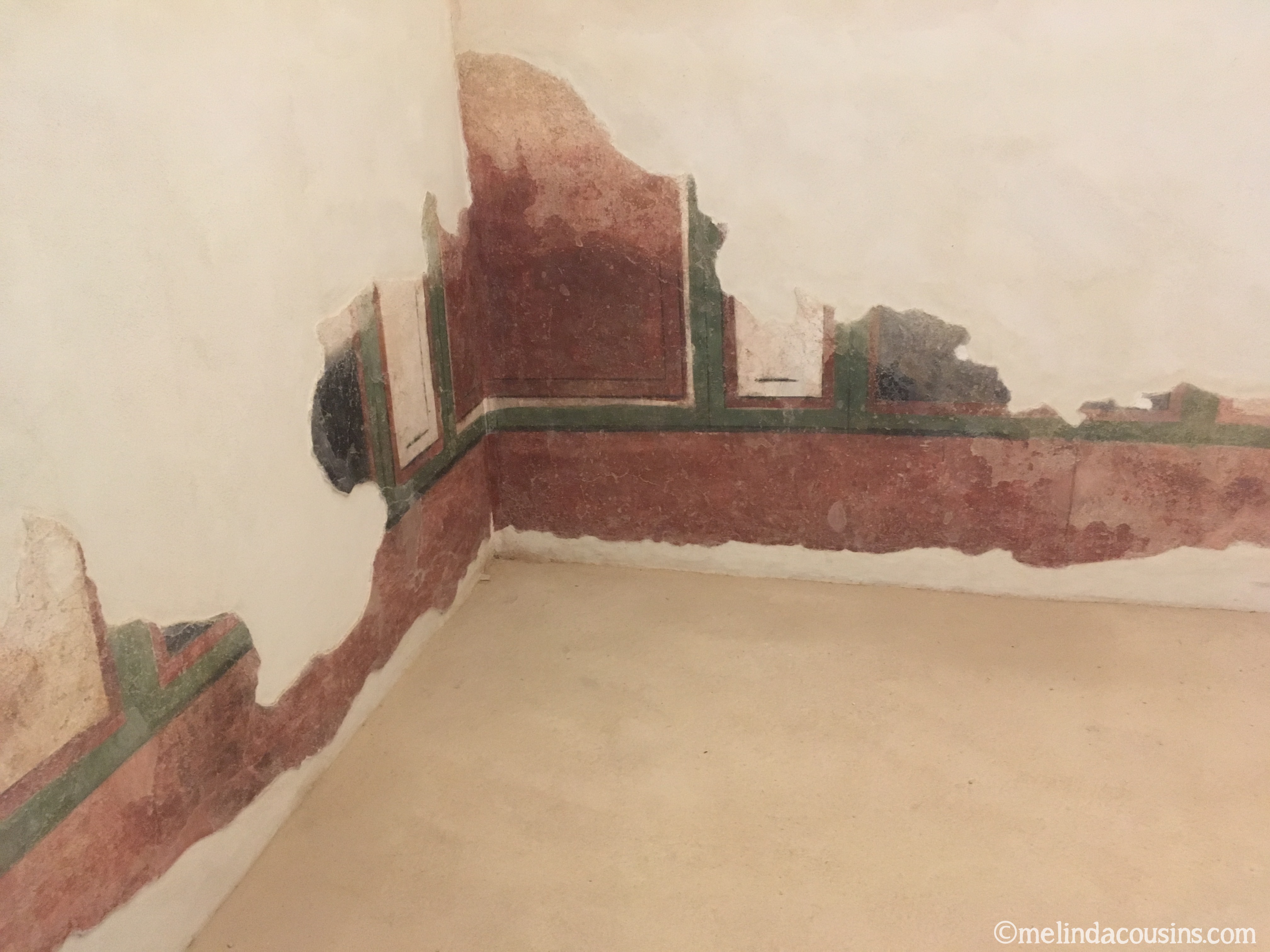
And inside the ruins of Herod’s palace, parts of the walls of an opulent bathhouse can be glimpsed.

Jerusalem Walls

The Old City of Jerusalem can certainly be called a city of walls – it is surrounded by them and contains within it one of the most famous walls in the world. The current walls around the city were built in the Ottoman period, dating to around 1540 CE. In places like this, you can also see the remains of much earlier walls.

The city’s main northern entrance is the impressive Damascus Gate, built on top of a gate dating back to Emperor Hadrian in the 2nd century CE.

On the other side of the city, the Zion Gate bears bullet marks from the 1948 Israeli War of Independence.

Within the Old City are remnants of much older walls, including the broad wall built by Hezekiah in the 8th century BCE.

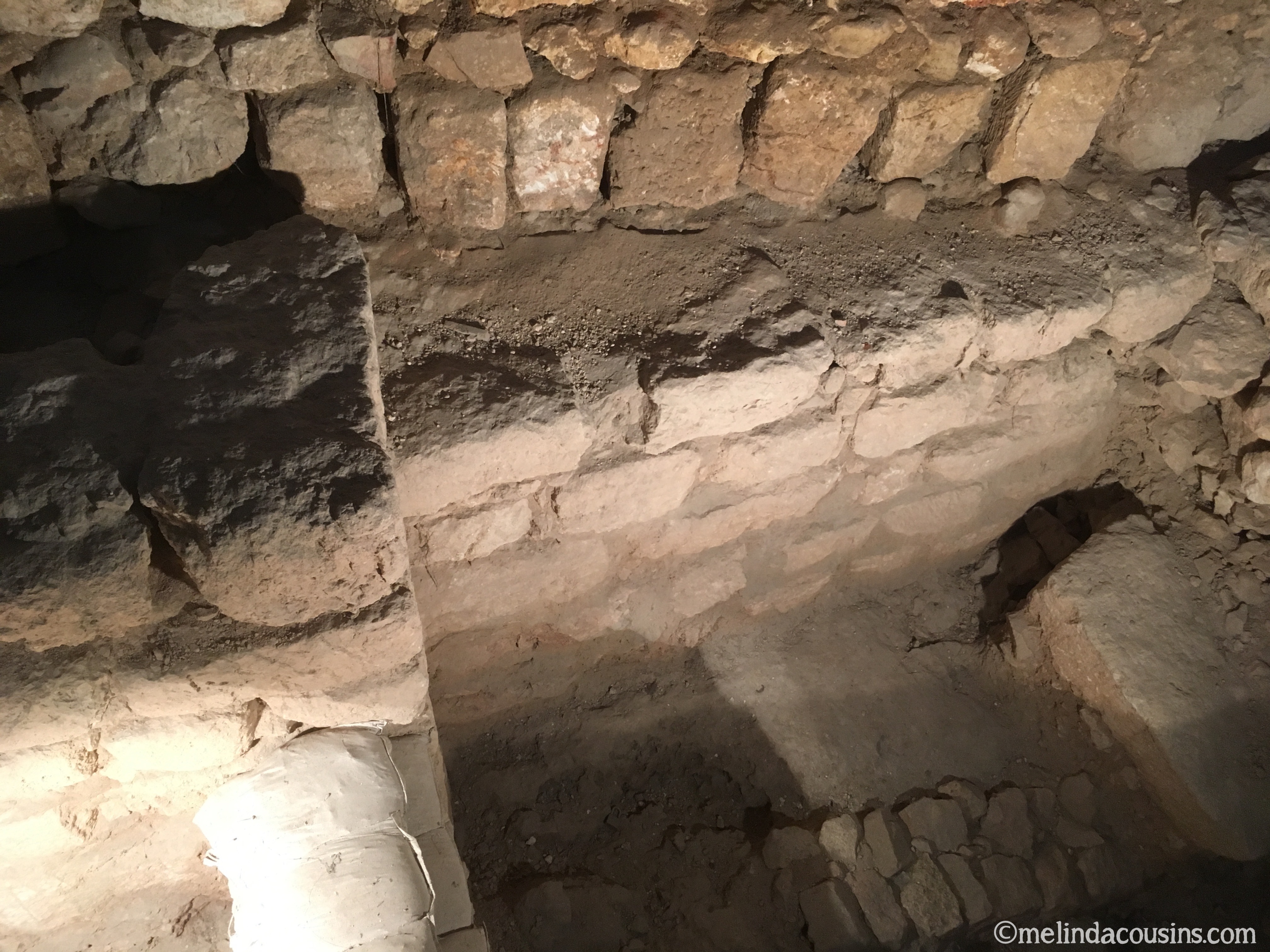
And inside the newly excavated Kishle, remains of a wall built during the Hasmonean period of Jewish independence in the 2nd century BCE.

And of course, in the heart of Jerusalem are the remaining parts of walls of the Temple built by King Herod in the first century BCE. This is the Temple Jesus visited, taught at and pronounced judgment upon.

The Herodian stones are massive and impressive, up to 13 metres in length.

The closest part of the wall to where the Temple was forms a centre of Jewish worship and patriotism in the Old City, commonly called the Wailing Wall. Thousands gathered to received the priestly blessing during Passover.

Thousands more came to celebrate national pride on the country’s Independence Eve.

Spending time at the wall to welcome in the Sabbath is a pretty amazing opportunity to see something of the celebration and joy that Jewish worship can encompass – in a multitude of different ways all at the same time.

The plaza in front of the wall is divided by a different kind of wall, separating men from women, leaving mothers to stand on chairs craning to look over as their sons undergo their coming of age ceremonies.

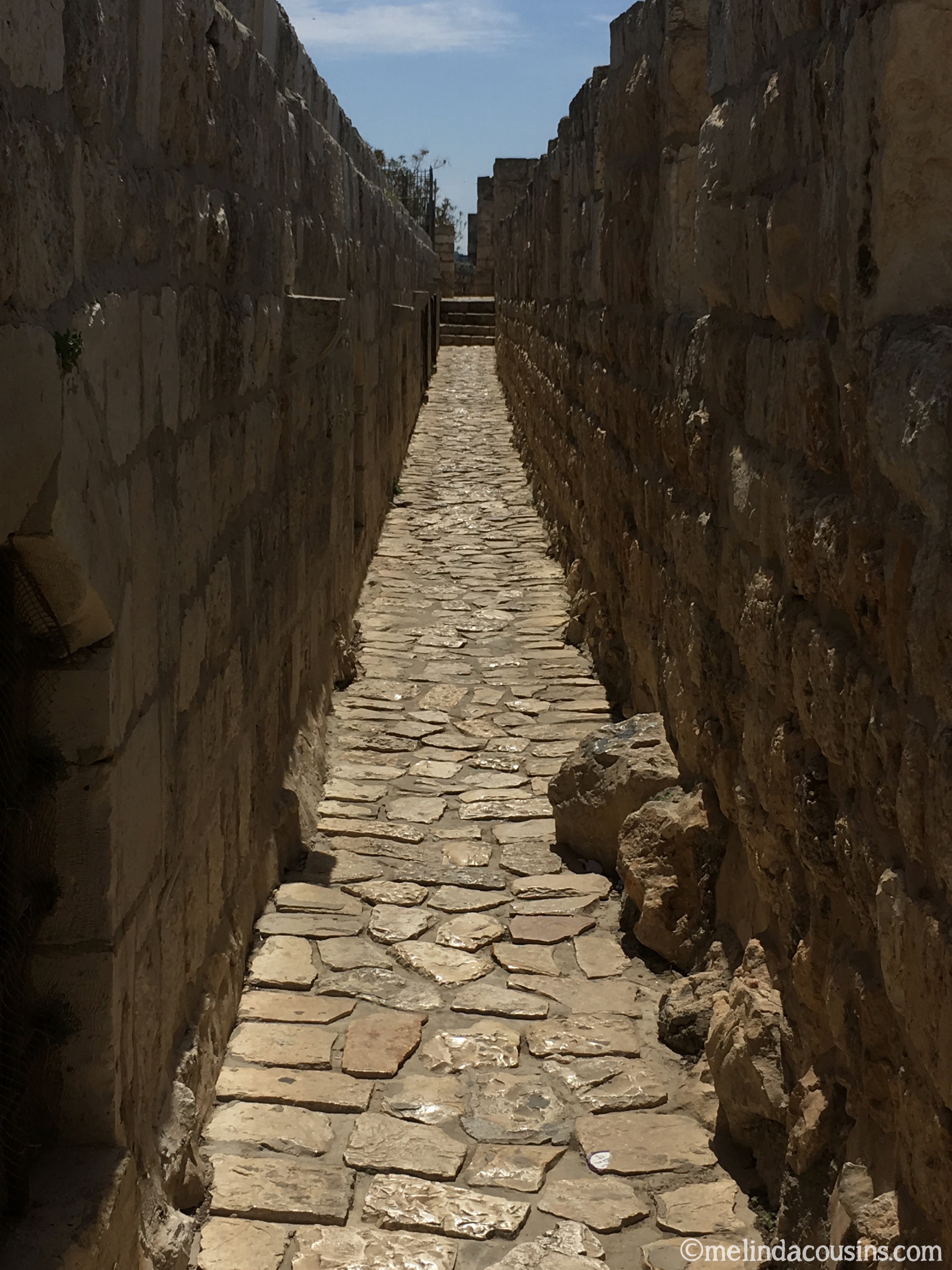
One of my favourite Jerusalem walks is up on top of the Old City walls, where it is usually quiet and you can look down into the city upon all these things and ponder the stories they tell and the values they signify.

And you can also look outside the old city and in the distance catch a glimpse of the most modern of the major walls in this land … the Separation Wall.

The Separation Wall

Israel started building this wall in 2002. It is actually only a wall when it surrounds towns. For most of its length it is two barbed wire fences with an exclusion zone in between.

The Israelis say this is a security barrier to protect them against terrorists.

Many Palestinians call it a racial barrier or apartheid wall.

In 2004, the International Court of Justice found that the wall violates international law and in response the United Nations passed a resolution 150-6 (with 10 abstentions) condemning it and calling on both sides to meet the obligations they had already agreed to under the ‘roadmap’ to peace. I find it difficult to comprehend that my country was one of the six.

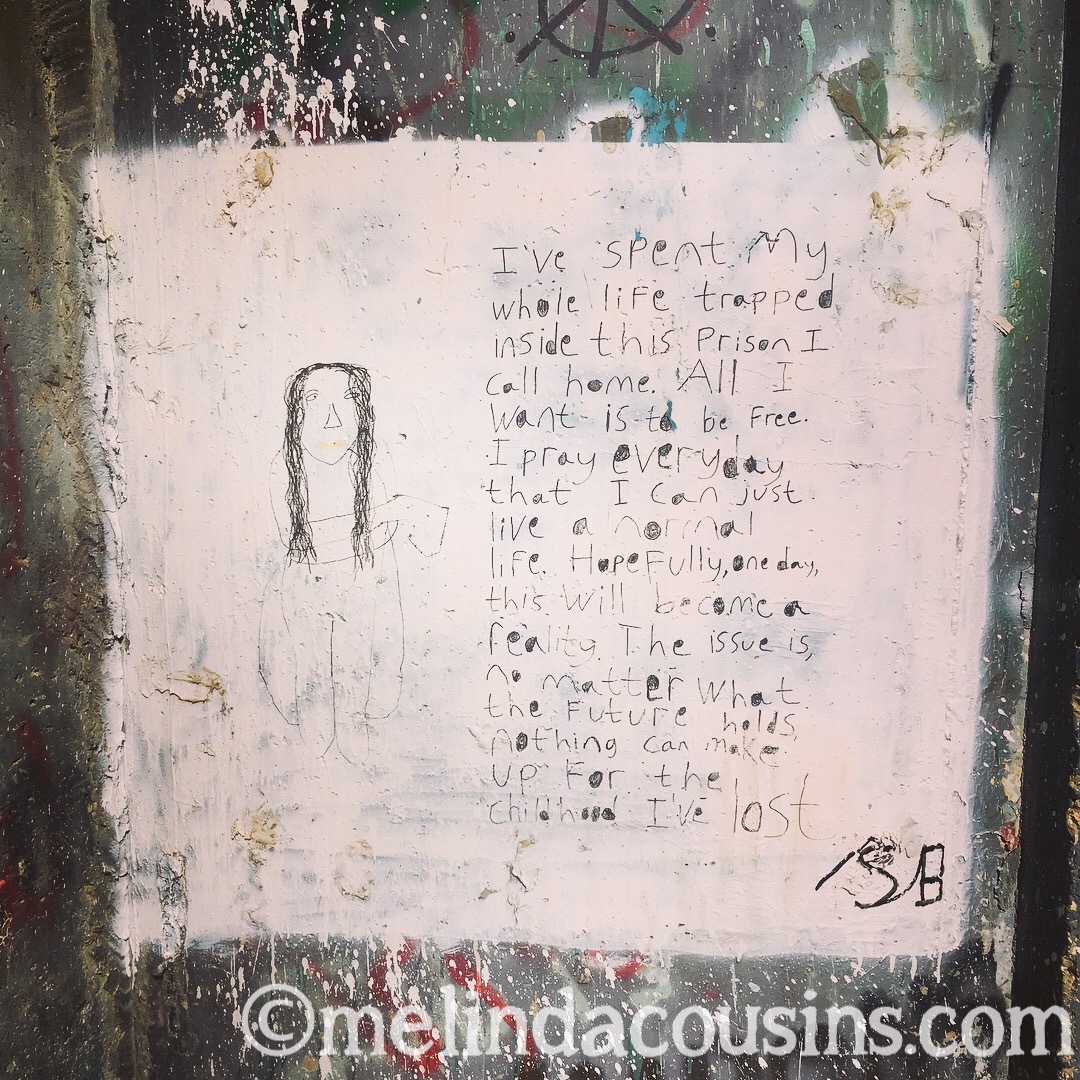
Politics aside, it’s hard to overestimate the psychological effect  growing up inside a wall like this has on children.

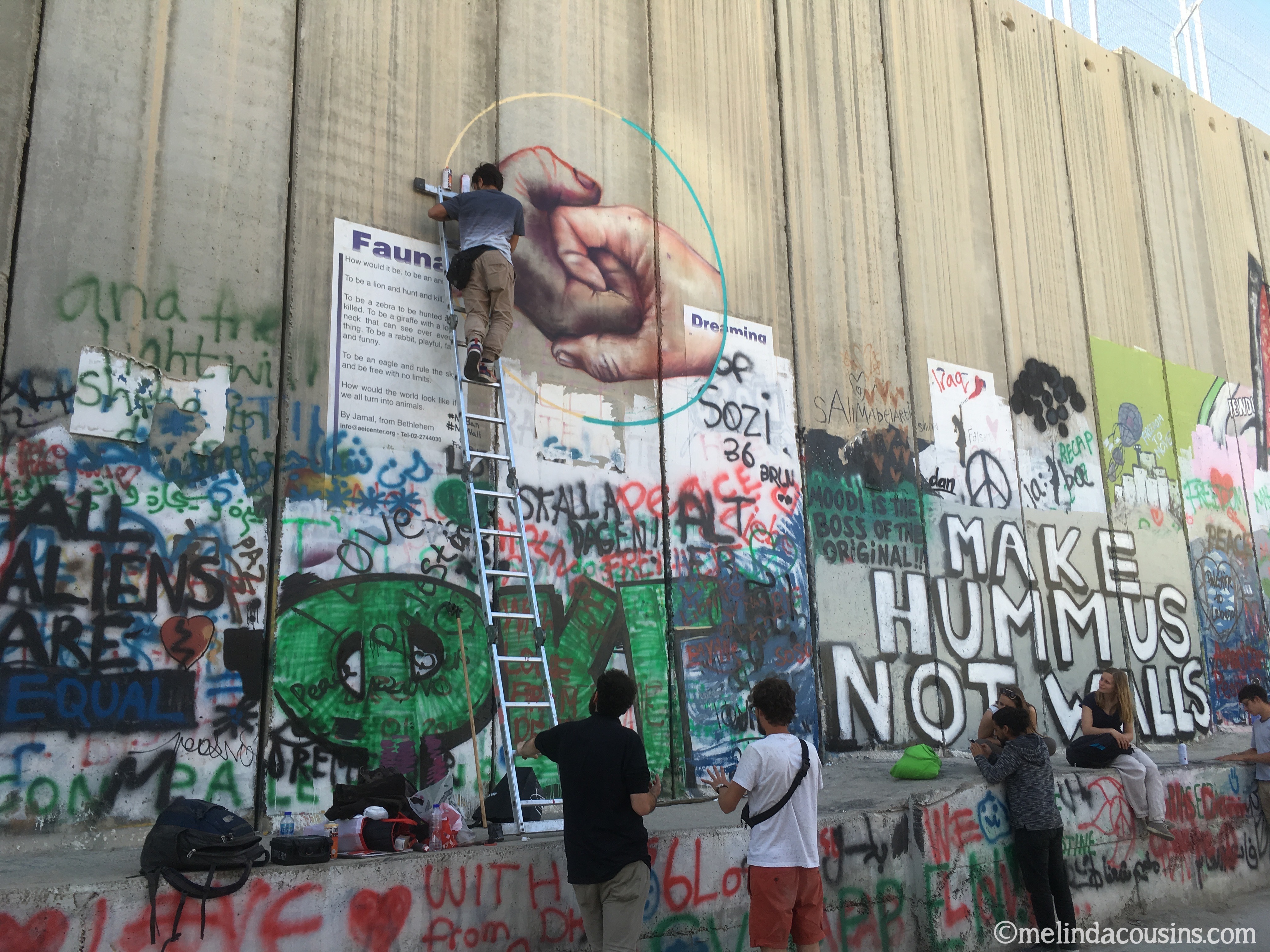
Frustrations and heartbreak are expressed by locals and visitors alike in graffiti and art all along the wall.

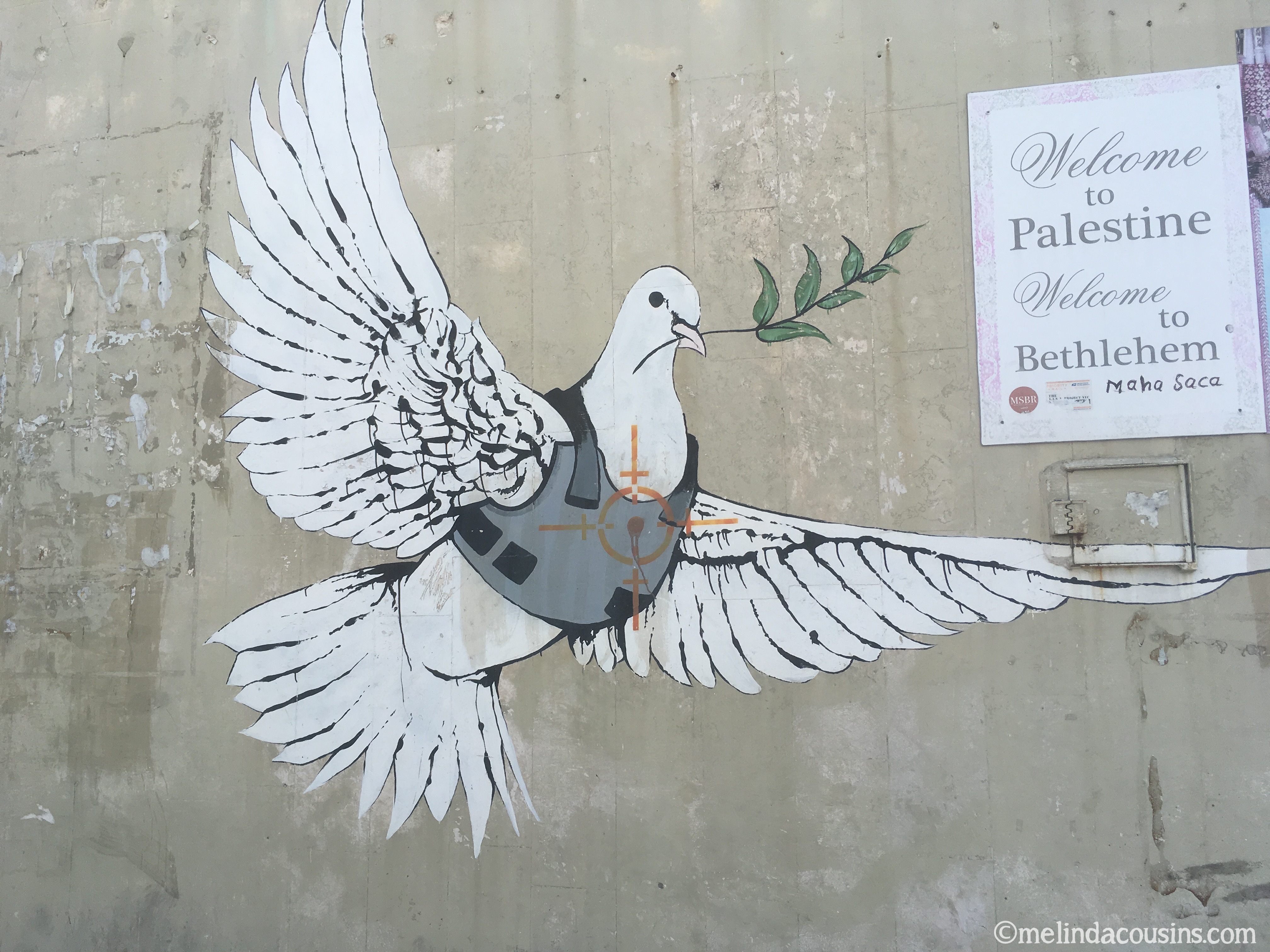
Famously, UK artist Banksy has painted various iconic images of subversive peace on it.

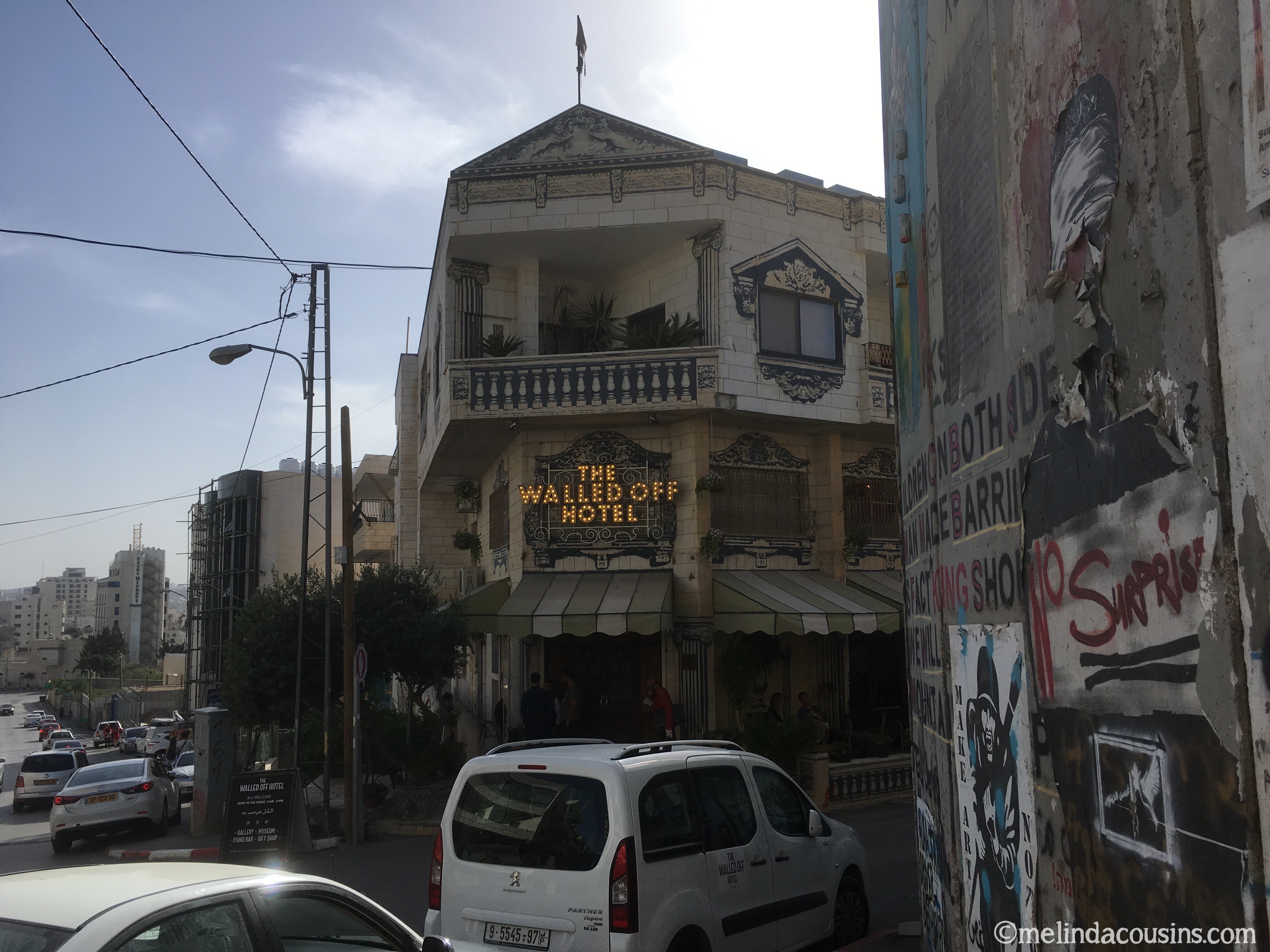
He also founded this establishment that bills itself as “the hotel with the worst view in the world.”

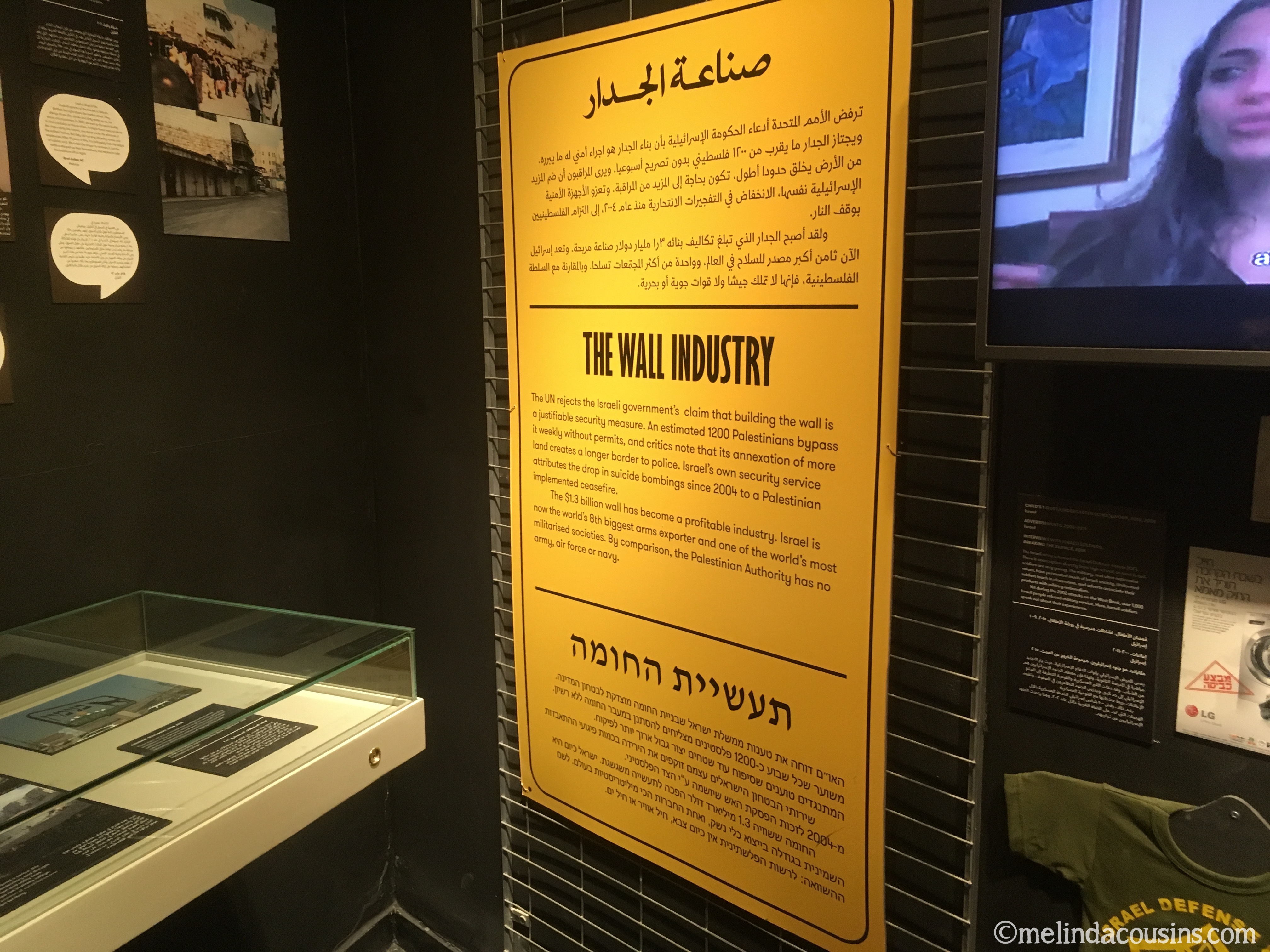
Inside is a small museum examining various perspectives on the impact of the wall.

Most mornings, those workers who have the right permits line up in this corral to cross the wall from Bethlehem into Jerusalem. Unless of course it has been closed for some reason – which seems to only be for those who live and work here, not tourists. Even when it is open to all, crossing a checkpoint with ease when most around you are questioned and searched is certainly a humbling experience.

Near the wall are a number of ‘refugee camps’ – but quite unlike what that name might suggest to many. Established just after 1948 and still under UN agency control, Aida camp, for example, is a rabbit warren of streets and apartment blocks home to five and a half thousand people in an area of 0.1km2.

Its residents use parts of the wall as memorials to children killed in fighting with wall security forces.

It is hard to see hope here. Surely there must be a better way forward. This kind of wall grieves me and I believe it grieves my Father. The founder of the Bethlehem Icon School painted this beautiful commission on the wall, a symbol of grief from this town’s most famous mother.

Windows

I have no solution to offer to this mess. And it wouldn’t be my place to offer one anyway. All I can do is share what I have seen, heard, and felt. But if there are any glimmers of hope I see in this place it is from the people I met who live there and are seeking to find and walk in ways of reconciliation, restoration, and peace. To me, in this place of walls, they are like windows.

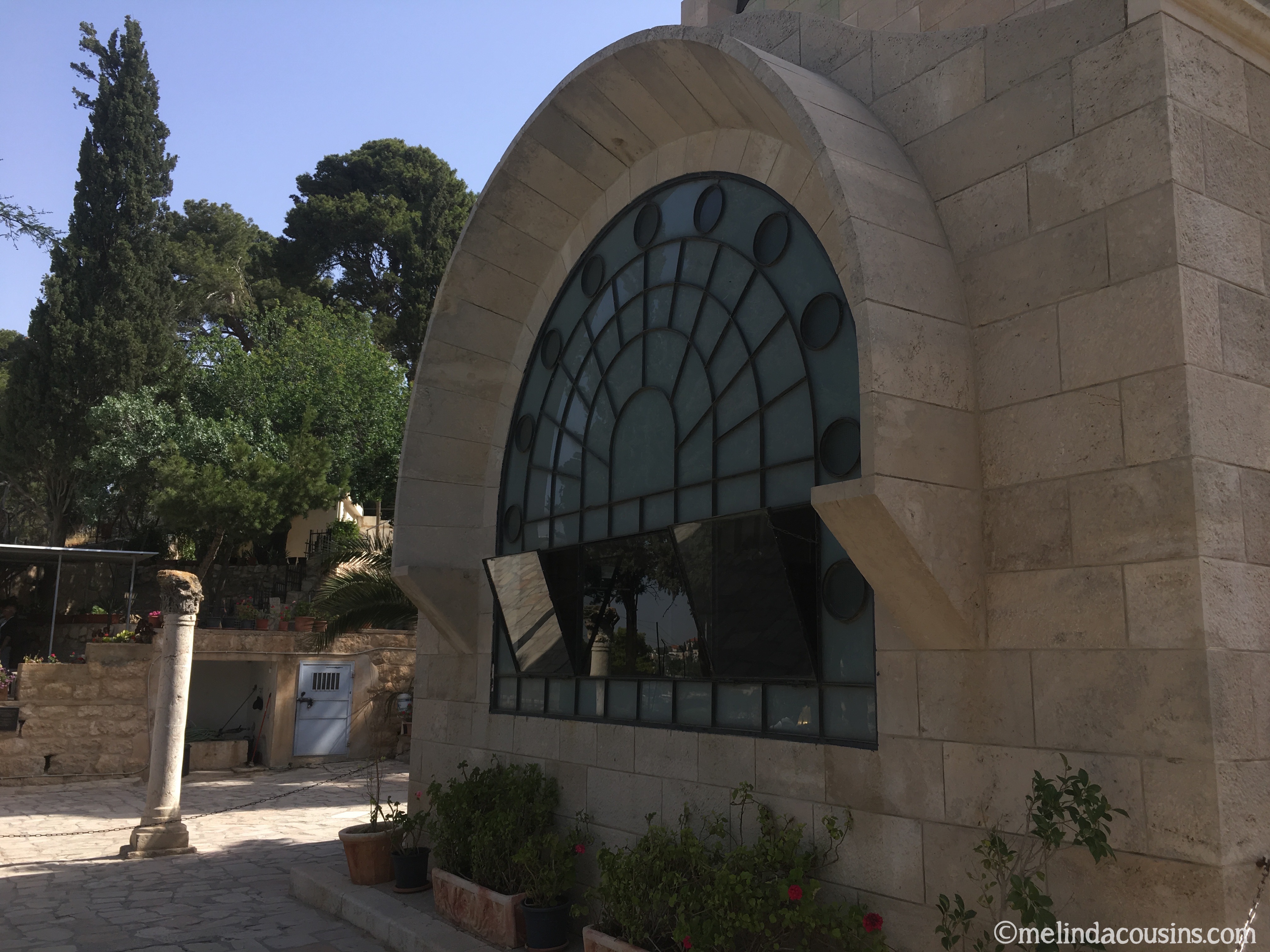
I think of this window in Jerusalem from a church called Dominus Flevit, meaning the Lord wept. It looks over the Temple mount and remembers the place where Jesus paused to weep over this city. It causes me to ask where He is pausing and weeping today.

Or this window in Nazareth picturing Mary receiving the most surprising news of God coming in a completely unexpected way. It causes me to hope that just because we can’t think of a way forward doesn’t mean there isn’t one. God can still bring Peace in unexpected ways.

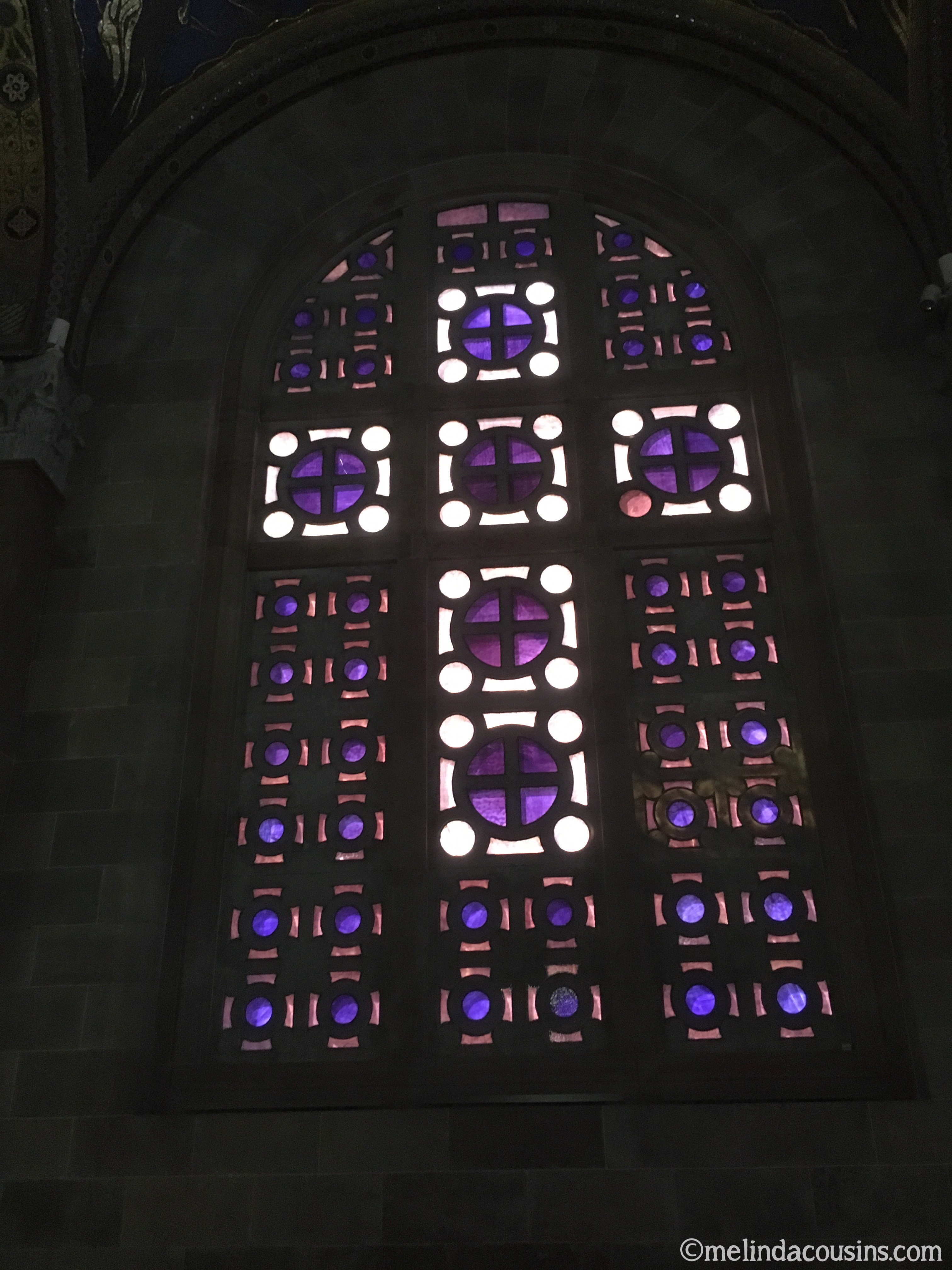
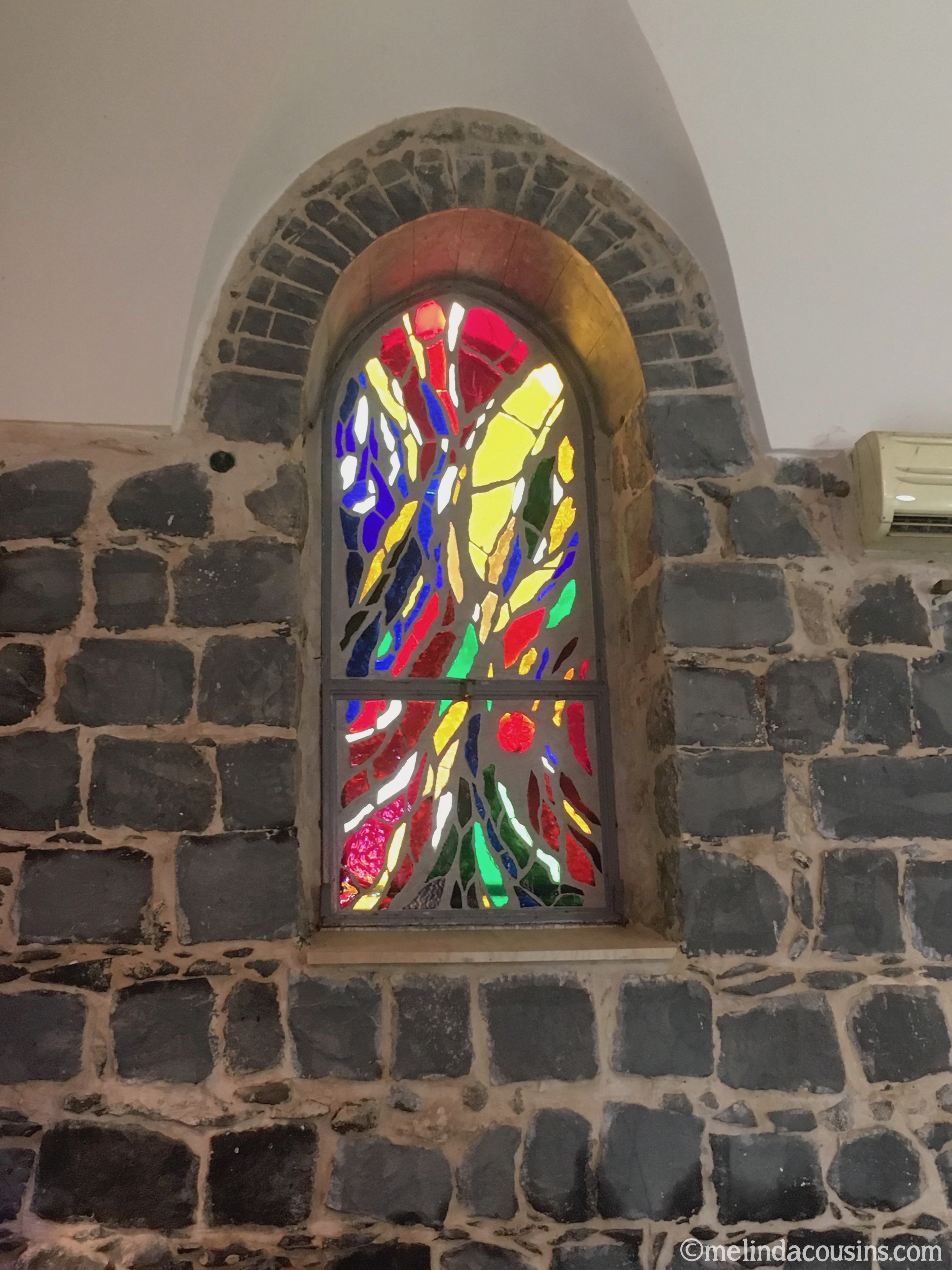
Most frequently, I found myself struck by many of the modern, abstract stained glass windows we saw in various churches in this land.

And the way each one reflects light in its own unique, often surprising, way.

From Nazareth to Bethlehem, Jerusalem to Galilee, I found myself drawn to the ways they let in and refract the sunlight.

The same sunlight, yet each has its unique beauty depending on its shape, colours and position.

To me that is a beautiful metaphor of what it means to be people of peace. People of light. People of faith.

And I met people like that in this land. People whom I continue to pray will find unexpectedly beautiful ways to shine light in the darkness.

A particular favourite of mine are these windows in a church at Tabgha on the Sea of Galilee. They are made of very thinly sliced alabaster. I am attracted to their incredible beauty, but I’m also intrigued by their very existence.

Windows made of stone. Who imagined that possible? And is it therefore possible that there might be a generation in this place who are able to imagine the impossible and even somehow turn walls into windows?