Category Archives: Culture

Today is a good day to be in Atlanta

I’m in Atlanta this week for the Annual Meeting of the Society of Biblical Literature. It’s an amazing opportunity to meet and hear from thousands of scholars who share similar passions and interests. I previously blogged about how inspiring it is to participate in a gathering of people who love what you love.

IMG_2329

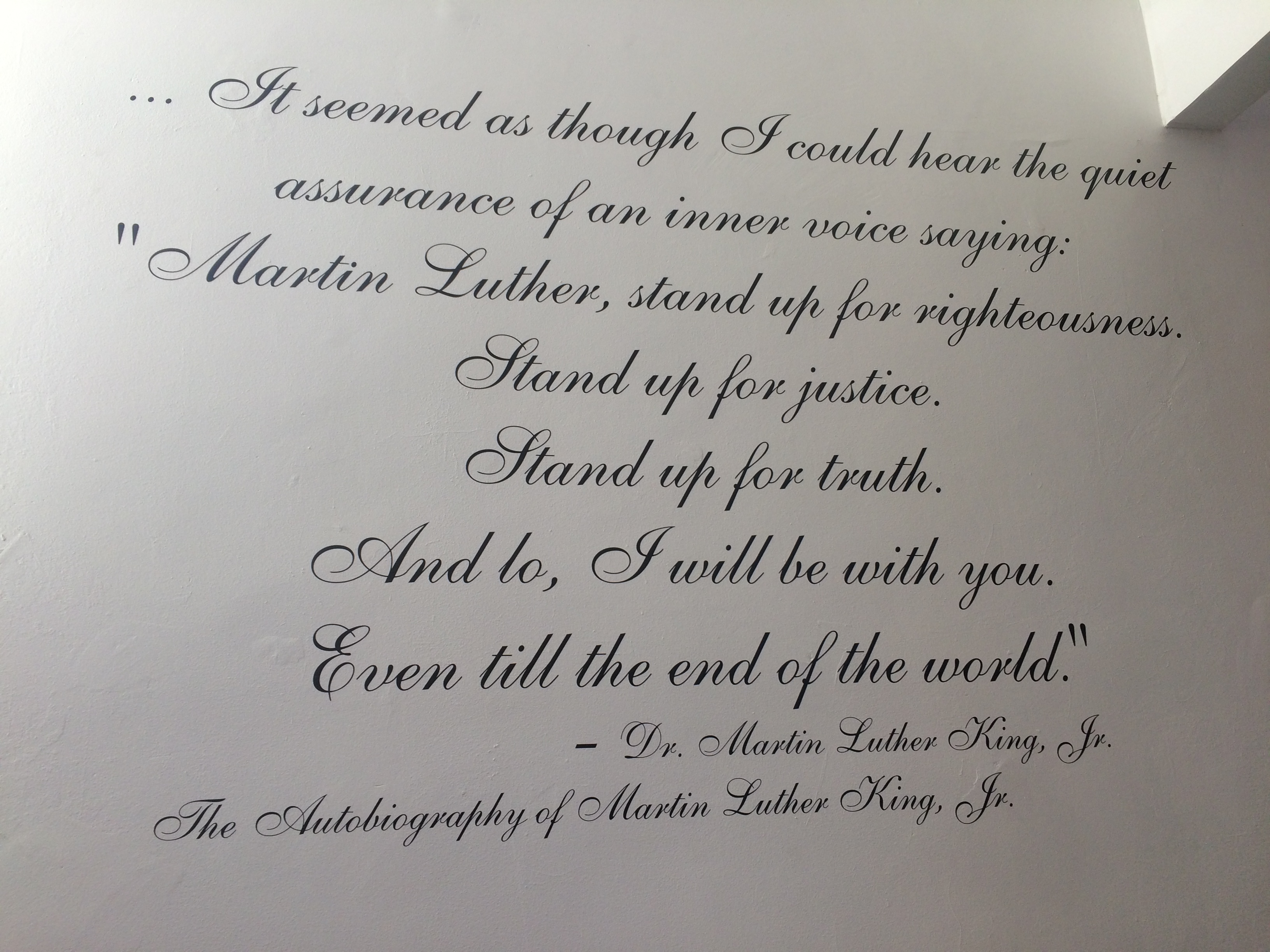
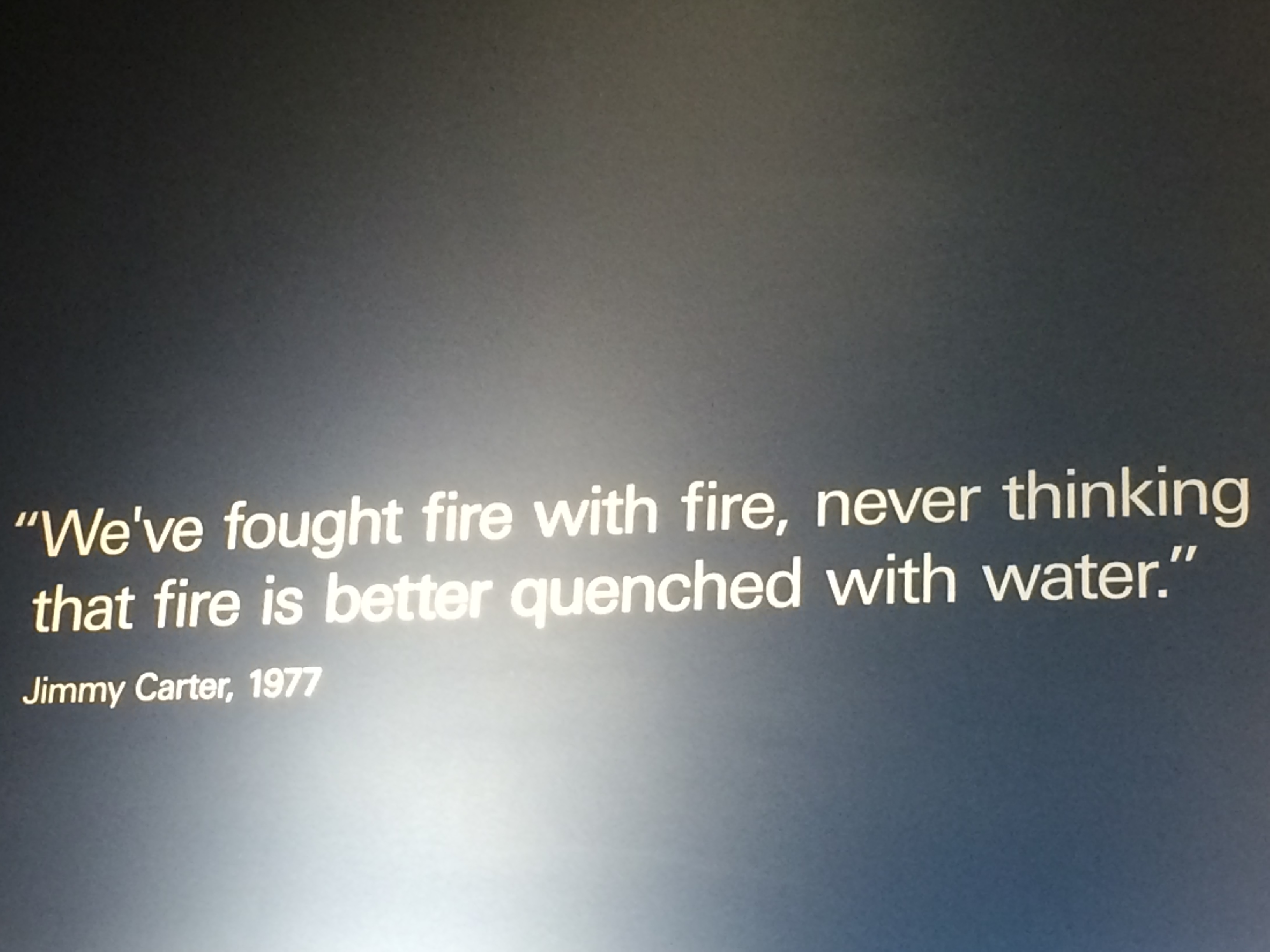
But I’ve also had the chance to do a small amount of sightseeing in Atlanta this week and it’s two places in particular I visited that I want to share about today. Two places and the two people they honour, who inspire me greatly: Martin Luther King Jr and Jimmy Carter.

image

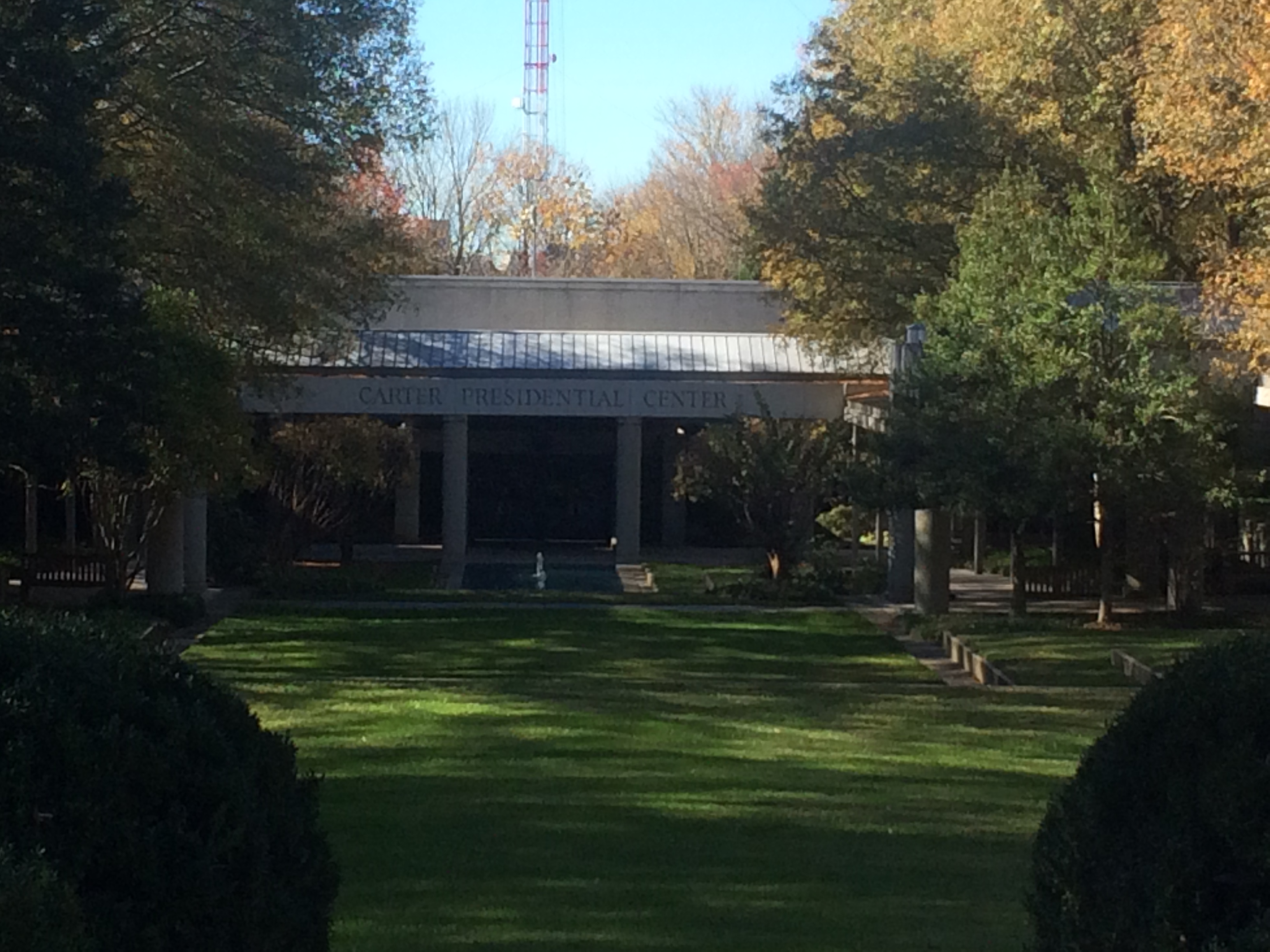
MLK was born in Atlanta, grew up here, pastored a church here, and is buried here. The King Historic District is today a National Park and well worth spending a few hours at. Jimmy Carter is from the state of Georgia and his Presidential Library is here in Atlanta, along with the Center he established which works for peace.
image

What have I loved about visiting the places dedicated to these two people here in Atlanta? 

The King District includes Martin’s birth house, which has been lovingly restored and so provides a fascinating glimpse into what daily life was like for a relatively well off African-American family here in the 1930s.

image

The church Martin’s maternal grandfather and father both pastored before him is a beautiful place of worship as well as a moving insight into his funeral which was held here after his assassination at just 39.

IMG_2237

The museum tells his story, one I am familiar with to some degree, and which last year’s excellent film Selma gave me a helpful entree into. His dual commitments to justice and non-violence are powerfully portrayed.

IMG_2197

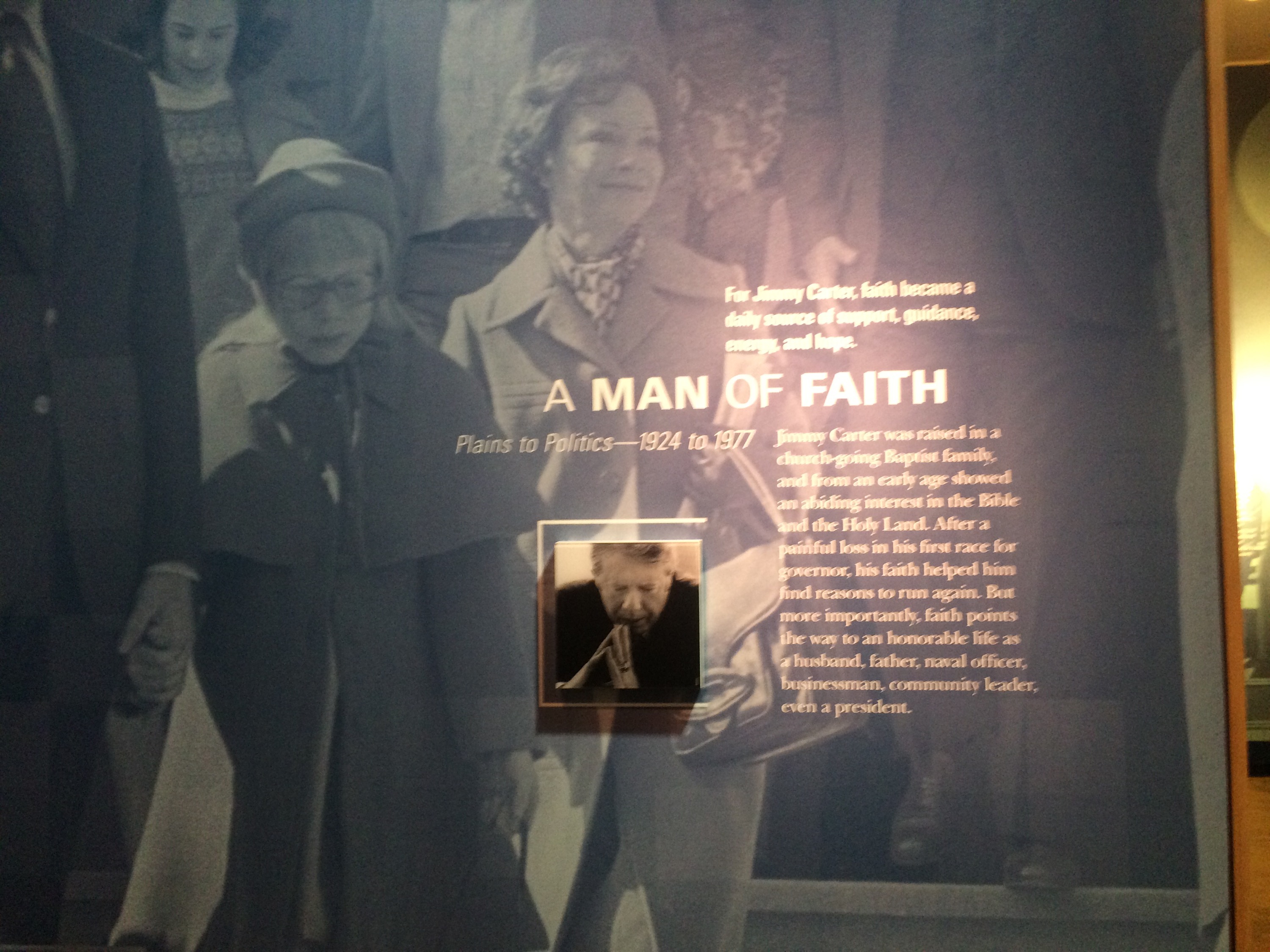
The Carter Library likewise provides an overview of one man’s life, from humble background, to Naval Officer, to peanut farmer, then Senator, Governor, and President. I find it fascinating to explore the life of a man my grandparents’ age and the ever changing times he lived through.
IMG_2336

And of course insights into occupying one of the most powerful roles in the world are always intriguing.

Reproduction of Carter Oval Office

But Carter’s story is moving and inspiring in many ways more because of what he has chosen to do since his “involuntary retirement” from that office. His commitments to justice and peace, from the Middle East to free elections in Africa, to the mistreatment of women around the world. He has tried to use his influence to do what he thought right and fair.

Carter's Nobel Peace Prize
Carter’s Nobel Peace Prize
What have I learned from spending time “with” these two men in Atlanta?

Born just 5 years and 250km apart, as far as I can discover, these two men never met. (Although MLK Sr became a great supporter of Carter’s, and Carter credits MLK Jr’s work with opening the door to make his presidency possible).

image

The two men differ, most obviously in race and longevity, but also in career paths and the paths by which they came to their shared views. I’m sure if you dig deep enough you could also find some topics on which they would not always have seen eye to eye.

image

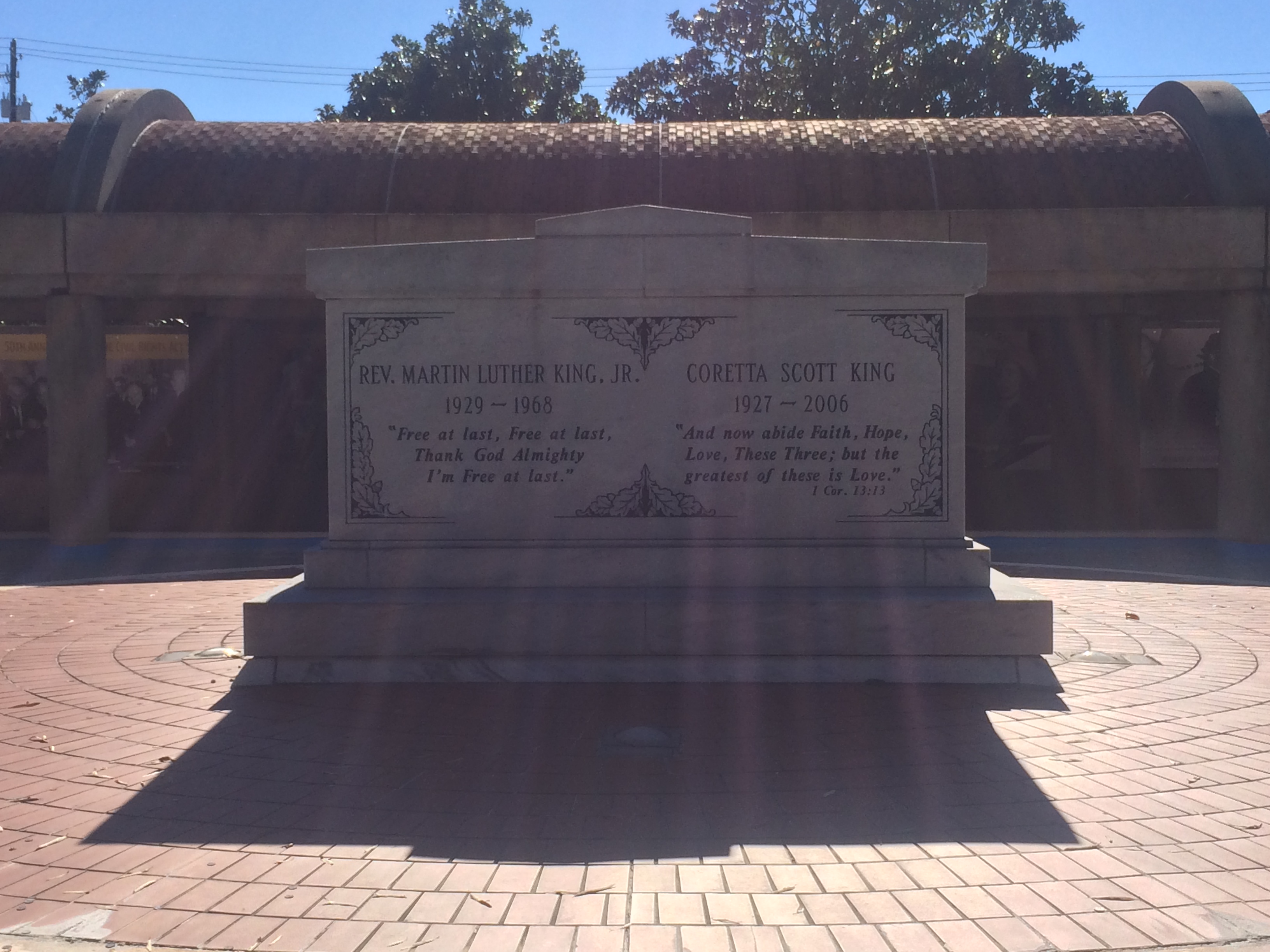
But they share not only this city and their Nobel Peace Prizes, but more importantly, a commitment to justice and a willingness to stand up for what they believed to be right no matter the cost. One paid a high price professionally and reputationally for a time. The other paid a far higher price, his life.
image

They also share an underlying source and motivation for their passions and convictions: a deep and abiding faith in Jesus Christ. I feel some sense of pride that I am part of the same faith tradition as these two great men.
image

And as I face a world struggling with fear and hatred, tempted to build walls between races and communities, I want to keep being inspired by the example of these two men. I do not have the influence or recognition that they have, but in whatever opportunities I do have, how can I live and speak justice, peace, truth and hope, no matter what it costs me?
image


Responding to evil in the world: do we accept what we expect or is there another way?

The last few days have seen some terrible things happen in various places around the world and many words written and spoken in response. Words of grief, words of fear, words asking questions, words expressing unease. I have hesitated to add my words for two reasons. The first is that I’m not sure I have much new to say. The second is that I worry that by saying something, assumptions will be made about all the things I leave unsaid.

But I called this blog “thinking  out loud” because for me it is often in sharing my questions that I begin to discover answers (or more questions!) So what I add here are not my first thoughts nor my final thoughts, not my only thoughts nor my complete thoughts. Just something I’m still working through and out …

This is by no means a comprehensive list, but here are some of the tragic events of the last month or so.

  • On October 5, 57 people were killed when a car bomb went off outside their local market.
  • On October 10, 102 people were killed as they attended a rally for peace in their capital city.
  • On October 14, 42 people were killed when suicide bombers entered their place of worship, and on October 23, another 27 were killed in similar circumstances in the same country.
  • On October 31, 224 people were killed when their aeroplane was brought down by an act of terrorism.
  • On November 12, 43 people were killed when suicide bombers detonated explosives in a suburban neighbourhood.
  • On November 13, over 129 people were killed due to a series of coordinated terrorist attacks in cafes and clubs.

By not including the places where these tragic events happened, they all sound the same. And on very many levels they are the same. All were acts of terrorism that resulted in the deaths of innocent people going about their daily lives. But in one important way, they are not the same at all.

One of the questions that is being asked is why only the last of these has generated wall to wall news coverage, the use of lights and flags on iconic buildings around the world as signs of solidarity, and statements of sympathy and determination to avenge by numerous western world leaders including the US President and the Australian Prime Minister.

I’m not sure there is a simple answer. I know there is no comfortable answer. Because for me, the question has to be personal. I could blame the media for making more of some things and not telling me about others, but I’m pretty sure their reasons are not that different from my own. Why did I have a stronger reaction to one event than I did to the others?

First, if I’m honest, there is the “it could have been me” factor. A place that I have recently been to, a place I am familiar with, a place that feels similar to where I live, people whom I somehow see as more “like” me… this is easier for me to sympathise with. I wish that was not true, but it is. I want to keep working hard to try to overcome that natural tendency I see within me. I need you to help me with this.

But the second thought I have had is about expectations. Are there some places in the world where these events feel unexpected to me? And therefore some where subconsciously they are, in contrast, “expected”? Have I somehow in my mind divided up the world into places where I think “this kind of thing happens” and places where I think it doesn’t?

And here’s the question that really horrifies me.

If there are places where I think these events are to be expected, does that lead me to assume that there are places where these events are to be accepted?

I hope not, but I fear if I’m not careful that may be my subconscious attitude. And I wonder what the alternative is.

Is it our level of expectation or our level or acceptance that needs to change? As a follower of Jesus,  I think, perhaps seemingly contradictorily, the answer is both. And that somehow, it is in living in the tension that expects evil and yet does not accept it, that hope is found.

Jesus teaches me that evil and the resultant suffering are to be expected everywhere. We live in a broken and hurting world and even the places we like to pretend are in some kind of protective, prosperous bubble are in reality fragile and vulnerable to the power of sin and darkness.

At the same time, Jesus calls me to act and speak out in a way that does not just accept evil and its resultant suffering anywhere. That works to overcome and respond with compassion and love to all people in all places so that His light might be seen where it is desperately needed … which is everywhere.

a669b1ba2d37bad1a89d6319ed642ab8

Some thoughts on racism, listening, and the gospel

Unless you’ve been living under a rock in Australia for the last week or so, you’ve been hearing about Adam Goodes and the issue of racism in sport/society. So much has already been said, I wasn’t sure if I had anything to add. But a few things have really challenged me and got me thinking about racism, listening to the voices of the “other” and how this all connects to the gospel.

The first is how easy it is for white Australians to make simplistic pronouncements about what is and isn’t racist. Here’s what I think: if you are a member of a majority group that has historically been responsible for the mistreatment, oppression and belittling of another group of people, and a member of that group is telling you that your actions are hurting them by perpetuating some of those attitudes and feelings, then you don’t get to tell them that they are “playing the victim card.” You don’t get to decide whether how they feel is valid. You don’t get to define what is going on. Your job is to listen. Not to rush to make statements or excuses or minimisations or give your perspective. To really listen. To hear what they are saying. And then to ask yourself how you are going to respond.

As appalled as I have been by some of the comments I have read and heard from white Australians this week, I’m hopeful that this is a moment in our history when we might finally be starting to listen. Listening to the voices of our indigenous Australians and realising there is something we need to really hear. That we have not yet dealt with the ongoing consequences of our shared history.

And so as well as appreciating the insights and responses of people like Charlie Pickering or Mia Freedman or this incisive outsider view from an ex-pat American, this week I have actively sought out the voices of indigenous Australians who are speaking about this issue. I want to hear what they have to say. I want to listen.

If you haven’t heard these voices, here are some you might want to take some time to listen to.

Stan Grant’s article in the Guardian: “Estranged in the land of our ancestors, living on the fringes of a rich society – parse your words, but we see only race in the attacks on AFL player Adam Goodes.”

Dickie Bedford’s opinion piece in the Australian: “It reinforces our scepticism that while Australia — a country we all love deeply — pretends to embrace us, it fails miserably when it comes to taking real and significant steps towards truly understanding our culture, our lore and our traditions.”

Charlie King’s excellent question to Andrew Bolt: “How would you feel if you sat in that position and looked at the world through the eyes of Aboriginal people?”

Warren Mundine on the Drum sharing his personal experience with racism in Australia: “This week has been a really dreadful week for me because it has brought up so many memories … This is what it [racism] does to people. It actually cripples you within your life and stops you from doing things and being able to function as a human being.”

* And this blog post from an indigenous man which takes the opposite view to the others and made me feel quite uncomfortable, but was an important reminder of the subtle racism I can easily fall into of assuming that all indigenous Australians share the same opinion or a single story: “For an urban blackfella like me, I hate the fact that all of a sudden my opinion is relevant … If someone is genuinely looking for a discussion, they are easy to tell, but most people just want me to be the token black who validates their own feelings on the matter.”

As a Christian, I’ve also been continuing to reflect more widely on how we can better listen to our Aboriginal brothers and sisters. The family of churches I am part of recently welcomed an indigenous church into our (overwhelmingly white) association. The pastor spoke to our gathering and his key message was for us to listen. To hear and understand what a big thing it was for them to join us, given our shared history. To hear the questions and fears and concerns they have about maintaining their identity even as they participate as part of our group. To walk a journey of listening to them rather than too quickly jumping in with our “help” or “solutions”.

Then a few weeks ago I had the opportunity at a dinner with some ministry friends to ask an indigenous friend if he would share with the rest of us some of what he thought we needed to hear from indigenous Australian Christians. With some good-natured joking about his role as spokesman for “all Aboriginal people everywhere,” we had a really amazing hour just listening to him. One of the most profound things he said, that has been challenging and inspiring me ever since, was this:

As Christians, we believe that the gospel becomes “enculturated” – that is, as the gospel is lived out in every people group throughout the world and throughout history, we see different aspects of it and we realise more of who Jesus is. So what do you have to learn about the gospel, about Jesus, from your Aboriginal brothers and sisters?

For people who believe that every tribe and tongue is part of God’s incredible vision for the future in Christ, what a great question. And I know that trying to answer it is going to take a lot more listening on my part.

One of a series of paintings by an indigenous Christian artist telling the story of the gospel