Tag Archives: Jesus

Are we willing to question our assumptions about self-interest and economics?

It was announced this week that Poverty Reduction has been officially removed from the goals of Australia’s foreign aid. Many people have asked, quite fairly I think, if reducing poerty is not the goal of foreign aid, then what is? There are some possibly good answers to that question, but my fear is that the real answer is either self-interest, economics or politics (which may or may not all be one and the same).

Now perhaps it is naive and idealistic of me to think that it has ever been any way but thus. After last year’s election, the new federal government changed the status of AUSAid from a separate agency to part of the Department of Foreign Affairs and Trade, which seems a fairly clear indication that our aid goals are subservient to our political or diplomatic ones. It has recently emerged that our previous government gave specific amounts of aid to certain countries as “incentives” for votes to secure us a UN Security Council seat, which also makes a fairly blatant statement about our priorities.

It seems to me that the government knows that most people won’t care and will just accept that this is of course the ways things work. That a government’s role is always political before it is humanitarian. However, I find the priorities this reflects, and the assumptions it makes about what our community wants, quite frightening.

This week I also listened to a radio interview with the Premier and Opposition Leader in the leadup to our state election. They were asked about their plan for the state, and both gave answers solely about the economy. Now, I don’t want to deny that economics is important, but the assumption that economy = state is similarly one that I find problematic.

Surely there is more to what it means to be a community than how much revenue we can generate. Surely life is not valued in dollar terms alone. Surely we look for more in a government than simply who can make us have the most money in our pocket, like for starters, perhaps, oh I don’t know, … maybe who can govern well?!

Both these examples seem to be symptoms of a wider issue, where political decisions are being made on the twin assumptions that money is the only indicator of success, and that self-interest is the only motivation for people to act.

As a follower of Jesus, I do not share those assumptions and priorities. I follow the life and teachings of a Man who says, “Love your enemies, do good, lend, expecting nothing in return“(Luke 6:37-38) and “It is more blessed to give than to receive.” (Acts 20:35)

But I’d also challenge those in my community who do not share my Christian faith to consider whether those assumptions really reflect the kind of nation they want us to be. When we strip away the details and debates and niceties, is that really a bottom line we are comfortable standing for?

I am reminded again of a question asked by my favourite fictional politician, one which caused him to reflect on his assumptions and actions. The context is a conversation with one of his staffers about foreign aid, and aid in particular to the fictional nation of Equatorial Kundu.

President Bartlet: Why is a Kundunese life worth less to me than an American life?

Will Bailey: I don’t know, sir, but it is.

The West Wing, Episode 4 x 15, Inuguration: Over There

I worry that in Australia today not only does it seem we are unwilling to consider the answers to those kind of questions, but that apparently it doesn’t even occur to us to think of asking them.

“O Little Town…” or … Today would be a nice day to be in Bethlehem

The "little" town of Bethlehem today
The “little” town of Bethlehem today

It seems appropriate this eve of Christmas Eve to think about spending time in the place where the events we are celebrating took place. I’ve visited Bethlehem three times, just for a day each time, and found it a place of sadness and joy, of tensions and of celebrations. A place which perhaps reflects the breadth of emotions the story of the Incarnation brings in all its fullness.

Mosaic Map of Bethlehem in St Catherine's Church
Mosaic Map of Bethlehem in St Catherine’s Church

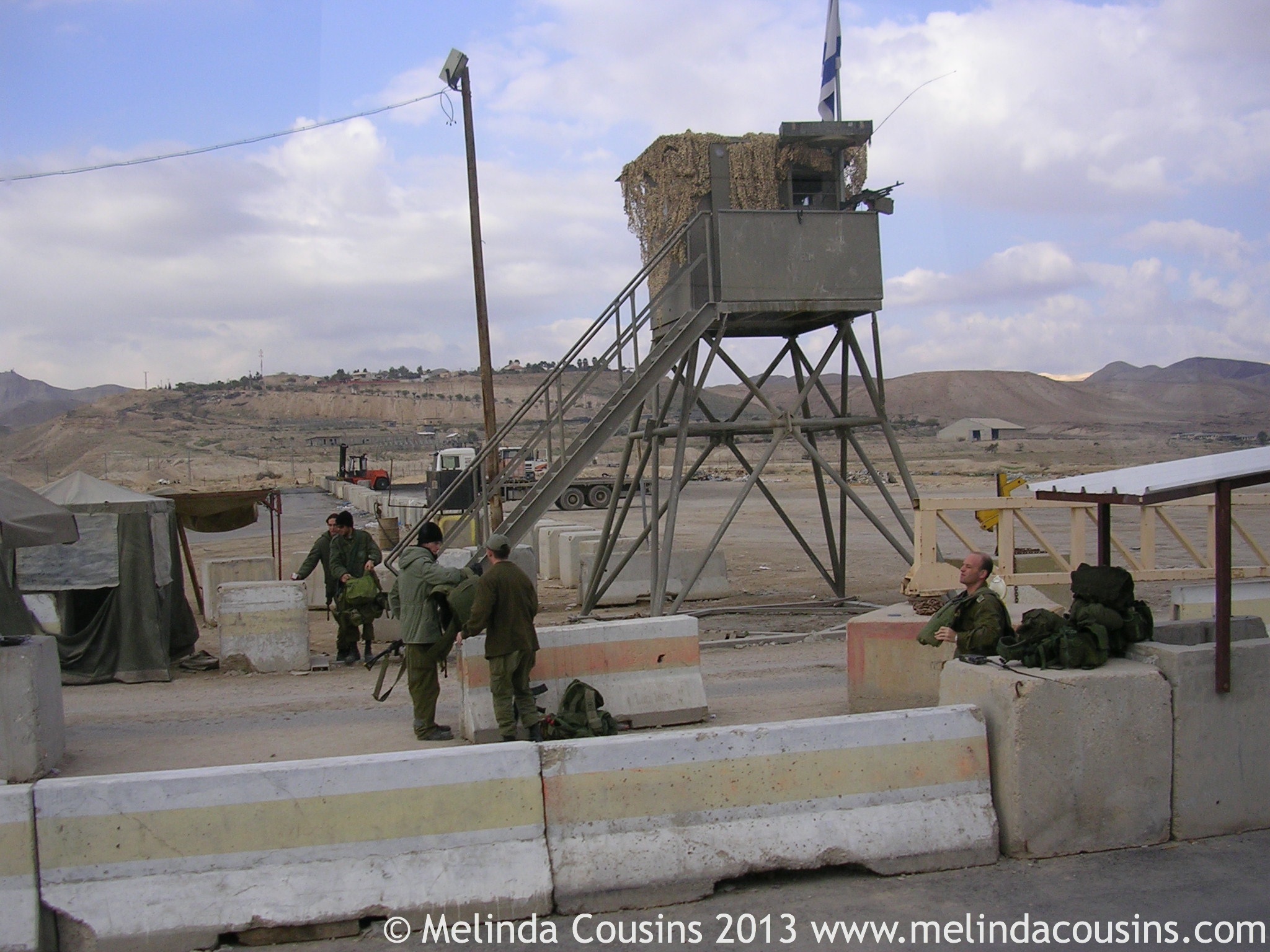
Bethlehem today is located in the West Bank, under Palestinian control. The first time I visited was during the Second Intifada and the experience of entering and exiting the town was quite confronting. Seeing the way those who lived there were roughly and invasively searched and trying to reconcile that with the deferential way we were treated as Westerners was difficult.

A 2005 West Bank checkpoint

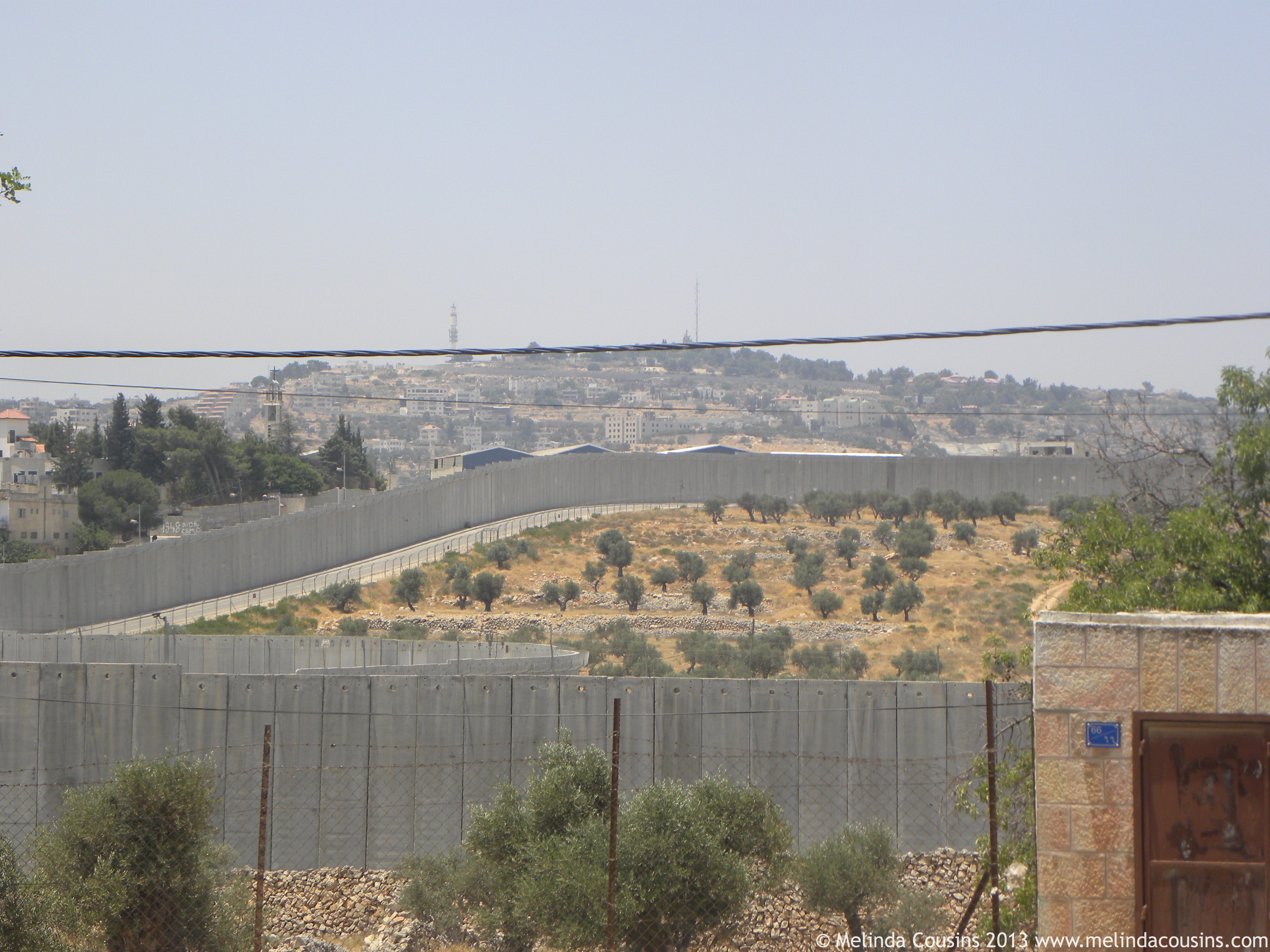
On our visit last year things were much calmer. But none of us could miss seeing the wall. The huge concrete construction which surrounds the town, seemingly making it appear to those outside that there is nothing and no one in there. This time one of the most confronting things I found was sections of the wall which were painted with pretty scenes of empty fields and the Sea’s edge, as if to enable those passing by to imagine that that is what the other side is really like. The reality is quite different. The difference between one side and the other is something like the difference between a ‘first world’ and a ‘third world’ country, if I can use those terms purely to evoke a comparison.

A small part of the separation wall
What did I love about Bethlehem?
Inside the Church of the Nativity

Obviously the main ‘attraction’ is the Church of the Nativity, built to remember the place of Jesus’ birth. The church has been through a lot. But there is a simple beauty in its setting. The tiny front door, supposedly a reminder to enter with humility, certainly makes you slow down as you go in.

Our guide entering the Church of the Nativity

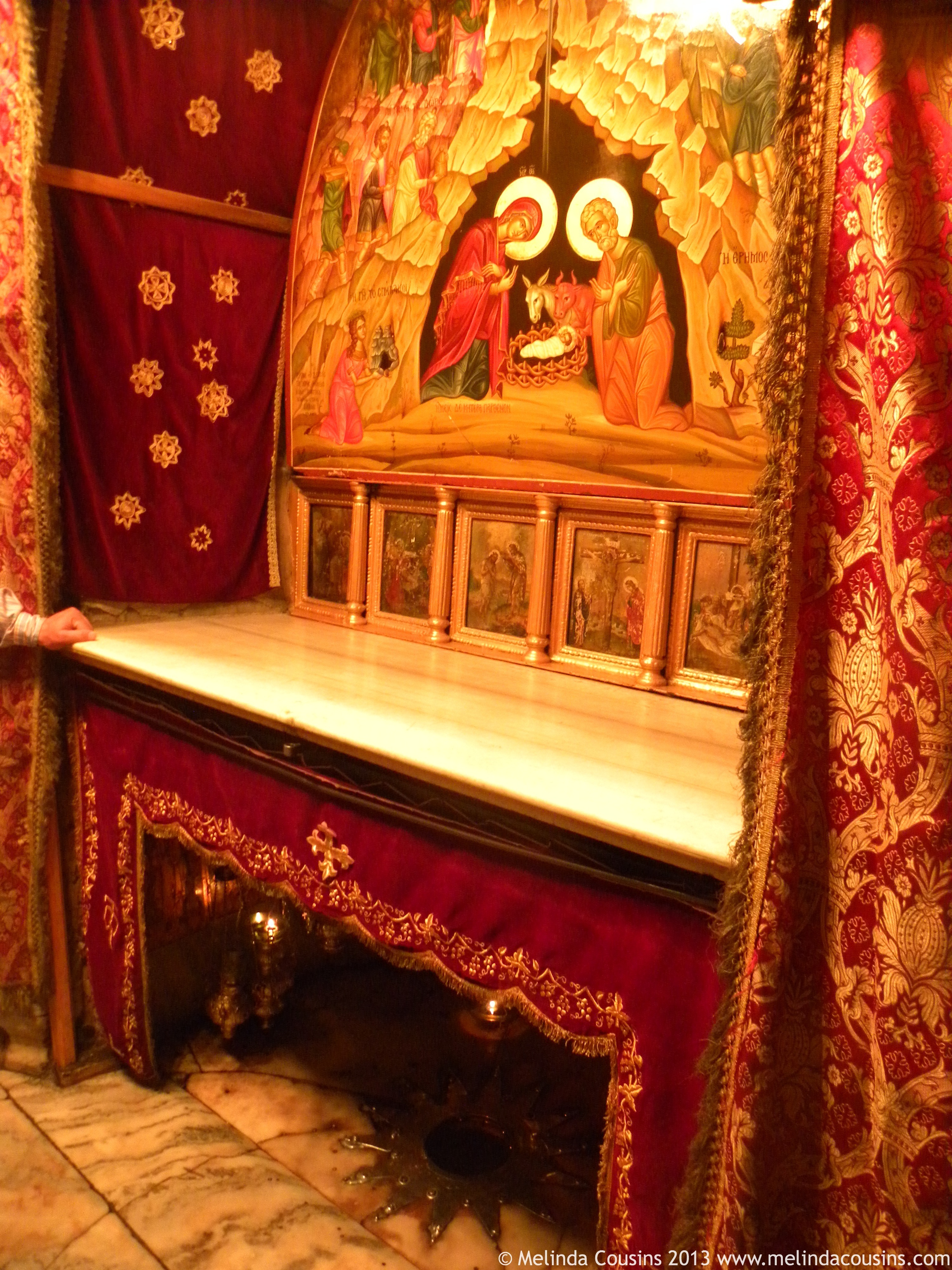
The grotto beneath the church with its star to locate the traditional ‘exact’ site of Jesus’ birth can provoke some cynicism; but is also a testament to the way many believers over thousands of years have remembered and been changed by the events that happened in this town.

Altar with a star on the ground marking the traditional site of Jesus' birth
Altar with a star on the ground marking the traditional site of Jesus’ birth

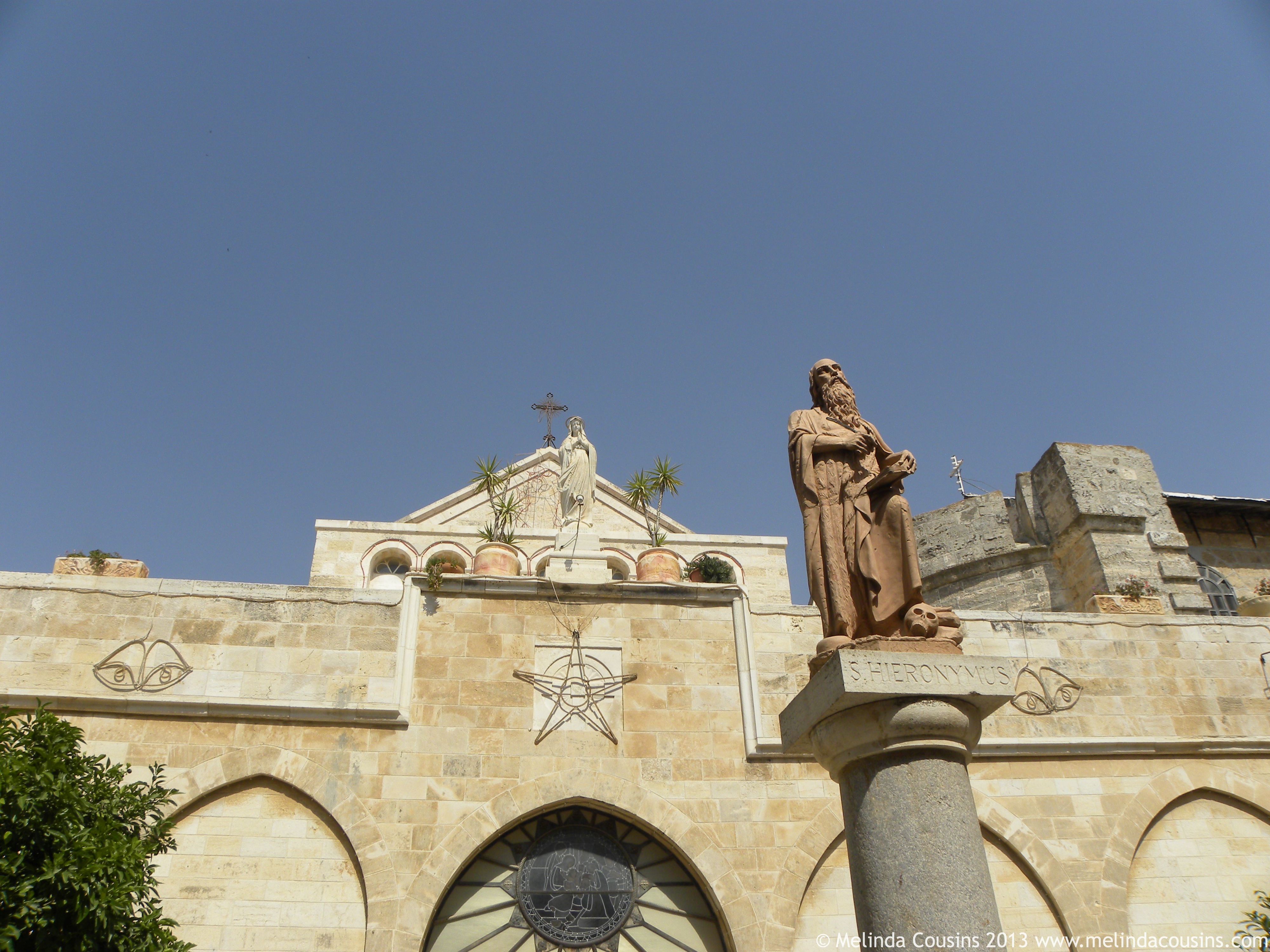
The adjoining chapel where Jerome translated the Bible into Latin is another reminder of those who have come before, and the way we benefit from their devotion and dedication. The statue of Jerome has a skull at his feet because supposedly he carried a human skull with him to remind himself of his own mortality. An interesting choice  not one I would emulate but, hey, if it worked for him …?

Statue of Jerome outside St Catherine's church
Statue of Jerome outside St Catherine’s church

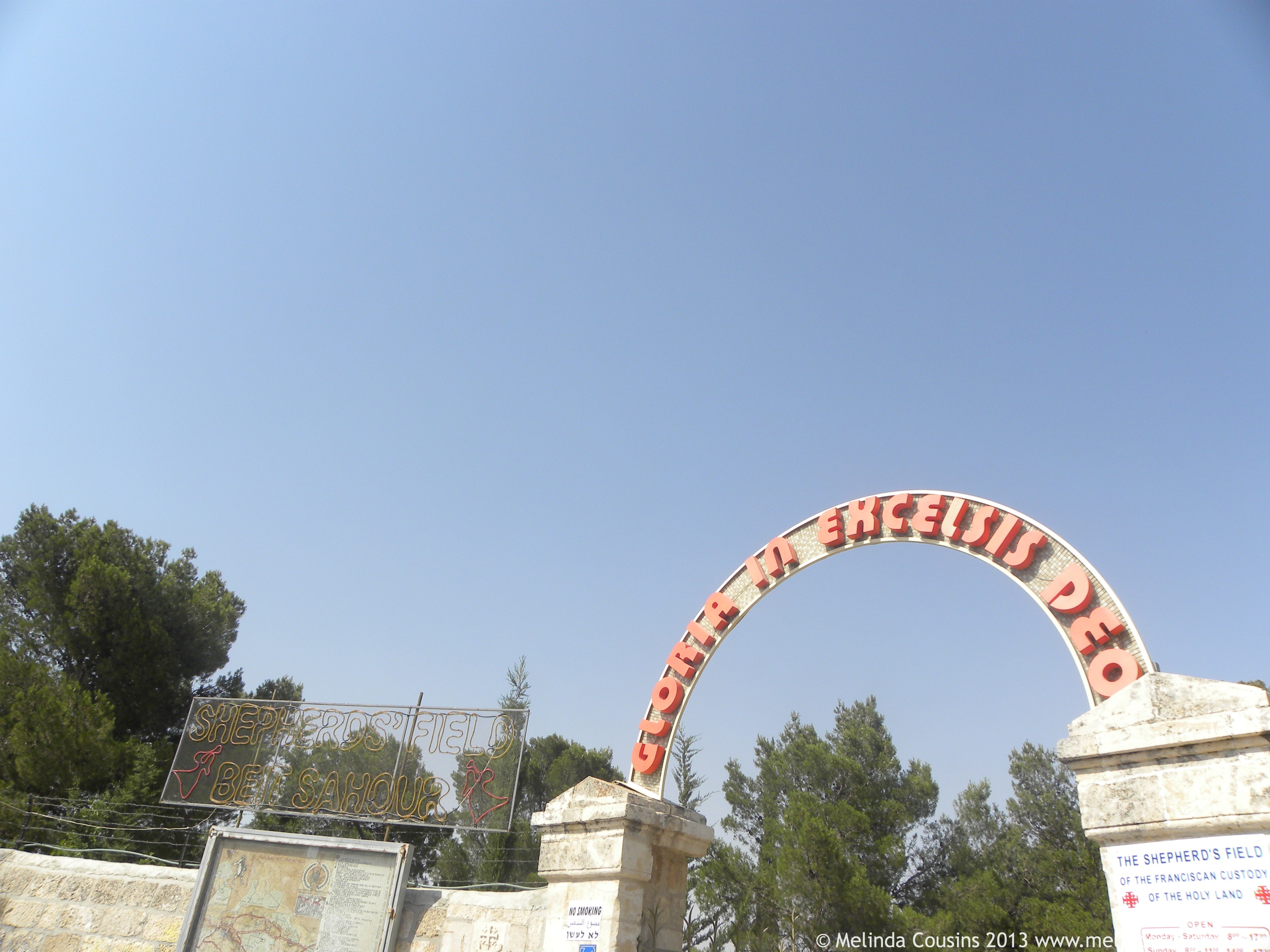
Further afield you can visit the “Shepherds’ Fields,” an area where perhaps the other aspects of the story of Christmas Eve took place. Again, whether the location is exact or not, there is space to reflect and remember the message of hope and peace; the truth proclaimed here that God’s favour rests upon humanity.

Entrance to the Shepherds' Fields
Entrance to the Shepherds’ Fields

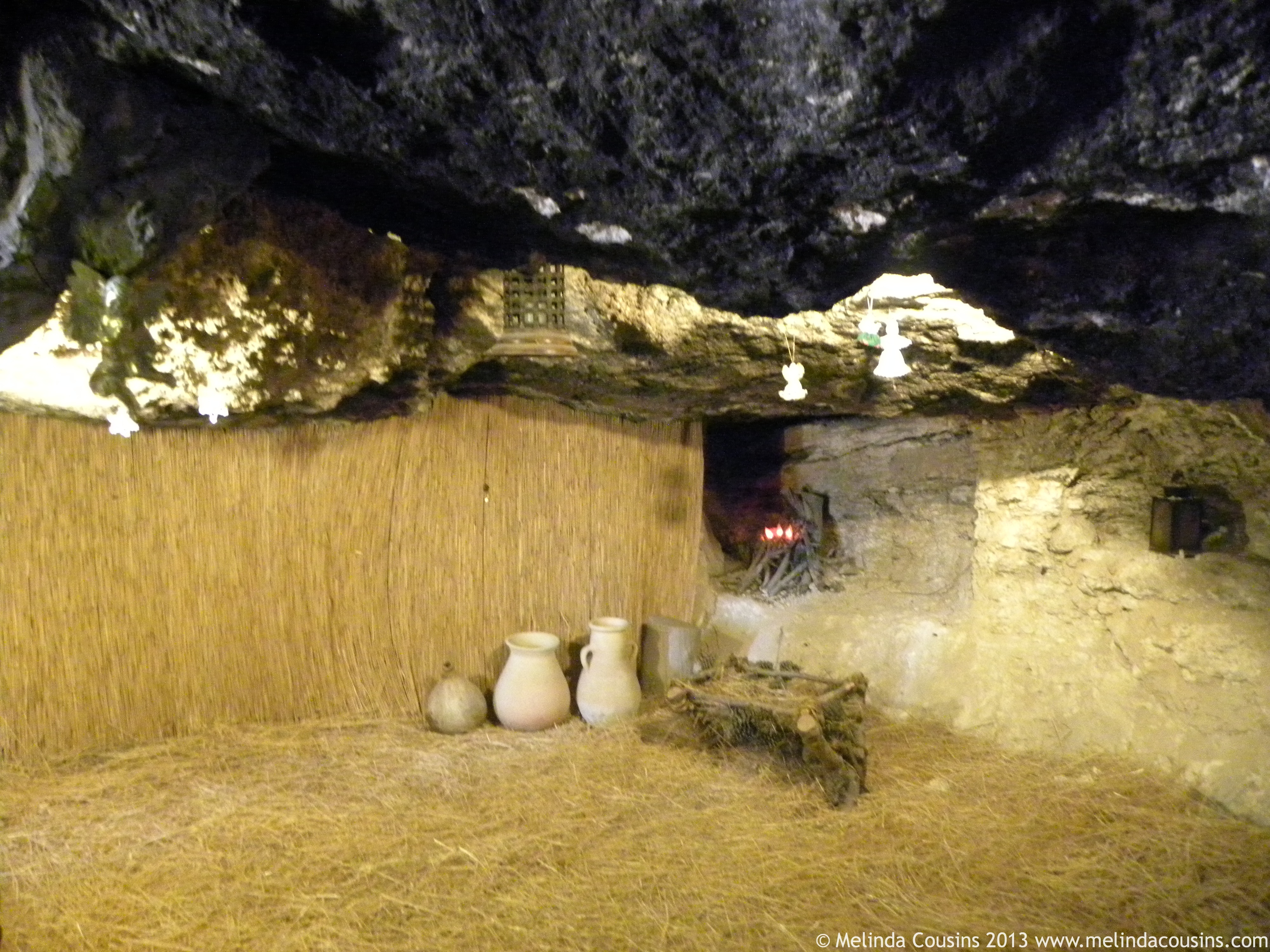
Our study group shared some time in the caves here last year worshiping. I know we can worship our Saviour anywhere, and yet I do appreciate the way a sense of ‘place’ can bring another dimension to our corporate experience.

A place to worship in the cave
What did I learn from Bethlehem?

As well as celebrating both the biblical story and the history of the church, this is one of the places that reminds me why people make pilgrimages. Whether these are physical visits to historical or sacred sites, or more spiritual recognitions of the journey, taking time to enter in, to be still, and to return to the busy-ness of life is an important spiritual practice. I can appreciate the intention of this sign on the door of the church through which we exited.

DSCN8904

We also spent time, and money, in some of the shops and restaurants around the town. Tourism is Bethlehem’s main source of income and it has suffered over many years. It is a privilege to be able to support those there who seek not a handout but a way to engage, serve and connect. It was also wonderful to meet with Palestinian Christians and hear something of their experience and their hopes for the future. They asked us to remember them, to pray for them, and to ask others to pray for them as they seek to find ways to build bridges of peace and reconciliation in such a difficult place.

The Bethlehem Peace Centre: designed to promote peace and cultural diversity (and a good place to shop for souvenirs!)

Like many places in Israel, the history of this place, both ancient and modern, is complicated; the politics perhaps even more so. Is it an accident that it is in this difficult place we remember that we have a God who steps into the mess and muck of humanity? The fullness of God dwelt in a helpless baby. The only ones to hear the angelic choir were those sleeping outside in the dirt with the animals. The birth of this tiny child provoked an attempted genocide. The Christmas story is not neat and tidy; and the place we remember and sing songs about at this time of year isn’t either. But it is a wonderful reminder of the real power of words like hope and peace and joy. They come in the midst of darkness and conflict and despair. They come just where we need them most.

The Sacredness of Questioning Everything

The title of this post is the name of a book by David Dark which someone gave me a few years ago. It’s quite a good book but I like the title even more so. Because I love asking questions. Not because I’m constantly seeking to challenge or undermine others, but because it helps me think about things in new ways. Questions open possibilities and ideas. Questions make me reconsider my assumptions. Questions invite people to join me in exploring and wondering and imagining.

One of the guys I used to work with would sometimes get frustrated when he felt like all I had were questions without any answers. And I can understand that frustration. I don’t want to come across as a Negative Nellie or a Doubting Debbie! I know I need to keep learning the difference between questions which are critical in the sense of expressing disapproval and questions which are critiquing in the sense of analysing options and possibilities. I want to ask questions that inspire rather than judge.

But I also know that too often Christians can seem to present themselves as people who have all the answers, as if when you choose to follow Jesus suddenly life gets all wrapped in a nice big bow and everything becomes simple. That hasn’t been my experience. For me part of the journey of discipleship has been learning to ask more and better questions.

Jesus asked questions a lot. Seriously, have a look at the Gospels. He asked questions all the time! It was a key way He taught, it was usually the way He engaged with people who came to Him with questions, and it was often the way He got His disciples to imagine what life in the kingdom of God might look like.

I find some of the best questions I ask are the ones I ask of myself. Questions like: What am I afraid of? What do I really want? What am I really trying to say? What is stopping me from doing what I know is right? What if I believed I could make a difference here? Why do I think that way?

And other times the really good questions are the ones God asks me. Who do you say that I am? (Luke 9:20)  What do you want me to do for you? (Matt 20:32) Will you really lay down your life for me? (John 13:38) Those are the ones I’m really trying to work on answering well.