All posts by melindacousins

Today would be a good day to be in Jakarta

Just a quick post today. I’ve been thinking a lot lately about the debate in my country about asylum seekers and refugees, the way our government has chosen to respond to them, and the options available to people who disagree to speak truth and advocate justice. I hope to post more about that in the future. For now, I’m turning my travel reflections this week to the place from which many of those asylum seekers board the boats that ultimately lead them to our detention centres, one of Australia’s closest neighbours, and a country I think we often misunderstand, Indonesia.

Just a small part of the Jakarta night skyline

I haven’t done the standard Aussie tourist trip to Bali, but alongside some off-the-beaten-track places, I have spent a little bit of time in Indonesia’s capital, and I can definitely say like nearly everywhere else I’ve visited, Jakarta is a place I both enjoyed and learned from.

While I didn't love the traffic, I did enjoy zooming past it on the back of a motorbike!
While I didn’t love the traffic, I did enjoy zooming past it on the back of a motorbike!
What did I love about Jakarta?

Like any capital city, the public buildings tell some of the story of the nation’s history and politics.

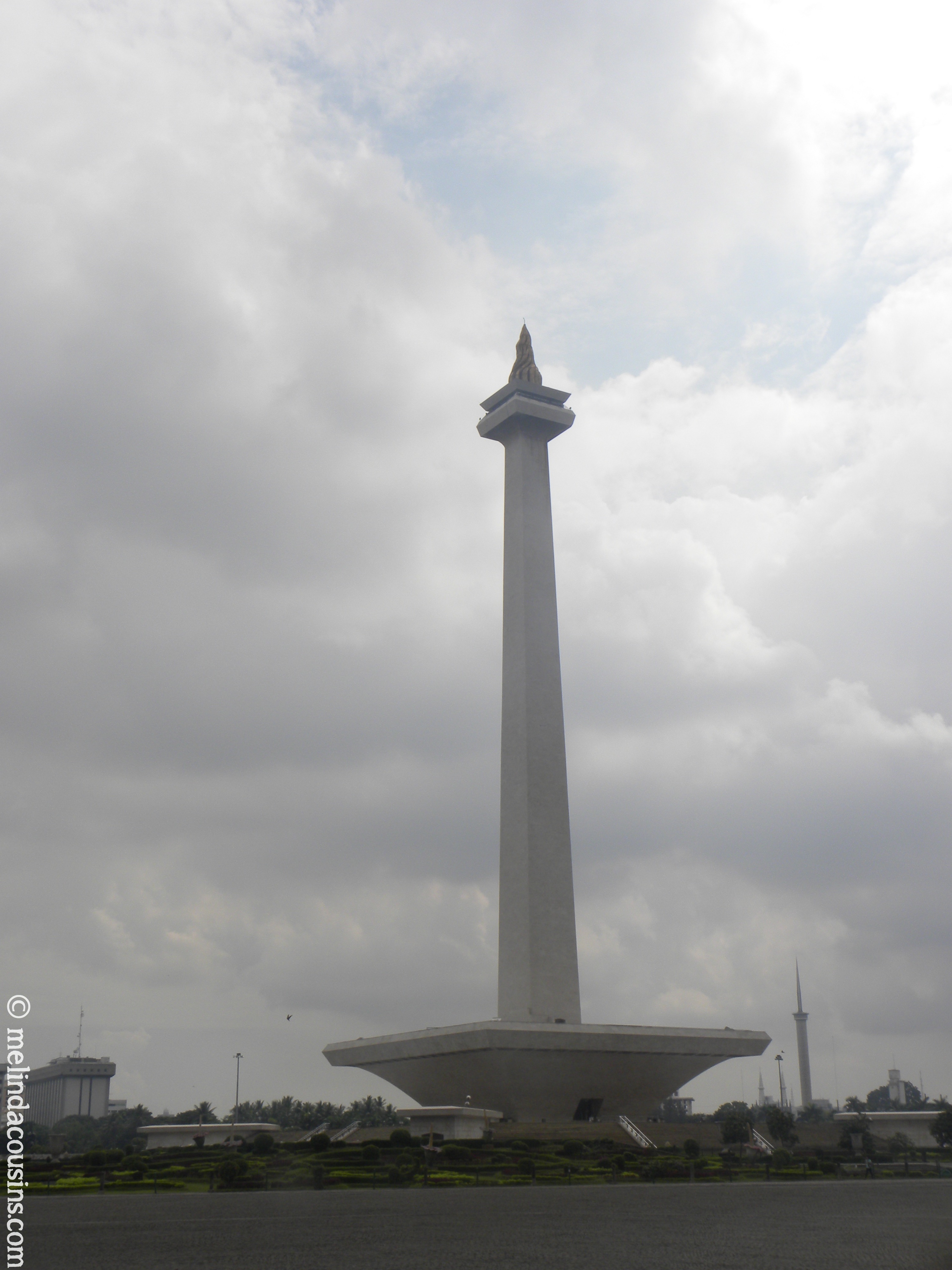
The National Monument, commemorating the struggle for independence

And the view from the top gives you just a tiny glimpse into what a city of 28 million people looks like.

Monument View

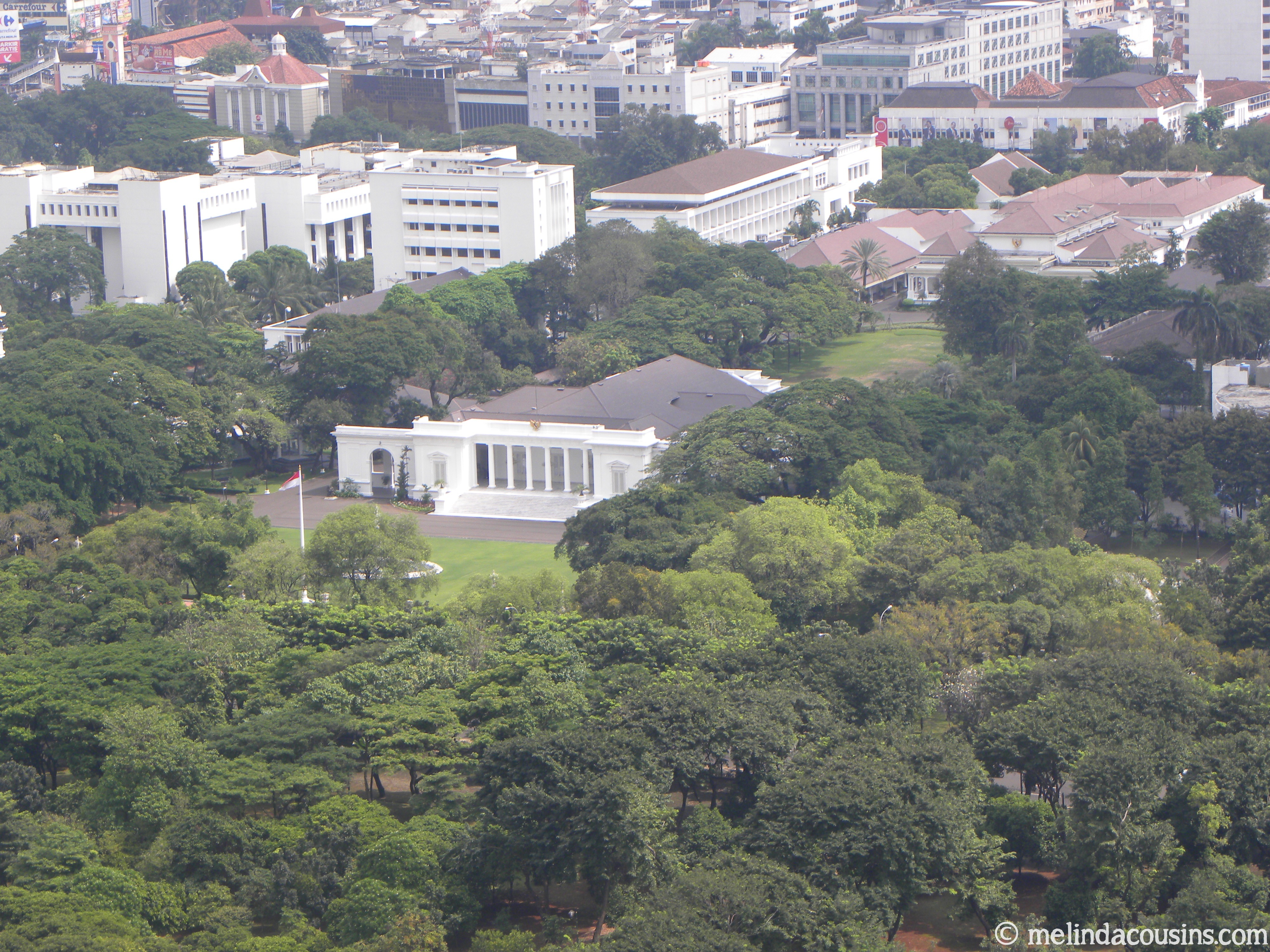
The President’s Palace is somewhat reminiscent of the White House.

Looking down on Merdeka Palace

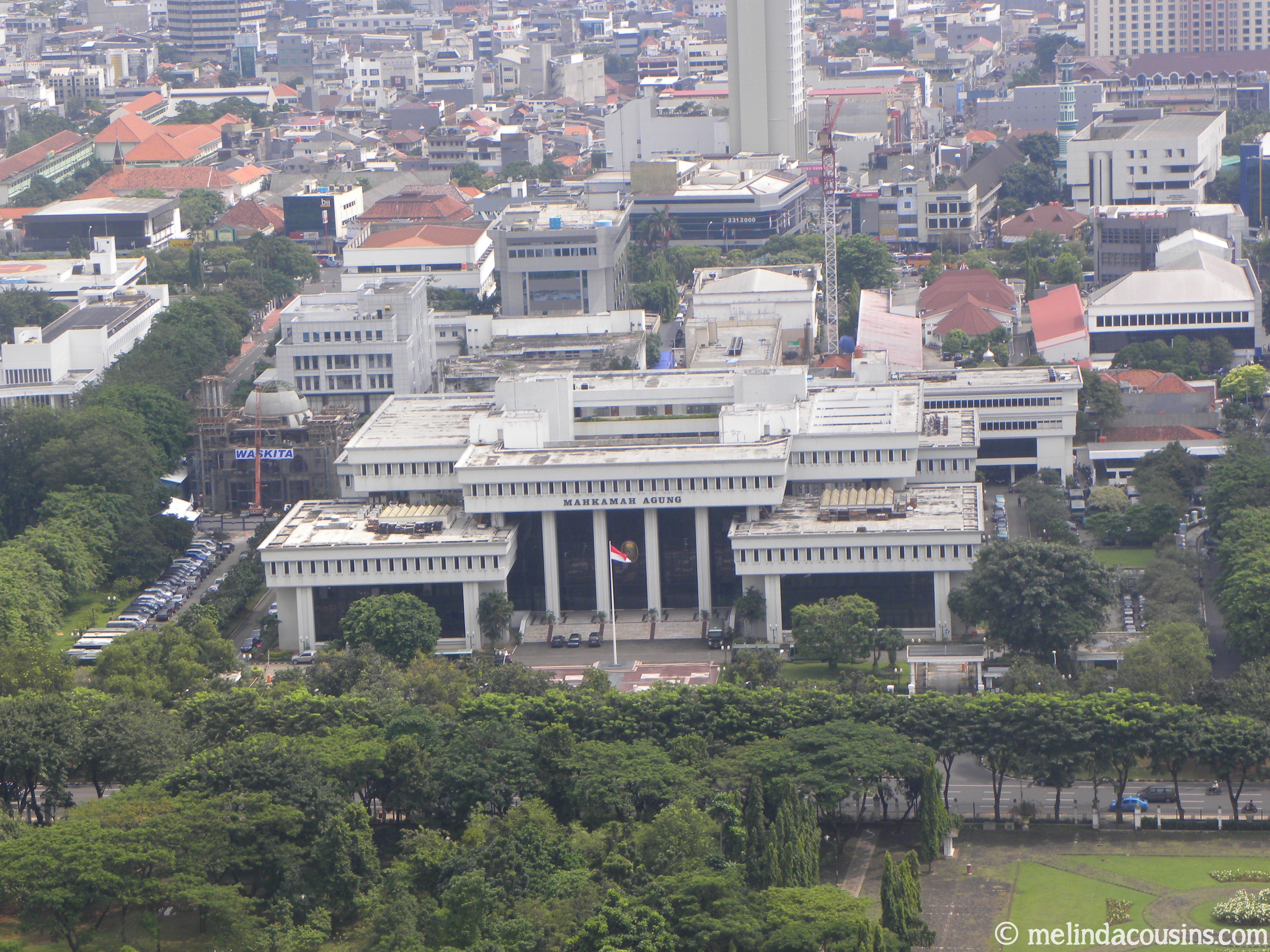
While the Supreme Court building would be at home in many places around the world.

Supreme Court

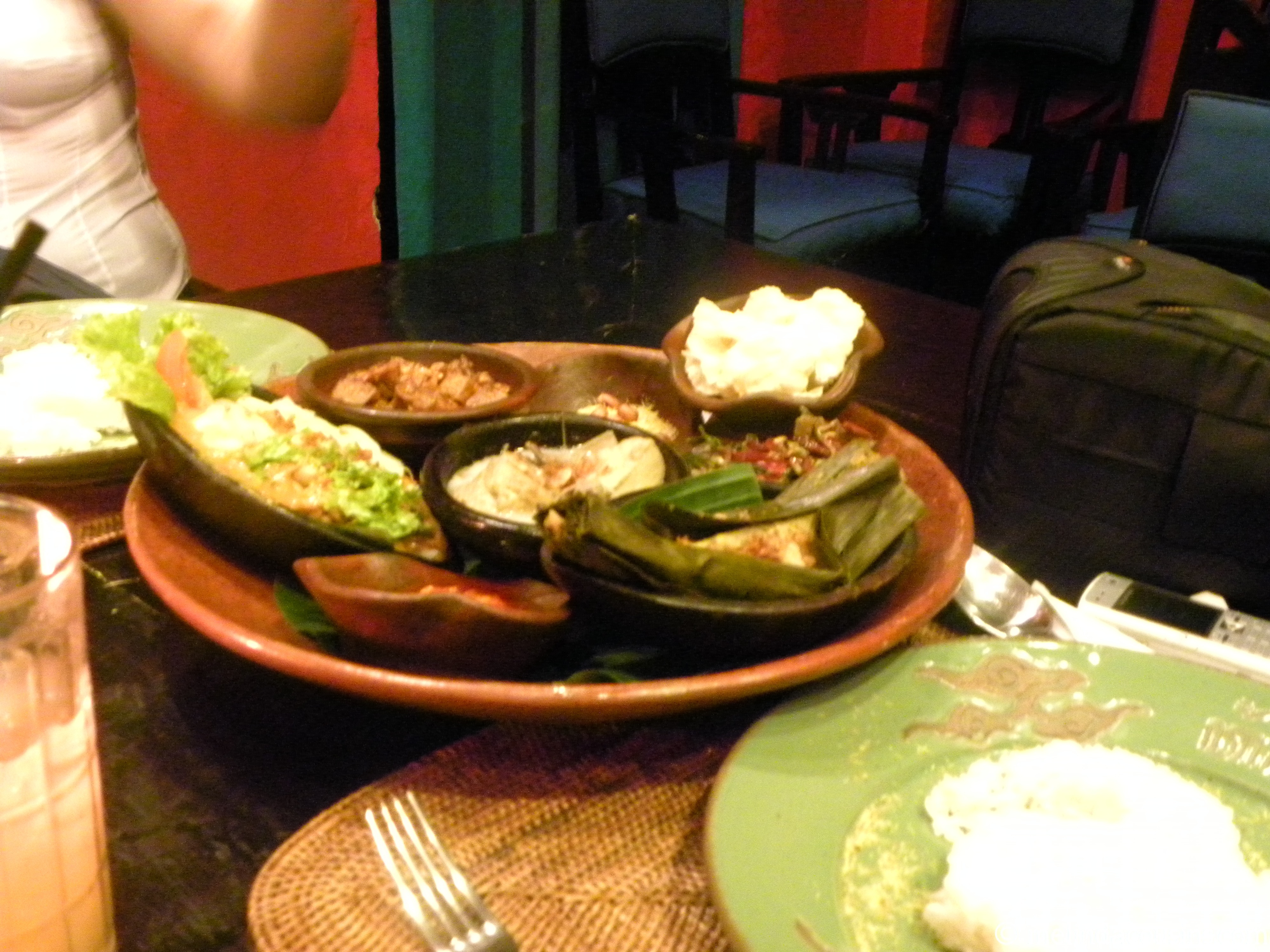
Above all, I loved the food. Fresh, fast, cheap, spicy, diverse, delicious.

Food

So. Much. Good. Food.

Food 2

What did I learn from Jakarta?

Like many places, Jakarta is a city of contrasts, with areas of great poverty in the midst of the high-rise city towers. I was reminded of the challenge all countries face to provide justice and equity, and in particular to remember the least among us.

A slum nestled between high rise construction zones

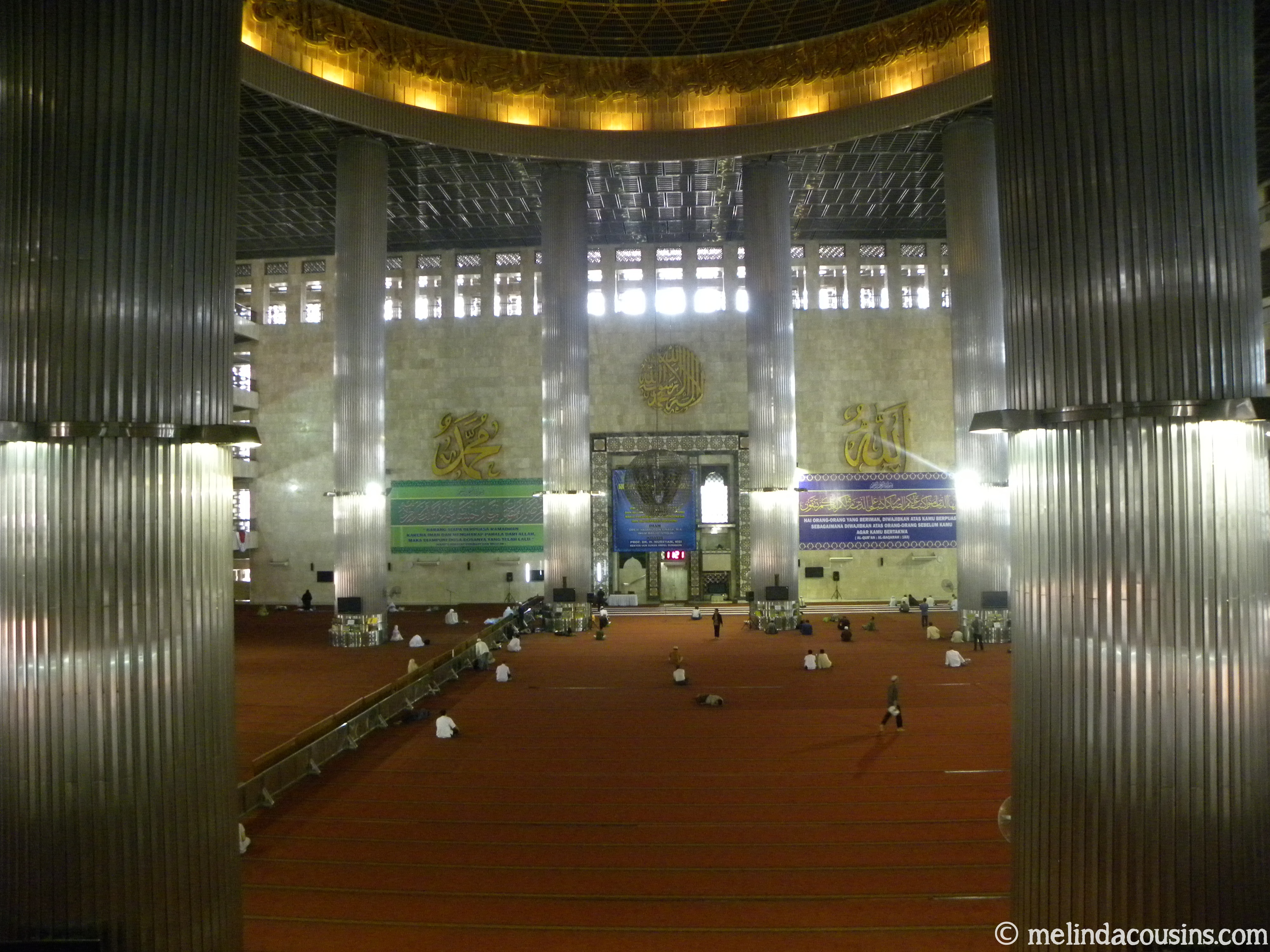
I appreciated visiting the huge mosque, which can accommodate 120,000 men praying simultaneously, and learning more of the influence religious affiliation has on life in Indonesia. I did get myself in a little trouble when I went to follow my (male) friend in signing the guest book, only to be given a sharp rebuke – not for you!

Inside Istiqlal Mosque

But mostly I learned from the people. They were so friendly and welcoming, with such a positive attitude towards me as an Australian (although this was prior to the diplomatic tensions of the last couple of years). I was often “mobbed” on the street by groups of young women wanting to practice their English.

English practice

I’ve said it before, and the more I travel the world, the more I am sure I will say it again. People are people everywhere. We like to think that it is so difficult to understand one another, and certainly on the level of politics and culture it can be. But when we take time to have a conversation and share something of our lives with another person, I am always amazed anew at how what divides us is superficial, and what unites us – our hopes, dreams, loves, laughters – is so much deeper. We are need to be challenged to take time to learn from those who seem different to us, and to learn how much we truly share.

Today would be a good day to be in a place I won’t name

My Monday travel posts are usually filled with photos. Not today. They are also usually filled with details of where I went and what I saw, but again, not today. I want to write today about one of the most profound travel experiences of my life, but in order to avoid any chance of compromising the people I met there, I am making the place I’m reflecting on today anonymous. I’m talking about visiting a place where Christians are facing daily harassment and persecution, and how it would be a good thing for me to spend more time there.

20140518-222326.jpg
An anonymous block of rooms at the back of an anonymous factory on the edge of an anonymous town … where I met the most inspiring people I’ve ever met

In the last couple of weeks, the Western world has been horrified by the news of the kidnapping and trafficking of nearly 300 (mostly) Christian girls in Nigeria, an event which I have already shared some of my questions from. This week, similar heartbreak and outrage has been expressed over the news of a pregnant women sentenced to death in Sudan for marrying a Christian. How do we even begin to respond to such happenings which are so far out of the realm of our experience?

Well, the reality is that while these may be out of the realm of our experience, they are familiar to many. Data from the reputable Pew Research Center this year shows that 74% of countries in the world have some level of government interference with worship or religious practices, and in 48% of countries, force was used against religious groups or individuals in 2012. The religious group harassed and persecuted in the highest number of countries (151) continues to be Christians.

While Christianity has enjoyed privilege and power in the West over the last century (that I can’t help but think it never should have accepted), at the same time around the world many followers of Jesus have suffered and given their lives for what they believe. When Christians in the West complain about our loss of privilege, we arrogantly minimise the very real suffering of our brothers, and increasingly even more so, our sisters, around the world.

So, what did I love about visiting a place where Christians live with this reality every day?

I loved the incredible faith, perseverance and hope I saw in those I met. Despite living in circumstances I simply cannot fathom (despite having seen them firsthand), the Christians I stayed with encouraged and inspired me greatly. These people take their faith seriously. They take the words of Jesus seriously. They know the cost of following Him, and they have chosen to pay it, believing His promise that they are blessed in doing so.

20140518-222500.jpg
The room I stayed in, which as a guest I had to myself. Next door, twelve young women live in the same space.

I was particularly inspired by their whole-hearted devotion to their calling and mission. These people seek to share with their families, friends, and neighbours, the hope they have found in Jesus, and have committed their whole lives to that end. Not to mention that their knowledge of the Bible would put most of my colleagues in ministry to shame!

What have I learned from meeting Christians in places like this?

I am so profoundly humbled when I think of those I met there. They treated me with respect and grace, seeing me as someone who had something to teach them about following Jesus. The truth is quite the opposite. I have so much to learn from them.

Some of them talked about their desire to one day visit a place like where I live, to see churches worshipping freely in my country. God help me, but I wanted to pray that they would never get that chance. For I fear how disillusioned they would be. They assume that our freedom and comfort would cause us to be even more devoted and passionate about our faith and mission. Would that they were right.

These people follow in the footsteps of their Saviour, who suffered and was persecuted and told His disciples not to be surprised if they faced the same. They witness to His grace, passion, humility and self-sacrifice in the way they live their lives daily. What do I witness to? How can I preach a crucified Messiah who gives Himself up for the world when I have so much and have given up so little?

20140518-222453.jpg
My bed … I admit I struggle simply going without a mattress for a couple of weeks

I am reminded of the words of Jesus: “It is harder for a rich person to enter the Kingdom of God than it is for a camel to pass through the eye of a needle.” (Matthew 19:24) It is easy to assume that we are the fortunate ones , but Jesus warns us of the danger of our wealth, comfort and security.

When we hear about people suffering for their faith around the world, our great desire seems to be to want to “fix” things, as if making their lives more like ours will make everything better. Certainly I believe we should speak out about the kinds of grave injustices that have been in the news this week. But I also wonder whether we need to take more time to “sit with” those who are suffering persecution, whether physically or spiritually, and recognise that perhaps we are the ones who need to become more like them.

I pray for my brothers and sisters facing persecution for their faith around the world. I pray for peace and courage, for mercy and protection. But I pray too for myself and the church in countries like mine. Where comfort so easily leads to complacency, and privilege to a loss of passion. I wonder how we can learn more from those following Jesus in places like the one I dare not name but would love to visit again today.

A Tale of Two Disappearances: Should it matter if they could have been us?

Over 200 people disappear in the middle of the night. How does the world respond? It seems that it depends. If the 239 people are tourists and business people on an aeroplane, the response is blanket media coverage for days on end, and millions of dollars and international cooperation in organising a weeks-long search, even though it has been clear for most of that time that there will be no survivors.

If, on the other hand, the 284 people are teenage girls from an African Muslim nation, it seems that it takes weeks for most of the world to even hear about their plight, desperate persistence by their families, and the beginnings of an outcry on social media before the mainstream media and governments even begin to mention the disappearance, even though it is very clear that these girls are very much alive and are being bought and sold as chattel.

I’ve been sickened and heartbroken over the news of the horrific kidnapping of nearly 300 16-18 year old girls from their school in Nigeria in April. It’s incredibly difficult to know how to respond. And like many others, I have found it difficult not to compare the response to this event to the response to the disappearance of flight MH370 in March.

The difference in news coverage has been striking. Our Australian Prime Minister has made numerous public statements about his dedication to the search for the wreckage of MH370, yet as far as I can see has made no public comment about the kidnapping and trafficking of these children in Nigeria. But I don’t just want to blame the government and the media. Often times they are simply focusing on what they think we want to hear about and/or care about.

And this raises for me some very tough questions about what we consider important and why. About whose lives are valuable and why.

Is it because these victims are black, or because they are female, or because they live in a Muslim country, that their story has not been treated as prominently? Perhaps. But I wonder if there is something else at work – something that lies within not just our governments, and our media, but in each of us.

I wonder if it boils down to this: “It could have been me.”

When we hear of a plane disappearing, most of us immediately think of our own air travel. It’s a part of our everyday experience, something we rely on and assume we can do freely without fear. We know there were four Australians on MH370, and so we relate to them because in many ways, they could have been us, or our family members. Perhaps it makes us that little bit fearful next time we board a plane, reminded of our own mortality and the risks inherent in our comfortable Western lives.

But militants kidnapping children because they are attending school? That is so far outside our experience, and so unlikely to ever happen to us or anyone we know, that we don’t have to worry about it. We can’t relate.

It seems to me that often we care more about people who are like us. And I wonder if it’s not necessarily because they are like us, but because subconsciously we think they could be us? So our compassion is in some ways selfish, because it is about our own fear, or our fear for our own children, rather than for the other person.

I’ve heard it said that 100,000 deaths in a remote third-world country = 1,000 deaths in a place you’ve heard of = 100 deaths in a country you’ve been to = 10 deaths in your own country = 1 death in your own neighbourhood. Is it simply about proximity, or is it that it’s “too close to home” meaning something like “that was very nearly me”?

A few years ago I was at a Women’s Retreat. Our guest speaker had recently returned from working in Niger, one of the poorest countries in the world. She told story after story about children dying of malnutrition and starvation, of preventable diseases and lack of access to basic sanitation. Then, just before lunchtime, someone received a copy of the local paper, and read a story about a three year old child who had drowned in a backyard pool in our city. As I went into lunch, I couldn’t help notice that the major topic of conversation around the tables was about the news story. How tragic and awful it was for the mother, the family, of that child. And it was. But no more tragic and awful than the experience of hundreds, thousands, of women in Niger who we had been hearing about all weekend. Why did one story grab our attention so much more than the others? I can only answer that it was because deep down, perhaps without even recognising it, many in the room were thinking, “That could have been my child. That could have been me.”

I hesitate to tell that story, because I don’t want to seem judgmental of others when I am often exactly the same. But I felt like I learned something very profound that day. It is hard to care for people when their experience does not touch our own lives in some way. Deep down, do we categorise some people’s experience as different to ours, and some people therefore as “other” to us, so that we can seemingly justify to ourselves not caring about them in the same way?

These kinds of questions make me feel rebuked, and I kind of hope you do too. I don’t want to be a person who cares about things only because they have some connection to my own self-preservation and self-interest. I want to be a person of compassion, speaking out against all injustice, especially when it is so outrageous, so disgusting, so far removed from my understanding of humanity, that I still can’t quite believe it could happen to anyone.

In terms of the Nigerian girls, what can we do?

For starters, we can start speaking up. We can take every opportunity to ask our government and our media to speak up too. And we can start speaking the truth about what has happened. Recent media reports say these girls are being sold “as brides,” accepting the language the perpetrators have used for what they are doing. That is watering down the true horror. They are being trafficked as sex slaves. Let us name this evil for what it is and stand against it.

We can educate ourselves about this situation, and support organisations that are seeking to work against injustice in places like this. This article on 6 Things You Should Know About Nigeria’s Mass Kidnappings is a good place to start. If you want some much deeper context, and are willing to engage with some harrowing truths, this working paper on Boko Haram and Gender Based Violence is worth a bit more time.

And we can pray. I was so pleased to read this article at A Church for Starving Artists which lists the names of many of the missing girls, and encourages readers to pick just one name and pray for that girl. Let’s make this personal. Let’s not succumb to the temptation to think of these girls are “other,” but let’s start treating them as our own children. Because, humanity, they are.